











 Secure payments
Standard refund policy
Trade Assurance
Secure payments
Standard refund policy
Trade Assurance
| Product Type | Memory Module |
|---|---|
| Memory Capacity | 16 GB |
| Memory Technology | DDR3 |
| Product Voltage | 1.5V |
| RAM Speed | 1866MHz |
| RAM Standard | DDR3-1866/PC3-14900 |
| Error Identifying | ECC |
| Signal Type | Registered |
| Column Access Strobe (CAS) | CL13 |
| Rank | Dual Rank x4 |
| Quantity of Pins | 240-pin |
| RAM Genre | RDIMM |
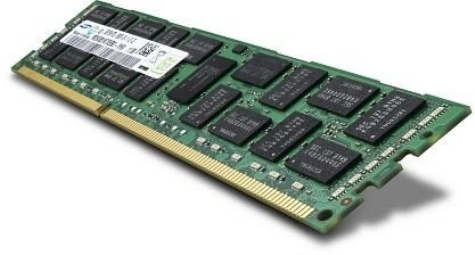
This 16GB DDR3-1866 registered ECC RDIMM, operating at 1.5V with a dual-rank x4 organization and CL13 latency, delivers the data integrity and signal stability essential for virtualization hosts and in-memory databases. Its registered architecture minimizes electrical loading on the memory bus while the ECC engine actively corrects single-bit errors, making it ideally suited for legacy server platforms where uptime and consistent performance under heavy multi-DIMM configurations are critical.
1. A 16GB capacity per module enables dense memory provisioning in virtualization hosts, allowing more VMs to reside on a single server while maintaining responsive multi-tenant workloads.
2. ECC protection transparently corrects single-bit errors, safeguarding transactional databases and in-memory analytics from silent data corruption that could compromise business continuity.
3. Registered signal buffering stabilizes command and address lines across fully populated DIMM slots, delivering the predictable reliability demanded by tier-one enterprise applications.
4. Dual Rank x4 organization interleaves access cycles to saturate memory channels, elevating sustained bandwidth for heavy consolidation and real-time data processing.
5. 1866MHz clock speed drives higher peak throughput, reducing response latencies in virtualized environments and accelerating session-heavy services like VDI and large-scale caching.
In enterprise server environments, unplanned downtime is measured in lost revenue per minute. The Samsung M393B2G70BH0-CMA is a 16GB DDR3-1866 registered ECC memory module engineered to eliminate the memory-born risks that keep IT managers awake at night. Its defining features are not just specifications; they are a direct answer to real-world data center pain points.
Consider a dense virtualization cluster running dozens of virtual machines. When idle memory gets overcommitted, bit errors in RAM become statistically inevitable. The built‑in Error Correcting Code (ECC) detects and corrects single‑bit flips automatically, preventing silent data corruption that could crash a critical customer database mid‑transaction. Equally vital is the registered signal buffer, which ensures electrical stability when all 24 DIMM slots per server are populated—this directly translates to achieving 384GB+ of RAM capacity without compromising 1866MHz throughput. Meanwhile, the dual‑rank x4 organization and CL13 latency optimize interleaving, effectively boosting bandwidth for in‑memory analytics platforms like SAP HANA that demand rapid, simultaneous reads across massive datasets. In a revenue‑critical database server, what this means is not just faster query execution—it is the assurance that every financial calculation occurring in memory is mathematically intact, every write‑back to storage is trustworthy, and thousands of concurrent users experience zero transactional anomalies. That level of reliability, combined with a standard 1.5V operating envelope for reduced thermal load in high‑density racks, makes this module a pillar of 24/7 operational integrity.
General Virtualization
For a hypervisor hosting multiple VMs, balance total RAM across guests. A single 16GB RDIMM per channel provides a solid start, but dense virtualization benefits from populating all channels with identical 16GB sticks to maximize bandwidth. Aim for at least 64GB (4x16GB) in a quad-channel system to comfortably run mixed workloads without paging.
In-Memory Database
Large, low-latency datasets demand both capacity and reliability. Deploy multiple 16GB RDIMMs to fill all memory channels—96GB to 256GB configurations are common for Redis or Memcached clusters under heavy loads. ECC protection is essential here to prevent silent data corruption during high-throughput reads and writes.
High Performance Computing
HPC clusters need high memory bandwidth for parallel simulations. Populate every memory channel with 16GB RDIMMs to sustain peak throughput; six or eight modules per node (96–128GB) is typical. The Registered ECC design guarantees stability under sustained compute pressure, while 1866MHz speed helps keep interleaved data flowing to multiple cores efficiently.
Server-grade memory, rigorously tested. Compatible with Dell PowerEdge R720, HP ProLiant DL380p Gen8, Lenovo System x3650 M4, and similar platforms.
Q: Can I mix this M393B2G70BH0-CMA with other memory modules of different brands or speeds?
A: Mixing brands or speeds is not recommended for RDIMMs. Even slight variances can cause signal integrity issues and system instability. Always use identical modules to guarantee reliable ECC operation in server environments.
Q: Is this memory compatible with my system?
A: This DDR3-1866 ECC Registered DIMM is designed for server platforms like Intel Xeon E5-2600 v2 or AMD Opteron 6300 series. Please verify your motherboard supports 16GB Dual Rank x4 RDIMMs at 1.5V before purchasing.
Q: What is the recommended DIMM population order for optimal performance?
A: Follow your server board’s population guide, typically filling identical RDIMMs per channel starting from the farthest slot from the CPU. Balancing ranks across channels ensures maximum memory bandwidth and interleaving benefits.
Q: Does this module support overclocking or XMP profiles?
A: No. This is a JEDEC-compliant server RDIMM running at standard 1866MHz with CL13. It does not support XMP profiles or overclocking, as stability and data integrity are paramount in enterprise environments.
Q: What warranty and typical failure rate can I expect?
A: This module includes a 1-year warranty. Enterprise-class RDIMMs like this Samsung original typically exhibit an annualized failure rate (AFR) well below 0.5%, ensuring excellent long-term reliability under 24/7 operation.