











 Secure payments
Standard refund policy
Trade Assurance
Secure payments
Standard refund policy
Trade Assurance
| Product Type | Memory Module |
|---|---|
| Compliance Standards | |
| Memory Capacity | 16 GB |
| Memory Technology | DDR4 |
| Product Voltage | 1.2V |
| RAM Speed | 2133MHz |
| RAM Standard | DDR4-2133/PC4-17000 |
| Error Identifying | ECC |
| Signal Type | Registered |
| Column Access Strobe (CAS) | CL15 |
| Rank | Dual Rank x4 |
| Quantity of Pins | 288-pin |
| RAM Genre | VLP RDIMM |
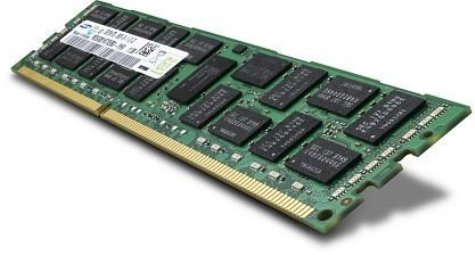
This VLP RDIMM is engineered for density-constrained 1U/2U servers and virtualization hosts, where its dual-rank x4 organization and registered ECC design ensure robust signal integrity and data reliability under heavy multi-DIMM memory configurations. The 1.2V DDR4-2133 CL15 module excels in memory-intensive workloads such as in-memory databases and consolidated virtual machines by offering stable, error-corrected performance with a reduced physical footprint for improved system airflow.
1. A 16GB capacity per stick supplies the density needed to consolidate more virtual machines and in-memory databases on a single host, deferring expensive hardware expansion.
2. ECC protection continuously corrects single-bit errors, safeguarding financial transactions and long-running analytic jobs from silent data corruption.
3. Registered buffering isolates the memory controller from electrical loading, letting the platform populate all channels with high-capacity DIMMs without sacrificing signal integrity.
4. Dual Rank x4 organization interleaves accesses across internal banks, extracting higher effective bandwidth and keeping latency low when many cores compete for shared memory.
5. The Very Low Profile RDIMM form factor minimizes obstruction inside 1U and blade enclosures, sustaining cooler air paths and preserving clock stability under dense rack thermal stress.
For data center environments, the M392A2G40DM0-CPBQ0 16GB DDR4-2133 module combines four decisive attributes: ECC correction, registered buffering, dual-rank x4 organization, and a VLP form factor. In dense virtualization clusters, a single undetected bit flip can silently corrupt hypervisors or guest workloads, resulting in cascading failures and unplanned downtime; the onboard ECC engine detects and corrects these errors in real time, keeping your multi-tenant services trustworthy without performance penalties. The registered clock driver isolates the memory controller from electrical loading, allowing you to fully populate channels with hundreds of gigabytes—a prerequisite when consolidating dozens of VMs and ensuring signal integrity under heavy load. Meanwhile, the dual-rank x4 configuration uses interleaving to boost command throughput, giving in-memory systems like Redis and SAP HANA the low-latency, high-bandwidth access they need to process transactions with microsecond precision. The very low profile design slips easily into 1U servers and blade chassis, preserving critical airflow and enabling higher rack density without thermal compromises. Together, these features deliver the stability, scalability, and uncompromising data protection your mission-critical applications depend on.
General Virtualization
For a virtualization host, ECC Registered DIMMs are essential to ensure data integrity across multiple guest machines. Deploy this 16 GB module in a balanced configuration across all memory channels—typically populating six or eight identical sticks for dual-socket systems—to maximize bandwidth and leave headroom for memory overcommitment. Aim for a minimum of 64 GB per host to comfortably run a modest number of VMs while keeping a few DIMM slots free for future scaling.
In-Memory Database
In-memory databases like Redis or SAP HANA demand absolute reliability and low latency, making ECC Registered memory non-negotiable. Equip the server with a full population of these 16 GB Dual Rank x4 modules to achieve high capacity and rank interleaving, which improves throughput under heavy read/write loads. Plan for at least 128 GB to hold substantial datasets entirely in RAM, and scale out in multiples of eight modules to leverage all available memory controllers.
High-Performance Computing (HPC)
HPC clusters prioritize bandwidth and error resilience for sustained number-crunching workloads, exactly where Registered ECC DDR4 excels. Fill every memory channel per CPU with identical 16 GB RDIMMs—typically eight or sixteen modules per node—to exploit the 2133 MHz speed in a balanced, multi-channel architecture. This approach delivers the aggregate bandwidth needed for tightly coupled parallel simulations while the ECC feature guards against silent data corruption during weeks-long runs.
Rigorously tested, compatible with Dell PowerEdge R740/R640, HPE ProLiant DL380 Gen10, Lenovo ThinkSystem SR650, and Cisco UCS C240 M5.
Q: Can I mix this M392A2G40DM0-CPB0Q with other memory modules of different brands or speeds?
A: Mixing is not recommended. Registered ECC modules must match in rank, speed, and voltage. Disparities can cause POST failures or subtle data corruption in server environments.
Q: Is this memory compatible with my system?
A: It is compatible with servers using Intel Xeon E5-2600 v3/v4 or select AMD EPYC platforms. Verify that your board supports 288-pin DDR4-2133 Registered ECC VLP RDIMMs.
Q: What is the recommended DIMM population order for optimal performance?
A: Populate identical DIMMs per memory channel, starting with the farthest slot from the CPU. Follow your server board's manual to balance across channels for maximum throughput.
Q: Does this module support overclocking or XMP profiles?
A: No. This is a JEDEC-compliant server DIMM with ECC and registers; it does not support XMP or overclocking. It operates strictly at 2133 MHz for absolute data integrity.
Q: What warranty and typical failure rate can I expect?
A: It includes a one-year warranty. As an enterprise-grade Samsung module, the annualized failure rate is exceptionally low, typically below 0.5% under specified conditions.