











 Secure payments
Standard refund policy
Trade Assurance
Secure payments
Standard refund policy
Trade Assurance
| Product Type | Memory Module |
|---|---|
| Memory Capacity | 16 GB |
| Memory Technology | DDR4 |
| Product Voltage | 1.2V |
| RAM Speed | 2133MHz |
| RAM Standard | DDR4-2133/PC4-17000 |
| Error Identifying | ECC |
| Signal Type | Registered |
| Column Access Strobe (CAS) | CL15 |
| Rank | Dual Rank x4 |
| Quantity of Pins | 288-pin |
| RAM Genre | VLP RDIMM |
Optimized for dense server deployments, this 16 GB VLP Registered DIMM leverages Dual Rank x4 organization and ECC to ensure data integrity under heavy virtualization and in-memory database workloads. Its 1.2 V DDR4-2133 operation with CL15 latency and registered signalling delivers stable, low-power performance in high-capacity rack and blade servers.
1. A 16GB capacity per module provides sufficient density to populate servers with abundant memory, allowing more virtual machines or containers to run concurrently without resorting to slower storage swap.
2. ECC protection continuously detects and corrects single-bit errors, delivering the uncompromising data integrity that transactional databases and long-running computational workloads rely on.
3. Registered signal technology buffers control signals between the CPU and DRAM, preserving clean timing across fully loaded memory channels to sustain stability in large-scale virtualization hosts.
4. The VLP RDIMM design lowers module height to optimize cooling airflow in densely packed rack servers, reducing thermal stress and extending system longevity under 24/7 operation.
5. Dual Rank x4 organization banks memory accesses for interleaved pipelining, keeping per-channel bandwidth saturated to prevent bottlenecks when multiple cores handle heavy consolidation traffic.
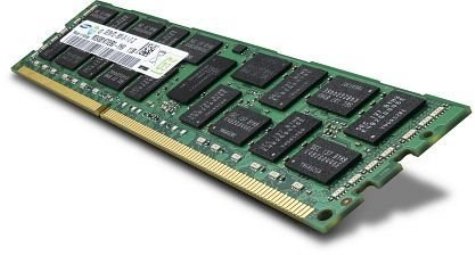
The Samsung M392A2G40DM0-CPB is a 16GB DDR4-2133 Very Low Profile Registered DIMM engineered for enterprise servers where reliability and uptime are non-negotiable. Its four defining characteristics directly address the pain points of data center architects. First, ECC error correction continuously detects and corrects single-bit memory errors. In a virtualized cluster running dozens of VMs on a single node, a silent bit flip in a hypervisor’s memory can cascade into guest crashes or data corruption; ECC acts as an essential safety net, preserving service continuity. Second, the Registered signal buffer stabilizes the electrical load on the memory bus, allowing a server board to support three DIMMs per channel without signal degradation. This is critical when scaling to 192GB or more for dense environments like an in-memory database, where Redis or SAP HANA demands massive capacity and absolute stability under sustained 24/7 loads. Third, the dual rank x4 organization interleaves access across internal banks, measurably increasing bandwidth utilization and reducing latency for concurrent queries during peak transaction volumes. Finally, the very low profile form factor reduces the physical height to just 18.75mm, maximizing airflow in 1U and blade servers and preventing thermal throttling that would otherwise choke performance in tightly packed racks. Together, these features transform a memory module into a foundation for worry-free virtualization and real-time data processing, where every transaction counts.
General Virtualization
For general virtualization servers, install one 16GB dual-rank VLP RDIMM per memory channel. Populating all six channels of a modern CPU socket yields 96GB and maintains consistent bandwidth for tens of lightweight VMs. The low 1.2V power draw and VLP form factor boost energy efficiency and thermal headroom in densely packed racks.
In-Memory Database
In-memory database scenarios demand maximum capacity. Equip each memory channel with two 16GB registered DIMMs; a dual-socket server with 12 channels can then reach 384GB. The dual-rank x4 configuration provides robust signal quality and ECC protects against data corruption. The 2133MHz speed is a reasonable trade-off for reliable large-memory operation.
High-Performance Computing
For HPC workloads, populate one DIMM per channel to achieve the best available bandwidth at 2133MT/s. If memory capacity is critical, fill two DIMMs per channel, accepting that the bus may downclock to 1866MHz. The very-low-profile design mitigates airflow restrictions in high-density compute clusters, keeping temperatures in check.
Rigorously tested server memory, compatible with Dell PowerEdge R740, HPE ProLiant DL380 Gen10, Lenovo ThinkSystem SR650.
Q: Can I mix this M392A2G40DM0-CPB with other memory modules of different brands or speeds?
A: Mixing is strongly discouraged in server environments. All modules must match in speed, rank, and ECC Registered type to maintain signal integrity and avoid system instability.
Q: Is this memory compatible with my system?
A: This VLP RDIMM is designed for Intel Xeon E5-2600 v3/v4 and select AMD EPYC platforms requiring DDR4-2133 ECC Registered memory. Verify your board's Qualified Vendor List.
Q: What is the recommended DIMM population order for optimal performance?
A: Populate identical DIMMs per channel, starting with the farthest slot (usually blue/white). Follow your server's manual to balance channels and enable interleaving for maximum bandwidth.
Q: Does this module support overclocking or XMP profiles?
A: No. As a JEDEC-compliant ECC Registered module, it operates strictly at 2133MHz CL15. Overclocking or XMP is not supported to ensure enterprise data integrity.
Q: What warranty and typical failure rate can I expect?
A: You get a one-year warranty. Enterprise-grade components like this VLP RDIMM exhibit very low annualized failure rates, typically well below 0.5% under proper cooling.