











 Secure payments
Standard refund policy
Trade Assurance
Secure payments
Standard refund policy
Trade Assurance
| Model | M392A2G40AM0-CPB |
|---|---|
| Product Type | Memory Module |
| Compliance Standards | EU RoHS,FCC |
| Memory Capacity | 16 GB |
| Memory Technology | DDR4 |
| Product Voltage | 1.2V |
| RAM Speed | 2133MHz |
| RAM Standard | DDR4-2133/PC4-17000 |
| Error Identifying | ECC |
| Signal Type | Registered |
| Column Access Strobe (CAS) | CL15 |
| Rank | Dual Rank x4 |
| Quantity of Pins | 288-pin |
| RAM Genre | VLP RDIMM |
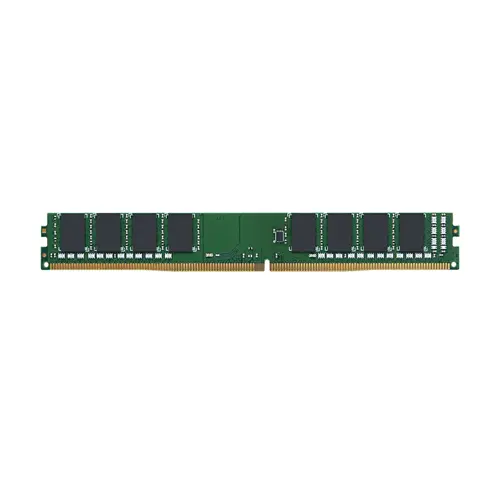
This Samsung VLP RDIMM is a server-class memory module purpose-built for dense virtualization, in-memory databases, and data-critical enterprise workloads where data integrity and uptime are non-negotiable. Its registered signal architecture ensures stable command/address signaling under heavy channel loading, while integrated ECC and the dual-rank x4 organization maximize error resilience and memory bandwidth efficiency for sustained high-throughput operations.
1. Built-in error correction eliminates single-bit memory faults silently flipping data, preserving transactional integrity for financial and database operations.
2. The registered buffer offloads the memory controller, enabling fully populated server boards with massive RAM footprints without compromising signal integrity.
3. Very low profile design fits into dense 1U and blade servers, improving airflow and allowing higher CPU TDPs without thermal throttling.
4. A sixteen-gigabyte module capacity provides the density needed to host multiple virtual machines or in-memory caches per node, reducing data center footprint.
5. Dual rank architecture interleaves accesses across two internal banks, maximizing available bandwidth and reducing memory latency under heavily consolidated workloads.
Based on the VLP RDIMM designation, this Samsung M392A2G40AM0-CPB is a server memory module purpose-built for data centers where every bit of integrity and every watt of power matter. Its four defining characteristics translate directly into mission-critical reliability.
First, ECC error correction means that single-bit memory errors—caused by cosmic rays or electrical noise—are detected and fixed in real time. In a virtualized cluster running dozens of VMs, one uncorrected flip can crash an entire host, taking down critical services; ECC keeps your hypervisor stable and your uptime intact. Second, the Registered signal buffer strengthens the command and address lines, enabling a server to support dense memory populations of 24 or more DIMMs per CPU without signal degradation. This is essential for scaling in-memory databases like Redis or SAP HANA, where capacity directly determines performance. Third, the Dual Rank x4 organization leverages rank interleaving to deliver higher sustained bandwidth, so the processor can pipeline requests across ranks while one is busy refreshing or precharging—meaning faster query responses under heavy load. Finally, the Very Low Profile form factor saves precious space inside 1U and blade chassis, improving airflow and cooling efficiency. Combined with 1.2 V low-power DDR4, it lowers thermal stress and energy bills, ensuring dense server farms stay cool and reliable around the clock.
General Virtualization
For a virtualization host, populate at least four 16GB modules (64GB total) to comfortably run multiple VMs. Distribute identical DIMMs across all memory channels (e.g., one per channel in a quad-channel platform) to maximize bandwidth and ensure ECC protection guards against data corruption in multi-tenant environments. Scale to eight modules (128GB) if you plan to host memory-overcommitted workloads.
In-Memory Database
In-memory databases demand both capacity and reliability, so install six or eight of these registered 16GB DIMMs (96–128GB) to keep entire datasets resident. Use a balanced channel-per-CPU configuration — populate all channels symmetrically with dual‑rank modules to sustain low latency under heavy random access, where the CL15 latency and ECC become critical for transactional integrity.
High-Performance Computing (HPC)
For bandwidth-sensitive HPC jobs, fill every memory channel with identical 16GB VLP RDIMMs — typically eight modules on a dual-socket server (128GB). The very low-profile design aids cooling and enables dense node packing, while using dual-rank DIMMs in all channels delivers peak memory throughput. At 2133MHz, prioritize channel count over raw speed to maximize aggregate bandwidth per node.
Proven compatible after rigorous testing: Dell PowerEdge R740, HPE ProLiant DL380 Gen10, Lenovo ThinkSystem SR650.
Q: Can I mix this M392A2G40AM0-CPB with other memory modules of different brands or speeds?
A: Mixing modules is not recommended for server environments. Uniformity ensures signal integrity and stability. Different brands, speeds, or ranks may cause POST failures or unpredictable errors under load.
Q: Is this memory compatible with my system?
A: This is a DDR4-2133 Registered ECC RDIMM designed for Intel Xeon E5-2600 v3/v4 or AMD EPYC 7001 platforms. Confirm your server board supports 16GB VLP RDIMMs with dual rank x4 and CL15.
Q: What is the recommended DIMM population order for optimal performance?
A: Populate identical modules per channel, following your server board's slot numbering (typically A1, B1, C1, D1 first). Balance channels for symmetric memory interleaving; consult your system's manual.
Q: Does this module support overclocking or XMP profiles?
A: No. As an enterprise-grade Registered RDIMM, it adheres strictly to JEDEC DDR4-2133 standard (PC4-17000) at CL15. Overclocking and XMP are not supported to guarantee data integrity.
Q: What warranty and typical failure rate can I expect?
A: This module includes a 1-year warranty. With high-grade Samsung components and ECC, the annualized failure rate is extremely low (<0.5%), suitable for mission-critical 24/7 operations.