











 Secure payments
Standard refund policy
Trade Assurance
Secure payments
Standard refund policy
Trade Assurance
| Model | M393A2G40EB2-CTD8Q |
|---|---|
| Product Type | Memory Module |
| Compliance Standards | EU RoHS,FCC |
| Memory Capacity | 16 GB |
| Memory Technology | DDR4 |
| Product Voltage | 1.2V |
| RAM Speed | 2666MHz |
| RAM Standard | DDR4-2666/PC4-21300 |
| Error Identifying | ECC |
| Signal Type | Registered |
| Column Access Strobe (CAS) | CL19 |
| Rank | Dual Rank x4 |
| Quantity of Pins | 288-pin |
| RAM Genre | RDIMM |
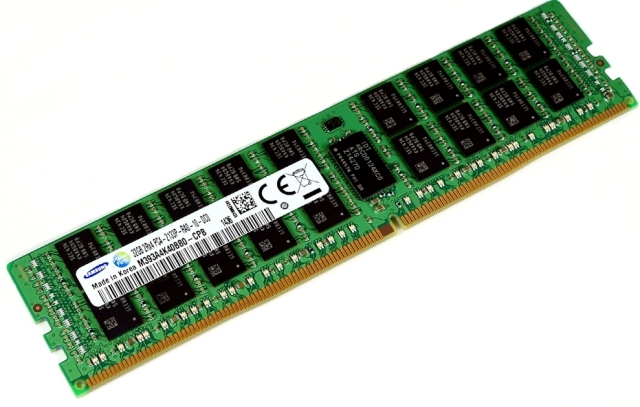
The M393A2G40EB2-CTD8Q is a server-class DDR4-2666 RDIMM with ECC and a registered signal type, purpose-built for virtualization hosts, in-memory databases, and mission-critical enterprise workloads where data integrity and sustained stability under heavy load are non-negotiable. Its dual-rank x4 organization delivers superior memory bandwidth efficiency and interleaving capability on compatible platforms, while CL19 latency at 1.2V helps maintain a balance between responsiveness and power consumption in dense rack deployments.
1. ECC memory proactively detects and corrects single-bit errors, preserving data integrity in financial transactions and mission-critical databases where even silent corruption is unacceptable.
2. Registered signal type buffers command and address signals, enabling stable operation across densely populated server boards with dozens of DIMMs per channel.
3. 16GB capacity per module strikes a balance that maximizes memory density per rack unit, allowing more virtual machines to run concurrently without exhausting budget or physical slots.
4. 2666MHz speed delivers the sustained high throughput needed to keep multiple CPU cores fed during parallel processing of large in-memory datasets and analytics workloads.
5. Dual Rank x4 organization interleaves access across two internal rank groups, keeping memory channels fully saturated and latency predictable under heavy virtualization consolidation.
The M393A2G40EB2-CTD8Q is a server-grade RDIMM built for data centers where failure is not an option. In virtualized clusters running dozens of VMs per node, the ECC circuitry actively corrects single-bit memory errors caused by background radiation or electrical noise, preventing silent data corruption that could crash hypervisors or poison critical application states. Meanwhile, the registered signal buffer ensures rock-steady electrical loading, allowing you to fully populate memory channels with high-capacity DIMMs without compromising stability—essential when scaling a VMware or KVM farm to meet growing tenant demand.
For in-memory databases like SAP HANA or Redis, the dual-rank x4 organization delivers genuine throughput advantages: interleaved access across internal ranks reduces row conflict stalls, so real-time analytics and high-frequency trading queries complete measurably faster. The 1.2V operating voltage then dramatically lowers energy consumption across hundreds of modules, shrinking both power bills and thermal burden in dense rack deployments. Together, these design choices translate directly into higher service uptime, predictable latency under load, and lower total cost of ownership—precisely what enterprise IT architects need from their memory infrastructure.
Based on the specifications, this is a server-grade DDR4-2666 Registered ECC DIMM (16GB, Dual Rank x4, 1.2V). It is designed for stability and data integrity in multi-socket servers. Here are the capacity planning guidelines for typical server workloads.
General Virtualization
For a host running 20–30 light to medium VMs, install 8 modules (128GB total) across 8 memory channels to balance capacity and cost. Populate one DIMM per channel to maintain balanced memory access while reserving slots for future scaling to 256GB.
In-Memory Database
Memory-resident databases like Redis or SAP HANA demand both capacity and fault tolerance. Configure 16 modules (256GB total), fully populating two DIMMs per channel on a dual-socket system. This maximizes bandwidth via interleaving and provides sufficient headroom for large in-memory datasets with ECC protection.
High-Performance Computing (HPC)
For bandwidth-sensitive parallel simulations, prioritize performance density. Use 12 modules (192GB, six per socket) in a dual-socket node, ensuring all memory channels are populated symmetrically. This configuration delivers high throughput for MPI workloads while leaving room for future node upgrades.
Rigorously tested for compatibility, this server memory works with Dell PowerEdge R740, HPE DL380 Gen10, Lenovo SR650, and similar systems.
Q: Can I mix this M393A2G40EB2-CTD8Q with other memory modules of different brands or speeds?
A: Mixing different brands or speeds is not recommended for server memory. Mismatched modules may degrade stability and cause data errors. For reliable operation, use identical Samsung DDR4-2666 ECC RDIMMs validated for your platform.
Q: Is this memory compatible with my system?
A: This Samsung DDR4-2666 ECC Registered DIMM is compatible with Intel Xeon Scalable and AMD EPYC platforms supporting DDR4-2666 RDIMMs. Please check your server’s qualified vendor list to confirm compatibility.
Q: What is the recommended DIMM population order for optimal performance?
A: Populate identical DIMMs starting from the farthest slot per channel. Balanced configurations, such as one DIMM per channel, ensure optimal bandwidth. Always follow the population guidelines in your server’s service manual.
Q: Does this module support overclocking or XMP profiles?
A: No. This ECC Registered server memory operates at JEDEC-standard DDR4-2666 speeds. It does not support overclocking or XMP profiles, as data integrity and stability are critical in enterprise environments.
Q: What warranty and typical failure rate can I expect?
A: This module carries a 1-year warranty. Samsung server DRAM typically exhibits an annualized failure rate below 0.5% under normal conditions, reflecting industry-leading reliability for mission-critical workloads.