











 Secure payments
Standard refund policy
Trade Assurance
Secure payments
Standard refund policy
Trade Assurance
| Model | M393A2G40EB2-CTD6Q |
|---|---|
| Product Type | Memory Module |
| Compliance Standards | CE,WEEE,RoHS |
| Memory Capacity | 16 GB |
| Memory Technology | DDR4 |
| Product Voltage | 1.2V |
| RAM Speed | 2666MHz |
| RAM Standard | DDR4-2666/PC4-21300 |
| Error Identifying | ECC |
| Signal Type | Registered |
| Column Access Strobe (CAS) | CL19 |
| Rank | Dual Rank x4 |
| Quantity of Pins | 288-pin |
| RAM Genre | RDIMM |
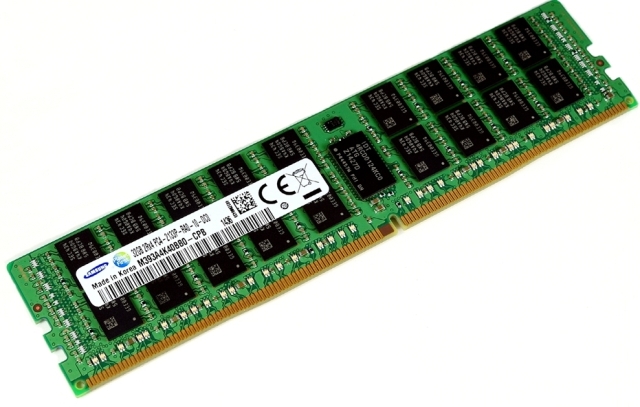
This Samsung M393A2G40EB2-CTD6Q is a server-grade DDR4-2666 Registered DIMM with ECC, purpose-built for enterprise platforms handling virtualization, in-memory databases, and mission-critical workloads where data integrity is non-negotiable. Its dual-rank x4 organization and Registered signal type enhance signal integrity and allow higher memory density per channel, while the CL19 latency and 1.2V operation deliver a balance of reliable throughput and energy efficiency for sustained 24/7 operation.
1. The 16 GB capacity per module allows dense memory configurations in 2U servers, supporting a higher number of virtual machines per physical host without sacrificing memory headroom.
2. ECC protection automatically detects and corrects single-bit errors, preventing silent data corruption in transactional databases and financial processing workloads.
3. Registered signal type buffers the command and address lines, preserving signal integrity across fully populated DIMM slots for large-scale in-memory analytics.
4. Dual Rank x4 organization enables rank interleaving that boosts effective memory bandwidth, reducing latency spikes in heavily consolidated database instances.
5. DDR4-2666 throughput delivers a balanced 21.3 GB/s per module, sustaining simultaneous query streams in virtualized environments while remaining within typical thermal and power envelopes.
As a server-class RDIMM, the Samsung M393A2G40EB2-CTD6Q is engineered to address the critical demands of enterprise data centers, where unscheduled downtime and data corruption are simply unacceptable. Its ECC technology actively detects and corrects single-bit errors caused by background radiation or electrical noise. In a dense virtualization cluster hosting dozens of VMs, this means hypervisor stability and transactional integrity remain uncompromised, preventing silent data corruption from cascading into application failures. The Registered signal type buffers the command and address lines, which allows a single server board to support high-density memory populations without signal degradation. When you are running an in-memory database like Redis or SAP HANA, this provides the headroom to scale datasets without sacrificing access reliability. The dual-rank x4 organization interleaves memory access across two internal ranks, delivering superior bandwidth utilization. For a database engine processing millions of concurrent queries, this translates directly into lower latency and faster table scans. Operating at a low 1.2V, the module also reduces thermal footprint, cutting cooling costs in large fleets while maintaining a steady 2666MHz speed under persistent, heavy loads.
General Virtualization
For general virtualization hosts, populate at least four identical M393A2G40EB2‑CTD6Q modules to balance memory bandwidth across memory channels. Configurations of 64 GB (4×16 GB) or 128 GB (8×16 GB) are typical to support moderate VM densities, leveraging the ECC and registered design for data integrity and stable host operation.
In-Memory Database
In-memory databases demand both large capacity and high reliability. Deploy six or eight modules on a dual‑socket platform to achieve 96–128 GB per socket while maintaining balanced interleaving. The dual‑rank x4 organization and CL19 latency provide the necessary throughput for real‑time analytics, and ECC protection guards against data corruption in persistent memory workloads.
High-Performance Computing (HPC)
HPC clusters benefit from the module’s registered ECC signaling and dual‑rank architecture under sustained parallelism. Fill all memory channels with identical 16 GB RDIMMs—often 8 or 12 modules per node—to maximize aggregate bandwidth and avoid throttling. The 1.2 V operation and 2666 MT/s speed help control power while delivering deterministic latency for tightly‑coupled MPI jobs.
This server memory is compatible with Dell PowerEdge R740, HPE ProLiant DL380 Gen10, Lenovo ThinkSystem SR650, and more—rigorously tested.
Q: Can I mix this M393A2G40EB2-CTD6Q with other memory modules of different brands or speeds?
A: Mixing is not advised for server environments. This RDIMM requires identical ECC Registered specifications; mixed brands or speeds may cause instability, reduced performance, or system failures. Maintain uniformity for reliability.
Q: Is this memory compatible with my system?
A: It is designed for servers supporting DDR4-2666 ECC Registered DIMMs. Compatible with Intel Xeon Scalable (Purley) and AMD EPYC platforms. Verify your server board's QVL to ensure proper RDIMM support.
Q: What is the recommended DIMM population order for optimal performance?
A: Populate channels symmetrically per CPU memory controller. Typically, install identical DIMMs in the first slot of each channel (often white slots). Consult your system manual for balanced memory interleaving.
Q: Does this module support overclocking or XMP profiles?
A: No. As a JEDEC-compliant server RDIMM, it operates only at standard DDR4-2666 parameters. Overclocking is not supported, ensuring 24/7 data integrity and compatibility in enterprise workloads.
Q: What warranty and typical failure rate can I expect?
A: This module includes a 1-year warranty. Built with high-quality components, it targets enterprise-grade reliability and a very low annualized failure rate, ideal for mission-critical server deployments.