











 Secure payments
Standard refund policy
Trade Assurance
Secure payments
Standard refund policy
Trade Assurance
| Product Type | Memory Module |
|---|---|
| Compliance Standards | |
| Memory Capacity | 16 GB |
| Memory Technology | DDR4 |
| Product Voltage | 1.2V |
| RAM Standard | DDR4-2666/PC4-21300 |
| Error Identifying | ECC |
| Signal Type | Registered |
| Column Access Strobe (CAS) | CL19 |
| Rank | Single Rank x4 |
| Quantity of Pins | 288-pin |
| RAM Genre | RDIMM |
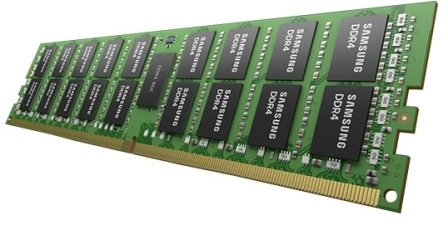
This DDR4-2666 Registered ECC RDIMM, configured as Single Rank x4, is purpose-built for server platforms requiring uncompromising data integrity, making it ideal for virtualized environments, in-memory databases, and mission-critical enterprise workloads. Its registered signal architecture stabilizes command and address buses under heavy loading, while the single-rank design reduces electrical load on the memory channel, enabling lower latency and improved signal margins in dense multi-DIMM configurations.
1. ECC protection silently corrects single-bit memory errors, safeguarding transactional databases and preventing silent data corruption in 24/7 operation.
2. Registered buffering stabilizes signal integrity across densely populated server boards, enabling reliable scaling to massive RAM capacities for virtualization hosts.
3. A 16GB module provides an optimal building block for dense memory configurations, maximizing VM counts per server without overprovisioning cost.
4. DDR4-2666 bandwidth delivers 21.3 GB/s throughput, smoothly handling concurrent real-time analytics and high-frequency trading workloads.
5. Single Rank x4 architecture reduces electrical loading on the memory bus, ensuring consistent low latency for latency-sensitive enterprise applications.
When deploying virtualized clusters or in-memory databases, the Samsung M393A2K40DB2-CTD7Y RDIMM transforms server reliability and efficiency through four critical features. First, its ECC technology actively detects and corrects single-bit memory errors, preventing silent data corruption that could crash virtual machines or produce inaccurate financial reports—a non-negotiable safeguard for mission-critical workloads. Second, the registered design buffers command and address signals, allowing you to populate all DIMM slots without signal degradation; this is essential when scaling a virtualization host to hundreds of VMs that demand massive, stable memory footprints. Third, operating at DDR4-2666 with a CL19 latency, it delivers the low-latency, high-bandwidth responsiveness required by real-time analytic platforms like SAP HANA to process large datasets in microseconds. Finally, the 1.2V operating voltage dramatically lowers power consumption across a fully loaded rack, shrinking cooling costs and improving TCO without sacrificing performance. Together, these attributes ensure your infrastructure never skips a beat under load.
General Virtualization
For general virtualization hosts, populate six or eight identical 16GB RDIMMs across the available memory channels to balance capacity and bandwidth. A total of 96GB to 128GB using single-rank x4 modules allows efficient handling of mixed workloads while leaving headroom for memory overcommitment. Prioritize balanced channel interleaving over maximum capacity to avoid NUMA penalties in dual-socket systems.
In-Memory Database
Memory-resident databases demand maximum capacity and fault tolerance, so fully load all DIMM slots per socket while maintaining identical rank configurations. Combine twenty-four or more of these 16GB RDIMMs per node to reach 384GB or higher, leveraging ECC to protect in-flight data. Keep memory speed conservative at DDR4-2666 to ensure signal integrity across all ranks when all channels are fully populated.
HPC
HPC applications benefit from high bandwidth, so pair these registered modules in a balanced configuration across all eight or twelve memory channels, using one DIMM per channel initially. Twelve 16GB RDIMMs deliver 192GB with optimal throughput for parallel simulations and modeling. Avoid mixing ranks within a channel to sustain consistent CL19 latency under continuous full-load conditions.
Rigorously validated for server platforms: Dell PowerEdge R740, HPE ProLiant DL380 Gen10, Lenovo ThinkSystem SR650.
Q: Can I mix this M393A2K40DB2-CTD7Y with other memory modules of different brands or speeds?
A: Mixing is not advised. Different modules may cause instability and force all DIMMs to the lowest speed. For production servers, use identical registered ECC modules to guarantee compatibility and uptime.
Q: Is this memory compatible with my system?
A: This 16GB DDR4-2666 ECC RDIMM is designed for Intel Xeon Scalable and AMD EPYC platforms. Ensure your server board supports 288-pin Registered DDR4 and populates a compatible speed grade.
Q: What is the recommended DIMM population order for optimal performance?
A: Adhere to your motherboard’s guide. Typically, populate identical DIMMs starting from the farthest slot per channel. Balanced channel loading enables optimal memory interleaving and maximum throughput.
Q: Does this module support overclocking or XMP profiles?
A: No. It is a server-grade registered ECC module adhering strictly to JEDEC DDR4-2666. Server environments prioritize data integrity and stability; overclocking and XMP are not supported.
Q: What warranty and typical failure rate can I expect?
A: It includes a 1-year warranty. Enterprise-class Samsung RDIMMs exhibit very low annual failure rates, typically below 0.1%, making them ideal for 24/7 mission-critical deployments.