











 Secure payments
Standard refund policy
Trade Assurance
Secure payments
Standard refund policy
Trade Assurance
| Product Type | Memory Module |
|---|---|
| Memory Capacity | 16 GB |
| Memory Technology | DDR4 |
| Product Voltage | 1.2 V |
| RAM Speed | 2933 MHz |
| RAM Standard | DDR4-2933/PC4-23400 |
| Error Identifying | ECC |
| Signal Type | Registered |
| Column Access Strobe (CAS) | CL21 |
| Rank | Dual Rank x8 |
| Quantity of Pins | 288-pin |
| RAM Genre | RDIMM |
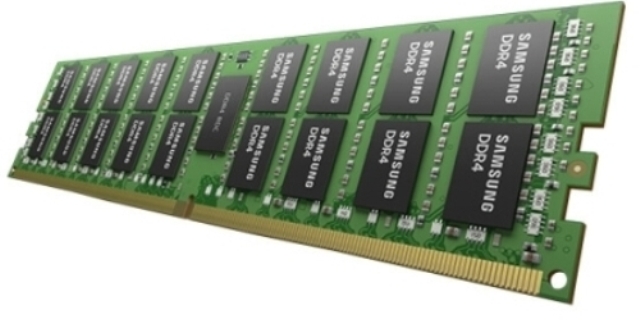
Designed for enterprise servers, this 16GB DDR4-2933 RDIMM with ECC and Registered signal type ensures data integrity in mission-critical workloads such as virtualization and in-memory databases, where silent memory errors are unacceptable. Its dual-rank x8 organization enhances bank-level parallelism for higher throughput, and the Registered clock driver stabilizes signal integrity across fully populated multi-DIMM channels.
1. ECC protection silently corrects single-bit errors, preventing silent data corruption in transactional databases and financial computation.
2. Registered signal buffering stabilizes high-density memory populations, letting data centers scale to terabytes per node without signal degradation.
3. RDIMM architecture reduces electrical loading on the memory bus, ensuring consistent uptime during heavy virtualization and container density.
4. Dual Rank x8 organization boosts interleaving parallelism, sustaining high bandwidth for in-memory analytics across consolidated workloads.
5. DDR4-2933 throughput elevates per-channel bandwidth, accelerating real-time streaming and large-page indexing in always-on cloud infrastructure.
When you are running a virtualized cluster hosting dozens of mission‑critical VMs, a single undetected bit‑flip in memory can cascade into data corruption or unplanned downtime. That reality makes the Samsung M393A2K43DB2‑CVFBQ far more than just another DDR4 module — it is a safeguard engineered for enterprise stability. Its ECC technology actively detects and corrects single‑bit errors, protecting in‑memory database transactions in platforms like SAP HANA or Redis from silent data distortion. Meanwhile, the Registered (buffered) signal architecture stabilizes electrical loads when populating all 24 or more DIMM slots, letting you scale to massive capacities without signal degradation, which is essential for high‑density virtualization hosts. The Dual Rank x8 organization further boosts performance through rank interleaving: while one rank completes a cycle, the other begins a new access, accelerating the random I/O patterns typical in virtual desktop infrastructure and real‑time analytics. At 2933 MT/s with a 1.2 V operating voltage, this 16 GB RDIMM balances data throughput with energy efficiency, reducing cooling burdens in crowded rack environments. Ultimately, these four characteristics — error correction, buffered reliability, dual‑rank parallelism, and measured speed — translate directly into what matters for your data center: uncompromised data integrity, higher VM density, and consistent responsiveness under sustained load.
General Virtualization
For a typical dual-socket virtualization host, populate all six memory channels per CPU with one 16GB RDIMM each, totaling 192GB (12 modules). This balanced configuration maximizes memory bandwidth and supports 40–50 average VMs. Always use identical dual-rank x8 DIMMs like this Samsung module to ensure consistent performance and reliable ECC protection.
In-Memory Database
In-memory databases such as Redis or SAP HANA demand both high capacity and low latency. Start with at least 256GB by installing 16 of these 16GB RDIMMs, evenly distributed across CPU memory controllers. Fill every channel to avoid bandwidth bottlenecks—imbalanced populations can stall large in-memory datasets. When scaling further, replace 16GB modules with higher‑capacity RDIMMs while keeping total rank count per channel within platform limits.
High‑Performance Computing (HPC)
HPC workloads benefit from consistent memory access patterns. Install one 16GB RDIMM per channel across all available channels—e.g., 12 modules for a dual‑socket system with six channels per socket (192GB total). Dual‑rank x8 modules deliver the optimal balance of capacity and command rate for sustained double‑precision throughput. Never mix different speeds or ranks; uniform DIMMs eliminate NUMA penalties and guarantee predictable run‑times in tightly‑coupled MPI jobs.
Server memory rigorously tested for Dell PowerEdge R760, HPE ProLiant DL380 Gen10, Lenovo ThinkSystem SR650.
Q: Can I mix this M393A2K43DB2-CVFBQ with other memory modules of different brands or speeds?
A: Mixing different brands or speeds is not advised for RDIMMs. It may cause instability, ECC errors, and force all modules to the lowest common speed, compromising server reliability.
Q: Is this memory compatible with my system?
A: This DDR4-2933 ECC RDIMM fits servers with Intel Xeon Scalable (2nd Gen+) or AMD EPYC 7002/7003 platforms that support registered DDR4-2933 memory. Always confirm with your server's qualified vendor list.
Q: What is the recommended DIMM population order for optimal performance?
A: For best performance, populate one DIMM per channel first, using the motherboard's recommended slots (often blue/black coding). Follow your server manual for balanced and symmetric configurations.
Q: Does this module support overclocking or XMP profiles?
A: No. This is a server-grade RDIMM operating at standardized JEDEC speeds. It does not support XMP or overclocking to guarantee data integrity and 24/7 stability.
Q: What warranty and typical failure rate can I expect?
A: It comes with a 1-year warranty. Built with Samsung DRAM, the module delivers high reliability with an expected annualized failure rate (AFR) typically below 0.5% under normal conditions.