











 Secure payments
Standard refund policy
Trade Assurance
Secure payments
Standard refund policy
Trade Assurance
| Product Type | Memory Module |
|---|---|
| Memory Capacity | 16 GB |
| Memory Technology | DDR4 |
| Product Voltage | 1.2V |
| RAM Speed | 2933MHz |
| RAM Standard | DDR4-2933/PC4-23400 |
| Error Identifying | ECC |
| Signal Type | Registered |
| Column Access Strobe (CAS) | CL21 |
| Rank | Dual Rank x8 |
| Quantity of Pins | 288-pin |
| RAM Genre | RDIMM |
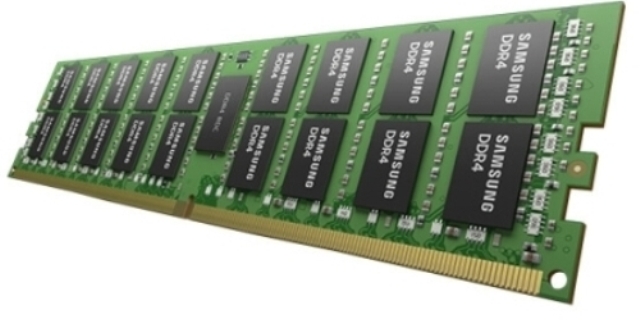
This is a server-grade DDR4-2933 RDIMM purpose-built for enterprise virtualization platforms and in-memory databases that demand uncompromising data integrity. The combination of ECC error correction, registered signal buffering, and a dual-rank x8 organization ensures stable operation at full speed while boosting memory interleaving and bandwidth efficiency in multi-DIMM configurations.
1. A 16GB module density boosts the memory footprint per server node, allowing more virtual machines and containers to run simultaneously without swapping bottlenecks.
2. The 2933MHz clock speed delivers high memory bandwidth essential for real-time analytics and in-memory databases, accelerating large dataset processing.
3. ECC protection corrects single-bit errors and detects multi-bit faults, safeguarding transactional integrity in financial and mission-critical enterprise applications.
4. Registered logic buffers the command and address lines, stabilizing signal integrity across densely populated server boards and enabling massive memory scaling.
5. Dual Rank x8 organization leverages interleaving to keep the memory bus highly utilized, reducing latency under concurrent multi-threaded workloads typical of virtualized environments.
The M393A2K43CB2-CVFC0 is a server-grade DDR4 RDIMM engineered for mission-critical enterprise workloads, where data integrity and unshakable stability are non-negotiable. Its ECC technology continuously detects and corrects single-bit memory errors caused by cosmic radiation or electrical noise—an absolute necessity in virtualization clusters hosting dozens of VMs, where a silent bit-flip could corrupt a database transaction or crash a hypervisor without warning. The registered signal buffer isolates the memory controller from the electrical load of high-density configurations, letting you populate all 24 DIMM slots in a 2U rack server without sacrificing signal quality. This directly enables seamless scaling of memory capacity for in-memory databases like SAP HANA or Redis, where real-time analytics demand that terabytes of hot data sit entirely in RAM. The dual-rank x8 organization increases bank-level parallelism, delivering measurably higher throughput under heavy concurrent access. In a financial trading platform processing millions of transactions per second, that extra bandwidth reduces latency jitter and ensures consistent response times even as CPU cores increase. Operating at 1.2V with a balanced 2933MT/s speed, this module keeps power consumption and cooling costs in check across a dense data center footprint, turning every watt into productive computational work rather than waste heat.
General Virtualization
For a DDR4-2933 Registered ECC RDIMM, balanced capacity and density are key. Populate six or eight identical 16GB modules across the server’s memory channels to enable uniform memory interleaving and maximize bandwidth for mixed VM workloads. This configuration delivers a sweet spot of 96GB or 128GB, supporting dozens of typical VMs without overspending on idle capacity.
In-Memory Database
In-memory databases demand not only capacity but also data integrity and sustained throughput. Deploy twelve 16GB RDIMMs (192GB total) across all channels to fully saturate the memory controller, leveraging Dual Rank x8 construction for higher bank-level parallelism. ECC protection is mandatory to guard against single-bit errors that could corrupt in-flight transactions.
High-Performance Computing
HPC favors bandwidth-bound access patterns over raw capacity alone. Install one 16GB RDIMM per channel across all available channels (often eight or sixteen modules per node) to achieve the widest memory bus. The 2933MT/s speed and Registered buffering reduce electrical load, enabling stable, full-populated operation for sustained floating-point and MPI jobs.
Rigorously tested for compatibility with Dell PowerEdge R760, HPE ProLiant DL380 Gen10, Lenovo ThinkSystem SR650, and similar servers.
Q: Can I mix this M393A2K43CB2-CVFC0 with other memory modules of different brands or speeds?
A: Mixing is not recommended. Combining different speeds, timings, or ranks on a server platform often leads to instability. Use identical part numbers for validated, mission-critical reliability.
Q: Is this memory compatible with my Intel Xeon Scalable or AMD EPYC server?
A: Yes, this DDR4-2933 ECC RDIMM is compatible with both Intel Xeon Scalable and AMD EPYC platforms that support registered memory. Always verify your motherboard's qualified vendor list (QVL).
Q: What is the recommended DIMM population order for optimal performance?
A: Follow your server board manual; typically, populate identical slots per channel first. For dual-socket systems, balance memory evenly across CPUs to enable all memory channels and maximize bandwidth.
Q: Does this module support overclocking or XMP profiles?
A: No. Server-grade RDIMMs operate strictly at JEDEC standard speeds for stability. Overclocking and XMP profiles are not supported, ensuring 24/7 data integrity under enterprise workloads.
Q: What warranty and typical failure rate can I expect?
A: This module includes a one-year warranty. Enterprise RDIMMs exhibit an extremely low annualized failure rate (AFR), typically under 0.5%, backed by rigorous post-production screening.