











 Secure payments
Standard refund policy
Trade Assurance
Secure payments
Standard refund policy
Trade Assurance
| Product Type | Memory Module |
|---|---|
| Compliance Standards | |
| Memory Capacity | 16 GB |
| Memory Technology | DDR4 |
| Product Voltage | 1.2 V |
| RAM Speed | 2933 MHz |
| RAM Standard | DDR4-2933/PC4-23400 |
| Error Identifying | ECC |
| Signal Type | Registered |
| Column Access Strobe (CAS) | CL21 |
| Rank | Dual Rank x8 |
| Quantity of Pins | 288-pin |
| RAM Genre | RDIMM |
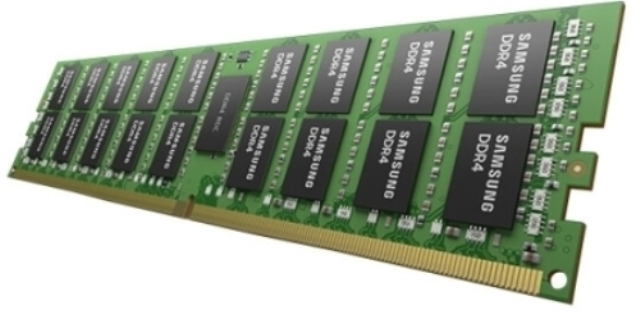
This Samsung 16GB DDR4-2933 Registered ECC DIMM (Dual Rank x8) is engineered for server platforms, providing strong data integrity through error correction and enhanced signal stability with its registered architecture. Its dual-rank configuration improves bank interleaving for lower latency and higher throughput, making it ideal for memory-intensive workloads such as virtualization, in-memory databases, and enterprise resource planning systems.
1. ECC protection actively detects and corrects single-bit errors, preserving data integrity in mission-critical database and transactional workloads where even silent corruption is unacceptable.
2. Registered signal type buffers the command and address lines, enabling large-scale memory populations that keep multi-socket servers stable under sustained virtualization pressure.
3. Dual Rank x8 organization interleaves access across multiple ranks to fully utilize the memory bus, delivering the steady bandwidth that consolidated cloud instances demand.
4. The 16GB capacity per module strikes a density sweet spot, maximizing virtual machine density per rack unit while leaving room for memory-hungry analytics jobs.
5. A 2933 MT/s data rate accelerates real-time processing pipelines, shrinking query response times in high-frequency trading or in-memory caching scenarios.
In server environments where uptime and data accuracy are non-negotiable, the Samsung M393A2K43DB2-CVFBY RDIMM is engineered to directly address the most critical pain points. Its ECC technology actively corrects single-bit memory errors caused by background radiation, a silent threat that can corrupt financial transactions or database entries without warning. In a dense virtualization cluster hosting dozens of VMs, a single undetected bit-flip could cascade into host kernel panic; ECC eliminates that risk, turning memory from a potential liability into a fortress of integrity.
The registered signal buffer on this 16GB DDR4-2933 module allows servers to populate all memory channels without compromising signal quality, which is essential when scaling to hundreds of gigabytes for large in-memory databases like SAP HANA or Redis. Paired with its dual-rank x8 organization, the module delivers superior bandwidth under heavy concurrent access—reducing latency in analytics workloads where every microsecond of query time matters. Meanwhile, the 1.2V low-voltage operation directly cuts thermal output and power consumption across a fleet of 2U servers. This means higher rack density, lower cooling costs, and a longer lifespan for surrounding components, all while maintaining CL21 responsiveness that keeps virtualized applications snappy and reliable around the clock.
Server Memory Identified
The module is a 16GB DDR4-2933 Registered ECC DIMM (RDIMM) — a standard server-class memory. Capacity planning guidance below targets typical enterprise workloads.
General Virtualization
Start with a balanced configuration of eight identical 16GB modules (128GB total) across two memory channels per CPU for a dual-socket server. This populates one DIMM per channel, maximizing bandwidth while leaving room for expansion. Scale to 256GB (16x16GB) when planning for moderate overcommit ratios, ensuring all channels remain balanced.
In-Memory Database
Capacity takes priority over channel balance for large datasets. Deploy twelve 16GB modules (192GB) as a baseline, filling three DIMMs per channel on a typical server, and monitor NUMA boundaries. For production-grade in-memory databases like Redis or SAP HANA, plan for 384GB-512GB using additional identical 16GB RDIMMs, accounting for ECC overhead and leaving headroom for replication buffers.
High-Performance Computing (HPC)
Maximize bandwidth by populating all available memory channels with a single DIMM per channel — for example, eight 16GB modules (128GB) in a one-DPC configuration. If capacity dictates a two-DPC setup, use identical dual-rank x8 modules but be aware of possible speed drops to 2666 MT/s on some platforms. For memory-bandwidth-bound codes, prioritize channel count and avoid mixing ranks per channel unless necessary.
Server-validated: rigorously tested, compatible with Dell PowerEdge R740, HPE ProLiant DL380 Gen10, Lenovo ThinkSystem SR650.
Q: Can I mix this M393A2K43DB2-CVFBY with other memory modules of different brands or speeds?
A: Mixing different brands or speeds with this registered ECC module is not recommended. It can cause signal integrity issues, system instability, or failed POST. For reliable operation, always use identical Samsung M393A2K43DB2-CVFBY modules in the same server.
Q: Is this memory compatible with my system?
A: This 16GB DDR4-2933 ECC RDIMM is validated for Intel Xeon Scalable (2nd Gen and newer) and AMD EPYC 7002/7003 platforms. Verify your server's qualified vendor list for the exact M393A2K43DB2-CVFBY part number to ensure full compatibility.
Q: What is the recommended DIMM population order for optimal performance?
A: Populate identical DIMMs per channel equally, starting with the farthest slot from the CPU in each channel. Follow your server motherboard’s memory population guide for balanced configurations and interleaving to maximize memory bandwidth.
Q: Does this module support overclocking or XMP profiles?
A: No. This is a JEDEC-compliant DDR4-2933 registered server module built for 24/7 stability, not overclocking. It operates only at standard speed and latencies, with no XMP or manual tuning support.
Q: What warranty and typical failure rate can I expect?
A: This Samsung server module includes a 1-year warranty. Enterprise-grade NAND and rigorous validation result in a typical annualized failure rate (AFR) below 0.5%, ensuring exceptional long-term reliability in data center environments.