











 Secure payments
Standard refund policy
Trade Assurance
Secure payments
Standard refund policy
Trade Assurance
| Product Type | Memory Module |
|---|---|
| Memory Capacity | 16 GB |
| Memory Technology | DDR4 |
| Product Voltage | 1.2 V |
| RAM Speed | 2933 MHz |
| RAM Standard | DDR4-2933/PC4-23400 |
| Error Identifying | ECC |
| Signal Type | Registered |
| Column Access Strobe (CAS) | CL21 |
| Rank | Quad Rank |
| Quantity of Pins | 288-pin |
| RAM Genre | RDIMM |
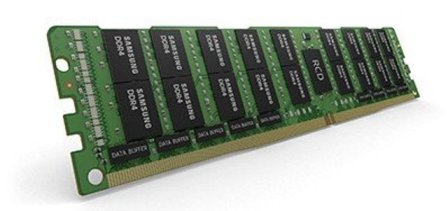
This RDIMM is a server-class DDR4-2933 ECC Registered memory module purpose-built for virtualization, in-memory databases, and enterprise workloads that demand uncompromising data integrity. Its quad-rank design maximizes capacity density per channel, while registered signaling preserves robust signal integrity and ECC actively corrects single-bit errors to ensure system stability in fully populated 24/7 server environments.
1. ECC error correction transparently detects and fixes single-bit memory faults, preserving the data integrity that financial ledgers and virtualized database servers depend on for non-stop operation.
2. The registered buffer re-drives command and address signals, making it possible to populate all DIMM slots in a dense rack server without signal collapse under heavy load.
3. A 16-gigabyte capacity per module gives infrastructure architects a cost-effective grain size to build balanced memory configurations for large-scale private clouds.
4. Quad Rank organization packs more DRAM devices onto the stick, maximizing per-slot density to host extra virtual machines while leaving expansion room for future scaling.
5. 2933 megatransfers per second bandwidth keeps multi-core server CPUs fed with data, accelerating in-memory analytics, caching tiers, and concurrent user requests.
When you deploy a virtualized cluster or an in-memory database, memory errors and downtime are not an option. The Samsung M393A2K40CB2-CVFCO is a 16GB DDR4-2933 Registered DIMM purpose-built to eliminate those risks. Its ECC engine constantly detects and corrects single-bit flips — silent data corruption that, in a hypervisor hosting dozens of VMs, could cascade into application crashes or data loss. The Registered architecture buffers command and address signals, allowing the platform to scale to quad-rank configurations without signal degradation, so you can populate all channels and maintain rock-solid stability under heavy multi-DIMM loads. With quad-rank organization, the module delivers denser internal bank interleaving; for an in-memory database like Redis or SAP HANA, this means higher sustained bandwidth and lower access latency when simultaneous read/write streams collide. The 2933 MT/s speed and 1.2V low-power design then ensure that every watt of your data-center power budget translates directly into throughput, not waste heat. In practice, this module lets you run more virtual machines per host and accelerate real-time analytics without worrying about memory-induced integrity failures or downtime.
General Virtualization
Deploy these 16GB registered ECC modules in balanced configurations across all memory channels to ensure consistent performance for virtual machines. A typical dual-socket server benefits from installing 8 identical DIMMs (128GB total) to comfortably host dozens of light-to-medium VMs, or 16 DIMMs (256GB) for higher consolidation ratios, relying on ECC to protect multi-tenant uptime.
In-Memory Database
Maximize both capacity and bandwidth by populating every memory channel with identical quad-rank RDIMMs. Start with at least 16 modules per server to keep entire datasets in DRAM and reduce storage I/O bottlenecks. Be aware that fully populating all slots with quad-rank DIMMs may force the memory controller to step down speed; consult the server’s population guidelines to balance capacity against clock rate.
High-Performance Computing (HPC)
For bandwidth-sensitive workloads, install one DIMM per channel to sustain the full 2933 MT/s data rate. A common node build uses 8 or 16 of these 16GB modules, achieving 128GB–256GB of local memory while keeping latencies predictable. Pair with careful NUMA domain binding to minimize remote memory accesses and maximize floating-point throughput.
Rigorously tested, this server memory is compatible with Dell PowerEdge R760, HPE ProLiant DL380 Gen11, Lenovo ThinkSystem SR650 V3, and more.
Q: Can I mix this M393A2K40CB2-CVFCO with other memory modules of different brands or speeds?
A: Mixing is not recommended for server environments. Matched modules ensure signal integrity and stability. Different brands, speeds, or ranks may cause POST failures or unpredictable ECC errors, voiding platform validation.
Q: Is this memory compatible with my Intel or AMD server platform?
A: This DDR4-2933 RDIMM is designed for Intel and AMD platforms supporting ECC Registered DIMMs. Verify with your server's Qualified Vendor List (QVL) for specific motherboard/system model compatibility, as validation varies by chipset and BIOS revision.
Q: What is the recommended DIMM population order for optimal performance?
A: Follow the server motherboard's population guide precisely, typically filling identical DIMMs per channel starting with slots farthest from the CPU. Balanced configurations across all memory channels maximize bandwidth and minimize latency for quad-rank modules.
Q: Does this module support overclocking or XMP profiles?
A: No. This is a JEDEC-compliant, ECC Registered server memory module operating at a fixed 1.2V. XMP profiles and overclocking are unsupported and would compromise data integrity and system stability in enterprise environments.
Q: What warranty and typical failure rate can I expect?
A: This module carries a one-year warranty. As enterprise-grade Samsung DRAM built to rigorous standards, it exhibits an extremely low annualized failure rate under specified operating conditions, ensuring reliable 24/7 operation in mission-critical servers.