











 Secure payments
Standard refund policy
Trade Assurance
Secure payments
Standard refund policy
Trade Assurance
| Product Type | Memory Module |
|---|---|
| Memory Capacity | 16 GB |
| Memory Technology | DDR4 |
| Product Voltage | 1.2 V |
| RAM Speed | 2933 MHz |
| RAM Standard | DDR4-2933/PC4-23400 |
| Error Identifying | ECC |
| Signal Type | Unbuffered |
| Column Access Strobe (CAS) | CL21 |
| Rank | Dual Rank x8 |
| Quantity of Pins | 288-pin |
| RAM Genre | UDIMM |
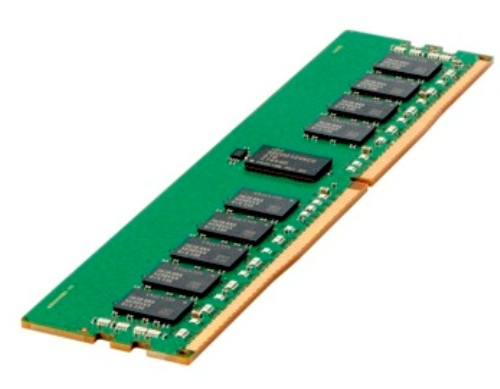
This 16GB DDR4-2933 ECC Unbuffered UDIMM is targeted at entry-level servers and professional workstations where data integrity is critical, making it ideal for file serving, light virtualization, and ZFS-based NAS appliances. Its dual-rank x8 configuration boosts effective memory bandwidth through bank interleaving while end-to-end ECC error correction safeguards against single-bit corruption without the added latency of a register buffer.
1. ECC memory continuously detects and corrects single-bit errors, safeguarding transactional data integrity and virtually eliminating silent corruption in always-on server environments.
2. The 16 GB capacity provides ample headroom for consolidating multiple lightweight virtual machines or containers, improving service density without overinvesting in hardware.
3. Running at a 2933 MT/s data rate, the module delivers high peak bandwidth that accelerates in-memory databases and reduces response tail latency under concurrent user loads.
4. The dual‑rank x8 organization interleaves memory banks for better channel utilization, keeping the memory controller busy and sustaining throughput during heavy multi‑tenant workloads.
5. An unbuffered UDIMM design reduces fundamental access latency and platform cost, making it a practical fit for entry‑level servers and micro‑data centers where power and budget are tightly controlled.
For professionals deploying entry-level servers, high-end NAS systems, or mission-critical workstations, the Samsung M391A2K43DB1-CVFQ0 is far more than just another 16GB DDR4 module—it is a purpose-built 288-pin Unbuffered ECC UDIMM that directly addresses the real anxieties of data integrity and consistent performance. The ECC (Error-Correcting Code) capability is your silent guardian against single-bit flips induced by background radiation or voltage noise; in a virtualized cluster hosting multiple business-essential services, this means one errant bit will never silently corrupt a customer database entry or crash a critical invoice run. Because it is unbuffered and runs at a native 2933 MT/s with CL21, the module strips away the extra latency of registered memory, which you will feel as snappier, more responsive in-memory databases like Redis or real-time analytics dashboards. Its dual-rank x8 organization intelligently interleaves accesses across two independent ranks on the same stick, yielding higher effective bandwidth that keeps frame rendering smooth during video transcoding and prevents stutter when multiple virtual machines compete for memory resources. Operating at a low 1.2V, it also helps keep thermals and power bills in check inside tightly packed SOHO servers or always-on microserver enclosures. In short, this memory eliminates the quiet fear of silent data corruption and slowdowns under pressure, delivering the unwavering throughput your work depends on.
General Virtualization
For a hypervisor hosting mixed workloads, balance density and cost. Populate at least four of these 16 GB ECC UDIMMs (64 GB total) across two memory channels in a dual-channel configuration to sustain moderate VM counts and leave expansion room. Favor identical dual-rank x8 modules per channel to avoid rank contention and ensure consistent performance during live migrations.
In-Memory Database
In-memory databases demand low latency and absolute data integrity. Fill every available channel with identical 16 GB modules — up to eight on mainstream micro-ATX server boards — to maximize capacity and interleaving bandwidth. The unbuffered ECC design guards against single-bit errors, and populating one dual-rank DIMM per channel keeps command rates low while preventing electrical loading issues.
HPC
Memory bandwidth is critical for tightly coupled HPC simulations. Install matched pairs of these 16 GB dual-rank UDIMMs across all memory channels (typically four or six) to sustain high throughput per core. A balanced 4×16 GB (64 GB) or 6×16 GB layout lets processors stream data with minimal bottlenecks; dual-rank modules deliver slightly better bandwidth than single-rank equivalents at the same frequency, benefiting vectorized workloads.
For server use, rigorously tested and compatible with Dell PowerEdge T340, HPE ProLiant DL20 Gen10, Lenovo ThinkSystem ST250.
Q: Can I mix this M391A2K43DB1-CVFQ0 with other memory modules of different brands or speeds?
A: Mixing is not recommended for server environments. The system will default to the slowest module's speed and may compromise ECC stability. Identical modules are required to maintain validated reliability and consistent performance.
Q: Is this memory compatible with my Intel Xeon or AMD EPYC server platform?
A: This DDR4-2933 ECC UDIMM is designed for platforms supporting buffered ECC UDIMMs, such as Intel Xeon E-2300 series or select AMD Ryzen Pro processors. Confirm support for 288-pin UDIMM with ECC in your board's QVL.
Q: What is the recommended DIMM population order for optimal performance with this module?
A: Populate one DIMM per channel first to balance memory bandwidth, then fill remaining slots. Because it is a dual-rank UDIMM, consult your server board's manual for the correct slot sequence to avoid performance impact.
Q: Does this module support overclocking or XMP profiles?
A: No. This is a JEDEC-standard ECC UDIMM running at fixed 2933MT/s. It does not support overclocking or XMP. The module prioritizes data integrity and stability, which are essential for server workloads.
Q: What warranty and typical failure rate can I expect?
A: This Samsung module includes a 1-year warranty. As an enterprise-grade component, it exhibits an annualized failure rate typically well below 0.5%, delivering the high uptime reliability critical for server operations.