











 Secure payments
Standard refund policy
Trade Assurance
Secure payments
Standard refund policy
Trade Assurance
| Product Type | Memory Module |
|---|---|
| Memory Capacity | 16 GB |
| Memory Technology | DDR4 |
| Product Voltage | 1.2 V |
| RAM Speed | 3200 MHz |
| RAM Standard | DDR4-3200/PC4-25600 |
| Error Identifying | ECC |
| Signal Type | Registered |
| Column Access Strobe (CAS) | CL24 |
| Rank | Single Rank |
| Quantity of Pins | 288-pin |
| RAM Genre | RDIMM |
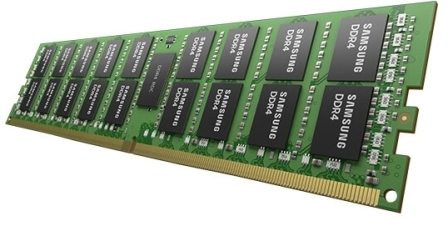
This RDIMM with ECC and registered signaling is designed for server-class platforms, making it ideal for memory-intensive workloads such as virtualization, in-memory databases, and mission-critical enterprise applications where data integrity is paramount. Its single-rank configuration with CL24 latency enables efficient memory controller loading and improved signal integrity, while the integrated ECC engine reliably detects and corrects single-bit errors to maintain system stability under continuous operation.
1. A per-module capacity sufficient for running memory-resident databases and caching tiers ensures critical hot data stays close to the CPU, slashing query latency in transactional workloads.
2. Sustained 3200 MT/s throughput supplies the bandwidth needed to saturate modern multi-core server processors, accelerating parallel data ingestion and real-time stream processing.
3. Hardware-integrated ECC transparently corrects single-bit memory errors, preserving weeks-long uptime and data accuracy for virtualized infrastructure and financial ledgers.
4. The registered buffer architecture isolates the memory controller from excessive electrical loading, making it possible to populate all channels at full speed in dense rack servers without signal degradation.
5. Single-rank design minimizes per-DIMM power draw and bus contention, allowing hyperscale deployments to pack more modules per node while maintaining consistent clock stability.
Based on the RDIMM specification and ECC support, the Samsung M393A2K40EB3-CWECQ is unmistakably a server-class memory module, engineered for mission-critical enterprise workloads where downtime is not an option. Its four core attributes directly translate into reliability and performance you can feel in your production environment.
First, ECC error correction is your silent guardian against single-bit memory flips that can corrupt financial transactions or silently degrade a database index. In a dense virtualization cluster running dozens of VMs, a single uncorrected error can cascade into host-level crashes—ECC prevents that, preserving your uptime SLAs. Second, the Registered signal buffer enables stable operation even with fully populated 12- or 24-slot servers, so you can confidently scale your in-memory database to multi-terabyte footprints without signal degradation. The DDR4-3200 speed then delivers 25.6 GB/s of bandwidth per channel, slashing query response times in real-time analytics platforms like SAP HANA or Redis workloads. Finally, the single-rank design at a low 1.2 V reduces electrical loading and thermal output, allowing your data center’s cooling budget to go further while keeping high-frequency transactions consistent and latency low.
General Virtualization
For a typical hypervisor hosting multiple VMs, density per socket is key. Populate memory channels evenly using identical 16GB RDIMMs—for a dual-socket server with eight channels per CPU, installing one DIMM per channel (16 × 16GB) yields 256GB, balancing capacity and bandwidth. Avoid mixing ranks within a channel to maintain stable 3200 MT/s operation.
In-Memory Database
Low latency and data integrity are critical. Configure all memory channels symmetrically with these registered ECC modules to sustain high throughput and eliminate uncorrected errors. Start with two DIMMs per channel (32GB per channel) and scale to the platform limit, prioritizing single-rank modules to keep command rates low and access times predictable.
High Performance Computing
HPC workloads demand maximum memory bandwidth. Populate one DIMM per channel across all available channels to achieve peak memory bandwidth per socket. Use identical 1.2V, single-rank RDIMMs to minimize electrical loading; this configuration supports the full DDR4-3200 speed and reduces jitter during sustained floating-point or MPI jobs.
Rigorously tested Samsung M393A2K40EB3-CWECQ DDR4-3200 RDIMM, compatible with Dell PowerEdge R750, HPE ProLiant DL380 Gen10 Plus, Lenovo ThinkSystem SR650 V2.
Q: Can I mix this M393A2K40EB3-CWECQ with other memory modules of different brands or speeds?
A: Mixing this Registered ECC RDIMM with different brands or speeds is not recommended. It can cause signal integrity issues and ECC errors, compromising server stability. Always use identical modules.
Q: Is this memory compatible with my server?
A: This 16GB DDR4-3200 Registered ECC RDIMM is designed for Intel Xeon Scalable and AMD EPYC platforms using chipsets like C620 or SP3. Verify your server supports 3200MT/s RDIMMs with 1.2V and CL24.
Q: What is the recommended DIMM population order for optimal performance?
A: For this single-rank RDIMM, populate one DIMM per memory channel first to maximize bandwidth. Balance modules evenly across CPU sockets following the server’s manual for optimal interleaving and performance.
Q: Does this module support overclocking or XMP profiles?
A: No. As a JEDEC-compliant server memory module, it runs at fixed DDR4-3200 timings (CL24). It does not support overclocking or XMP profiles, prioritizing data integrity and 24/7 operational reliability.
Q: What warranty and typical failure rate can I expect?
A: This Samsung RDIMM includes a 1-year warranty. Enterprise memory of this class typically exhibits an Annualized Failure Rate (AFR) below 0.2%, ensuring exceptional long-term reliability in mission-critical server environments.