











 Secure payments
Standard refund policy
Trade Assurance
Secure payments
Standard refund policy
Trade Assurance
| Product Type | Memory Module |
|---|---|
| Compliance Standards | RoHS,WEEE |
| Memory Capacity | 16 GB |
| Memory Technology | DDR4 |
| Product Voltage | 1.2 V |
| RAM Speed | 3200 MHz |
| RAM Standard | DDR4-3200/PC4-25600 |
| Error Identifying | ECC |
| Signal Type | Registered |
| Column Access Strobe (CAS) | CL22 |
| Rank | Dual Rank x8 |
| Quantity of Pins | 288-pin |
| RAM Genre | RDIMM |
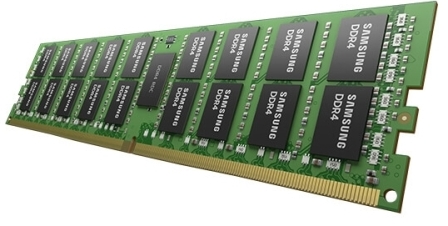
Designed for server platforms, this DDR4-3200 registered ECC memory module ensures data integrity in virtualized environments and memory-intensive databases. Its dual-rank x8 organization and CL22 latency optimize memory bandwidth and bank interleaving, while the registered signal type enhances stability in multi-DIMM configurations.
1. Registered signal type decouples the command bus from heavy DRAM loads, enabling massive memory configurations that keep virtualized clusters stable during peak provisioning.
2. ECC error identification silently corrects single-bit memory faults in real time, preventing silent data corruption in transactional databases and long-latency analytics jobs.
3. Dual Rank x8 organization amplifies bank-level parallelism, driving consistently high bandwidth that preserves VM response times even as consolidation density scales.
4. 3200 MT/s transfer speed shrinks hot-data access gaps, accelerating in-memory caches and reducing latency spikes for latency-sensitive enterprise workloads.
5. 1.2 V DRAM voltage lowers overall rack thermal footprint and power draw, directly improving data center PUE and long-term TCO for large-scale deployments.
In enterprise computing, unplanned downtime or data corruption is not an option. The Samsung M393A2K43DB3-CWEGY is a 16GB DDR4-3200 RDIMM engineered specifically for servers where integrity and scalability define operational success. Its four core attributes directly address the real pain points of IT infrastructure managers.
First, ECC error correction continuously detects and corrects single-bit memory errors, which is critical in an in-memory database like Redis or SAP HANA. A silent bit flip caused by background radiation can corrupt a financial transaction ledger or a customer record; ECC ensures that every calculation remains mathematically precise without crashing the instance. Second, the registered signal type buffers the command and address lines, stabilizing the memory controller when you populate all 24 DIMM slots in a 2U virtualization host. This allows you to confidently run dozens of virtual machines without signal degradation, avoiding the sporadic boot failures that plague unbuffered modules at high densities. Third, the dual-rank x8 organization increases bank-level parallelism, feeding data to the CPU more efficiently during heavy consolidation workloads, which directly translates into higher VM density per socket. Finally, operating at a native 1.2V with a 3200MT/s transfer rate, this module delivers the high bandwidth demanded by real-time analytics while keeping thermals and power budgets under control in a packed data center rack. For your virtualized clusters and mission-critical database servers, this memory transforms hardware reliability from a hope into a guarantee.
General Virtualization
For general virtualization hosts, balance capacity and channel population to maximize VM density without exhausting budget. With 16 GB DDR4‑3200 RDIMMs, a typical dual‑socket server using 8 memory channels per CPU benefits from installing one DIMM per channel (16 modules total) for 256 GB of available memory. This configuration maintains balanced memory interleaving and leaves room to scale by populating the second DIMM per channel later.
In-Memory Database
In‑memory databases like SAP HANA or Redis demand large, low‑latency footprints to keep entire datasets in RAM. Populate all memory channels with these 16 GB ECC RDIMMs, aiming for maximum capacity per node—often 24 or more modules in a dual‑socket system to reach 384 GB and beyond. ECC protection is critical here to prevent data corruption, and dual‑rank x8 modules help sustain bandwidth under heavy read/write loads.
High-Performance Computing (HPC)
HPC workloads rely on high memory bandwidth and predictable latency. Install one 16 GB RDIMM per channel across all available memory channels to achieve a balanced, high‑throughput setup. For a dual‑socket compute node, 12 to 16 modules (192–256 GB) deliver strong bandwidth while keeping capacity sufficient for most simulation and modeling tasks. Opt for uniform dual‑rank DIMMs to maximize rank interleaving and avoid NUMA imbalances.
Rigorously tested server memory, compatible with Dell PowerEdge R750, HPE ProLiant DL380 Gen10 Plus, and Lenovo ThinkSystem SR650 V2.
Q: Can I mix this M393A2K43DB3-CWEGY with other memory modules of different brands or speeds?
A: Mixing with different brands or speeds is not recommended for registered ECC memory. This can lead to signal integrity issues, system instability, or failure to POST. Always populate identical part numbers for validated, mission-critical server reliability.
Q: Is this memory compatible with my system?
A: This DDR4-3200 ECC RDIMM is designed for server platforms supporting Intel Xeon Scalable or AMD EPYC processors. Verify your server board’s qualified vendor list (QVL) for this specific Samsung module to ensure fully validated compatibility and proper seating in 288-pin slots.
Q: What is the recommended DIMM population order for optimal performance?
A: Follow your server motherboard manual. Typically, balance identical DIMMs across all memory channels, populating the farthest white slots first. This dual-rank x8 RDIMM achieves best throughput with symmetric configurations and one DIMM per channel.
Q: Does this module support overclocking or XMP profiles?
A: No. As an enterprise-grade registered DIMM, it operates strictly at JEDEC-standard DDR4-3200 with CL22 timing. XMP and overclocking are disabled to guarantee 24/7 data integrity and maximum uptime in server environments.
Q: What warranty and typical failure rate can I expect?
A: This Samsung module includes a one-year warranty. It delivers a typical annualized failure rate (AFR) below 0.5%, engineered with rigorous JEDEC testing and stringent binning for exceptional long-term reliability in demanding data centers.