











 Secure payments
Standard refund policy
Trade Assurance
Secure payments
Standard refund policy
Trade Assurance
| Product Type | Memory Module |
|---|---|
| Compliance Standards | |
| Memory Capacity | 16 GB |
| Memory Technology | DDR4 |
| Product Voltage | 1.2 V |
| RAM Speed | 3200 MHz |
| RAM Standard | DDR4-3200/PC4-25600 |
| Error Identifying | ECC |
| Signal Type | Registered |
| Column Access Strobe (CAS) | CL22 |
| Rank | Single Rank x4 |
| Quantity of Pins | 288-pin |
| RAM Genre | RDIMM |
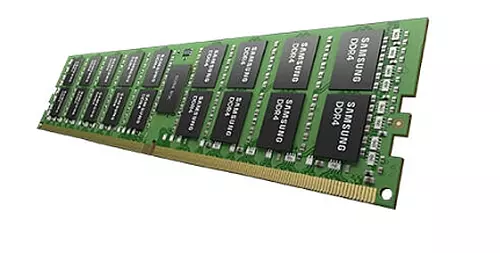
Designed for enterprise servers, this 16GB DDR4-3200 RDIMM with ECC and registered signaling delivers critical data integrity and signal stability for memory-intensive workloads such as virtualization and in-memory databases. The single-rank x4 configuration and CL22 latency offer a balanced combination of high bandwidth access efficiency and reduced electrical loading, enabling reliable operation in dense, multi-DIMM server deployments.
1. With 16 GB capacity per module, this RDIMM enables dense memory configurations in virtualization hosts, allowing more VMs to run concurrently without swapping to slower storage.
2. DDR4 technology provides a mature balance of bandwidth and power efficiency, ensuring stable operation in always-on server environments where thermal and electrical margins are tightly controlled.
3. The 3200 MT/s transfer rate boosts memory bandwidth for data-intensive workloads like in-memory databases, translating directly to faster query responses under sustained load.
4. ECC error correction continuously detects and corrects single-bit memory faults, dramatically reducing the risk of silent data corruption in financial transactions or critical analytics.
5. Registered signal buffering stabilizes high-capacity memory channels by reducing electrical load on the memory controller, which is essential for maintaining signal integrity in multi-DIMM server platforms.
The Samsung M393A2K40DB3-CWECO is a server-class DDR4 RDIMM engineered for mission-critical enterprise workloads, and its design directly addresses the real-world demands of virtualized clusters and in-memory databases. In a virtualized cluster running dozens of VMs per host, a single undetected memory error can corrupt hypervisor state or silently flip a financial transaction bit. The module’s ECC engine catches and corrects these single-bit errors immediately, preserving data integrity and eliminating costly failovers. Meanwhile, the registered buffer decouples the memory controller from the DRAM modules, enabling you to fully populate all 24 DIMM slots in a 2U server without signal degradation. This translates to stable, large-capacity memory pools for dense virtualization. When the same server runs an in-memory database like SAP HANA or Redis, the 3200 MT/s speed delivers 25.6 GB/s of bandwidth per channel, slashing query latency and keeping real-time analytics responsive under heavy concurrency. The low 1.2V operating voltage further reduces power and cooling overhead across a rack full of nodes, directly shrinking operational expenses without compromising the relentless stability these applications demand.
General Virtualization
For general virtualization hosts, balanced capacity and reliability are essential. Deploying six or eight 16GB RDIMMs (96–128GB total) across multi-channel memory controllers ensures ample headroom for dozens of lightweight VMs while leveraging ECC protection. Populate identical modules symmetrically per memory channel—typically two DIMMs per channel on dual-socket servers—to maintain balanced memory access and satisfy common hypervisor overcommit ratios.
In-Memory Database
In-memory databases like SAP HANA or Redis demand maximum capacity and low latency. Fully populate all available DIMM slots with this 16GB DDR4-3200 RDIMM to build large, reliable memory pools; a 24-slot dual-socket server yields 384GB, suitable for moderate in-memory workloads. Use a balanced configuration across all memory channels to sustain high throughput, and favor single-rank x4 modules for optimal signal integrity at 3200MT/s, minimizing database stall time.
High-Performance Computing (HPC)
HPC workloads require high bandwidth and consistent latency under heavy load. Configure one 16GB RDIMM per memory channel—typically eight modules per socket—to achieve full channel interleaving and peak aggregate bandwidth for memory-bound simulations. Stick to identical single-rank registered DIMMs at 3200MT/s; avoid mixing ranks or capacities to prevent memory speed degradation. This approach keeps large CFD or climate modeling datasets close to the CPU while ECC guards against silent data corruption across long-running parallel jobs.
Rigorously tested server RDIMM: compatible with Dell PowerEdge R760, HPE ProLiant DL380 Gen11, Lenovo ThinkSystem SR650 V3, and more.
Q: Can I mix this M393A2K40DB3-CWECO with other memory modules of different brands or speeds?
A: Mixing RDIMMs of different brands or speeds is strongly discouraged. It can cause signal integrity issues, system instability, and may disable ECC functionality. For reliable operation, use identical modules.
Q: Is this memory compatible with my system?
A: This DDR4-3200 ECC Registered DIMM is compatible with servers using Intel Xeon Scalable or AMD EPYC platforms that support 288-pin RDIMMs. Verify your motherboard's QVL and support for 16GB single-rank modules.
Q: What is the recommended DIMM population order for optimal performance?
A: Follow your server motherboard manual. Typically, populate the farthest slot from the CPU per channel first, balancing across memory channels to maximize bandwidth and enable interleaving.
Q: Does this module support overclocking or XMP profiles?
A: No. As an enterprise server RDIMM, it adheres to JEDEC DDR4-3200 standards with no XMP or overclocking support. It is designed for stability at CL22-22-22 latencies.
Q: What warranty and typical failure rate can I expect?
A: This module includes a 1-year warranty. Enterprise-grade RDIMMs have a very low annualized failure rate, typically below 0.5%, under proper operating conditions and cooling.