











 Secure payments
Standard refund policy
Trade Assurance
Secure payments
Standard refund policy
Trade Assurance
| Model | M393B2G70QH0-CMA08 |
|---|---|
| Product Type | Memory Module |
| Compliance Standards | EU RoHS,FCC |
| Memory Capacity | 16 GB |
| Memory Technology | DDR3 |
| Product Voltage | 1.5V |
| RAM Speed | 1866MHz |
| RAM Standard | DDR3-1866/PC3-14900 |
| Error Identifying | ECC |
| Signal Type | Registered |
| Column Access Strobe (CAS) | CL13 |
| Rank | Dual Rank x4 |
| Quantity of Pins | 240-pin |
| RAM Genre | RDIMM |
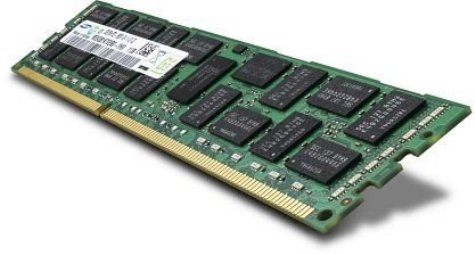
Designed as a DDR3-1866 Registered ECC RDIMM, this module is purpose-built for legacy server platforms requiring high data integrity in virtualized environments and memory-intensive database workloads. Its dual-rank x4 organization and CL13 latency strike an optimal balance between capacity scalability and signal stability under sustained buffered access, while ECC protection ensures end-to-end data reliability in mission-critical deployments.
1. Registered signal type buffers command and address signals, maintaining rock-solid signal integrity across densely populated server boards where dozens of DIMMs operate concurrently.
2. ECC error correction continuously detects and fixes single-bit memory faults in real time, safeguarding transactional databases and in-memory caches from silent data corruption.
3. 16GB capacity per module strikes a balance between memory density and cost, enabling high total RAM footprints in virtualization hosts without sacrificing available DIMM slots.
4. 1866MHz speed delivers a substantial memory bandwidth pipeline, accelerating large dataset processing and reducing latency in scale-out analytics clusters.
5. Dual Rank x4 organization leverages rank interleaving to overlap memory access cycles, elevating sustained throughput for multi-tenant cloud workloads under heavy I/O pressure.
When you depend on a virtualized cluster or an in-memory database to keep your business alive, the Samsung M393B2G70QH0-CMA08 RDIMM is not just a spec sheet—it is your safety net. This 16 GB DDR3-1866 registered module directly addresses the failures that keep IT teams up at night. Its ECC engine silently corrects single-bit errors caused by cosmic radiation or electrical noise, so a flipped bit cannot cascade into a corrupted virtual disk image or a silent data loss inside a Redis instance. The registered signal buffer and dual-rank x4 organization let you fully populate a server with six or twelve DIMMs without sacrificing signal integrity. In a dense virtualization host running dozens of VMs, that means stable, predictable memory access even when every guest is thrashing its allocation. The 1866 MT/s speed and CL13 latency keep the pipeline fed for write-heavy online transaction processing, where milliseconds of memory stall translate directly into lost revenue. Instead of buying raw capacity, you are investing in runtime confidence: fewer unexplained crashes, safer in-memory analytics, and a platform that holds its ground when workloads spike unpredictably.
General Virtualization
For a standard hypervisor host running multiple VMs, populate the server with six to eight of these 16GB RDIMMs (96–128 GB total). Distribute modules evenly across memory channels to preserve balanced interleaving and consistent latency under mixed loads. Leave at least two DIMM slots free per CPU to accommodate future growth without replacing existing capacity.
In-Memory Database
Maximize capacity per channel by installing all 24 DIMM slots (if the platform supports it) for a total of 384 GB, using identical M393B2G70QH0 modules. This dual-rank, x4 configuration delivers the high bank count and rank interleaving that accelerate large in-memory datasets and reduce transaction latency. Prioritize population of all channels to avoid NUMA penalties on multi-socket database nodes.
High-Performance Computing
Configure twelve modules (192 GB) per node, spreading six per CPU across both memory risers for optimal bandwidth. The registered ECC architecture and 1866 MT/s speed ensure data integrity during large-scale simulations, while the dual-rank design sustains throughput under heavy floating-point bursts. Validate one DIMM per channel first, then add the second rank pair only if workload profiles show sustained memory pressure.
Rigorously tested DDR3 server memory. Compatible with Dell PowerEdge R720, HP ProLiant DL380p Gen8, Lenovo System x3650 M4.
Q: Can I mix this M393B2G70QH0-CMA08 with other memory modules of different brands or speeds?
A: Mixing brands or speeds is not recommended for server environments. Even similar specs may introduce subtle timing discrepancies, risking data integrity. For guaranteed stability, populate exclusively with identical M393B2G70QH0-CMA08 RDIMMs.
Q: Is this memory compatible with my system?
A: This DDR3-1866 Registered ECC RDIMM is compatible with select Intel Xeon E5-2600 v2 and AMD Opteron 6300 series platforms. Please verify your server board's Qualified Vendor List (QVL) and 240-pin DDR3 RDIMM support to ensure proper operation.
Q: What is the recommended DIMM population order for optimal performance?
A: Populate identical DIMMs per channel, starting with the primary slots (often blue) to balance memory interleaving. Consult your server motherboard manual for specific slot numbering; typically, install one DIMM per channel first for maximum bandwidth.
Q: Does this module support overclocking or XMP profiles?
A: No. This server-grade RDIMM adheres strictly to JEDEC DDR3-1866 specifications. It does not support XMP or overclocking, as mission-critical servers demand absolute signal integrity and 24/7 error-free operation without performance tuning.
Q: What warranty and typical failure rate can I expect?
A: This module includes a one-year warranty. Server-class memory exhibits an extremely low annualized failure rate, typically under 0.5% in controlled environments. Proper cooling and handling ensure long-term, reliable service life.