











 Secure payments
Standard refund policy
Trade Assurance
Secure payments
Standard refund policy
Trade Assurance
| Product Type | Memory Module |
|---|---|
| Compliance Standards | |
| Memory Capacity | 16 GB |
| Memory Technology | DDR4 |
| Product Voltage | 1.2V |
| RAM Speed | 2666MHz |
| RAM Standard | DDR4-2666/PC4-21300 |
| Error Identifying | ECC |
| Signal Type | Registered |
| Column Access Strobe (CAS) | CL19 |
| Rank | Single Rank x4 |
| Quantity of Pins | 288-pin |
| RAM Genre | RDIMM |
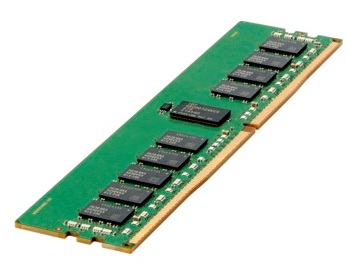
This RDIMM is engineered for enterprise servers and workstations handling virtualization, in-memory databases, and mission-critical applications where data integrity is paramount. Its registered signal architecture with ECC ensures stable multi-DIMM operation at 2666 MT/s, while the single-rank x4 organization and CL19 latency optimize memory bandwidth and reduce electrical loading for dense, scalable deployments.
1. Error-correcting code memory continuously scrubs and repairs single-bit errors, preserving data integrity for transactional databases and financial workloads that cannot tolerate silent corruption.
2. Registered signal buffering stabilizes command and address lines across fully loaded server boards, enabling massive memory footprints for dense virtualization without compromising signal integrity.
3. Capacity of sixteen gigabytes per module allows data center operators to reach higher total memory ceilings within limited DIMM slots, supporting more concurrent containers and virtual machines per physical node.
4. A transfer rate of twenty-six hundred megahertz delivers ample throughput for in-memory caching and real-time analytics, accelerating query responses under sustained multi-tenant access.
5. Single-rank organization reduces electrical loading on the channel, helping servers maintain consistent clock frequencies across all populated slots when scaling up capacity.
The Samsung M393A2K40BB1-CTD is a server-grade DDR4 RDIMM, purpose-built for enterprise workloads where reliability directly impacts revenue. Its four defining characteristics translate into concrete operational advantages. ECC error correction silently detects and corrects single-bit memory flips caused by background radiation, preventing silent data corruption in an in-memory database like Redis or SAP HANA—a single uncaught bit error could otherwise cascade into a corrupted transaction log or a failed financial reconciliation. The registered signal buffer re-drives address and command lines, enabling a virtualization host to populate all 24 DIMM slots per server with 16GB modules without signal degradation; this directly supports dense VM farms that need massive, stable memory pools. The Single Rank x4 organization strikes a critical balance: x4 devices provide wide chip-level error coverage, while a single rank minimizes inter-rank timing conflicts, sustaining consistent 21.3 GB/s bandwidth for multiple concurrent database queries under heavy OLTP loads. Finally, the 1.2V operating voltage reduces power draw across a hyperscale cluster by over 15% compared to earlier generations, cutting cooling costs and improving energy efficiency per terabyte of memory deployed. In a world where unplanned downtime costs thousands per minute, this module turns raw specifications into resilient, cost-effective infrastructure.
General Virtualization
For a typical hypervisor hosting multiple VMs, populate all memory channels symmetrically to maximize bandwidth. Deploy six or eight identical 16GB RDIMMs per CPU to achieve 96–128GB, balancing density with cost. Leave at least one DIMM slot per channel free to allow future expansion without disrupting balanced configurations.
In-Memory Database
Latency-sensitive workloads like Redis or SAP HANA demand maximum capacity at the lowest latency. Fully populate every channel with these single-rank x4 16GB RDIMMs to reach 256GB or more per socket, while leveraging the CL19 CAS and registered ECC for data integrity. Avoid mixing ranks within a channel to maintain signal quality under heavy read/write loads.
High-Performance Computing
HPC clusters benefit from consistent, error-corrected throughput. Install 8 or 12 identical modules per dual-socket node to saturate all memory controllers, delivering the cumulative bandwidth critical for parallel simulations. The 1.2V DDR4-2666 registered design ensures stable operation across long-running jobs, and ECC prevents silent data corruption during large-scale computations.
Rigorously tested and validated for compatibility with Dell PowerEdge R760, HPE ProLiant DL380 Gen10, Lenovo ThinkSystem SR650, and more.
Q: Can I mix this M393A2K40BB1-CTD with other memory modules of different brands or speeds?
A: Mixing is strongly discouraged in server environments. Different brands or speeds can cause signal integrity issues and disable ECC functionality, compromising system stability. Always install identical RDIMMs with the same rank and CAS latency for validated uptime.
Q: Is this memory compatible with my system?
A: This RDIMM is designed for server platforms using Intel Xeon Scalable or AMD EPYC processors that support DDR4-2666 Registered ECC memory. Please consult your motherboard or server system’s qualified vendor list (QVL) for specific compatibility confirmation.
Q: What is the recommended DIMM population order for optimal performance?
A: For dual-socket servers, balance identical modules across all memory channels per CPU. Typically populate white slots first, then black, following the motherboard manual to ensure interleaved access and full channel bandwidth with 1 DIMM per channel.
Q: Does this module support overclocking or XMP profiles?
A: No. This is a JEDEC-compliant registered ECC module built for mission-critical reliability, not enthusiast overclocking. It does not support XMP. The fixed DRAM timings and voltage ensure data integrity in continuous 24/7 operation.
Q: What warranty and typical failure rate can I expect?
A: It comes with a 1-year warranty. As a server-grade Samsung RDIMM, it is manufactured to exacting standards with an extremely low annualized failure rate (AFR), ideally suited for data centers demanding high reliability and longevity.