











 Secure payments
Standard refund policy
Trade Assurance
Secure payments
Standard refund policy
Trade Assurance
| Product Type | Memory Module |
|---|---|
| Memory Capacity | 24 GB |
| Memory Technology | DDR3 |
| Product Voltage | 1.35V |
| RAM Speed | 1333MHz |
| RAM Standard | DDR3-1333/PC3-10600 |
| Error Identifying | ECC |
| Signal Type | Registered |
| Column Access Strobe (CAS) | CL9 |
| Rank | Triple Rank x4 |
| Quantity of Pins | 240-pin |
| RAM Genre | RDIMM |
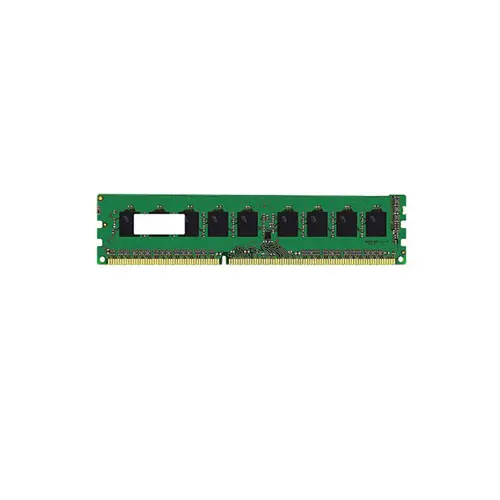
This is a server-class DDR3 Registered DIMM with ECC, purpose-built for legacy enterprise platforms requiring high data integrity and stable multi-DIMM operation. Its triple-rank x4 configuration and registered signaling enable dense 24GB capacity per module at a low 1.35V, making it well-suited for memory-intensive virtualization or in-memory database workloads on older Xeon-based systems where low CAS 9 latency helps offset the rank-induced bus loading.
1. ECC protection detects and corrects single-bit memory errors in real time, safeguarding transactional integrity for mission-critical databases and financial applications.
2. Registered signal buffering stabilizes high-density memory arrays, enabling reliable scaling of enterprise servers without electrical loading penalties.
3. 24GB capacity per module expands virtualization headroom, allowing more concurrent virtual machines while preserving responsive application delivery.
4. Triple Rank x4 organization increases memory bank interleaving, maximizing bus utilization for sustained throughput in analytics and rendering clusters.
5. 1.35V low-voltage operation cuts datacenter power consumption and waste heat, directly lowering cooling costs and total cost of ownership.
The Samsung M393B3G70BV0-YH9 is a server-grade Registered DIMM (RDIMM) built for mission-critical enterprise workloads, and its four defining characteristics translate directly into tangible operational benefits. First, the Error-Correcting Code (ECC) capability is non-negotiable in data centers: a single bit flip caused by cosmic radiation can corrupt financial transactions or silent data in a virtualized cluster, leading to costly downtime. Paired with the registered signal type, the on-module buffer stabilizes command and address lines, enabling a dense virtualization host to run dozens of virtual machines without signal degradation across all 24 GB of memory, even when fully populated. Second, the triple-rank x4 organization and CL9 latency at 1333 MHz deliver predictable bandwidth for in-memory databases like Redis or SAP HANA—each rank interleaves accesses, boosting throughput under heavy concurrent queries. Finally, operating at 1.35 V instead of the standard 1.5 V reduces thermal load inside a tightly packed 1U rack chassis, directly lowering cooling costs and improving long-term reliability for a 24/7 database cluster. Together, these features ensure that your consolidated infrastructure maintains data integrity, scales smoothly, and sustains performance where consumer memory would fail.
General Virtualization
For a typical dual-socket virtualization host using triple-channel Xeon architectures, install six identical 24 GB DDR3-1333 RDIMMs (three per CPU). This yields 144 GB of registered ECC capacity with balanced interleaving, comfortably supporting 20–30 moderate VMs while maintaining memory bandwidth. The 1.35 V low-voltage design further reduces power draw in dense deployments.
In-Memory Database
Maximize capacity by populating all DIMM slots with these 24 GB triple-rank modules—up to 12 modules in a dual-socket server for 288 GB total. The registered ECC and low CAS latency (CL9) suit latency-sensitive, data-intensive workloads like Redis or SAP HANA. Pair with CPUs featuring large L3 caches to offset DDR3-1333 transfer rates when handling large datasets.
High-Performance Computing
Populate one DIMM per channel across all quad-channel memory banks (e.g., eight modules for dual-socket, 192 GB) to achieve peak aggregate bandwidth. The 1.35 V RDIMMs minimize thermal load during sustained number-crunching, and the registered signal path ensures stability under heavy simultaneous access patterns common in MPI-based simulations. Avoid mixing ranks within the same channel to maintain optimal command timing.
Rigorously tested, this server RDIMM is validated for Dell PowerEdge R720, HPE ProLiant DL380p Gen8, and Cisco UCS B200 M3.
Q: Can I mix this M393B3G70BV0-YH9 with other memory modules of different brands or speeds?
A: Mixing is not recommended. Registered ECC RDIMMs require matched ranks, timings, and voltage for stable operation in multi-DIMM server platforms. Mismatched modules may cause POST failures or data integrity issues.
Q: Is this memory compatible with my system?
A: This DDR3-1333 PC3-10600 Registered ECC RDIMM is designed for dual-socket Intel Xeon E5-2400/2600 v1/v2 servers with C600-series chipsets and AMD Opteron 6300-series platforms. Verify quad-channel support and 1.35V LV-RDIMM capability in your board’s QVL.
Q: What is the recommended DIMM population order for optimal performance?
A: Populate identical RDIMMs per channel, starting with the farthest memory slots from the CPU. For triple-rank x4 24GB modules, install in sets of three to enable triple-channel mode on suitable platforms. Refer to your server’s slot numbering guide.
Q: Does this module support overclocking or XMP profiles?
A: No. This is a JEDEC-compliant server-grade RDIMM operating at fixed 1333MHz CL9. ECC Registered memory does not support XMP profiles, overclocking, or voltage adjustments; it is validated for stable, error-corrected operation at rated specifications only.
Q: What warranty and typical failure rate can I expect?
A: This Samsung original module includes a 1-year warranty. Enterprise RDIMMs typically exhibit an annualized failure rate (AFR) under 0.5% when operated within environmental specs, making them extremely reliable for 24/7 server workloads.