











 Secure payments
Standard refund policy
Trade Assurance
Secure payments
Standard refund policy
Trade Assurance
| Product Type | Memory Module |
|---|---|
| Memory Capacity | 256 GB |
| Memory Technology | DDR4 |
| Product Voltage | 1.2 V |
| RAM Speed | 2933 MHz |
| RAM Standard | DDR4-2933/PC4-23400 |
| Error Identifying | ECC |
| Signal Type | Registered |
| Column Access Strobe (CAS) | CL21 |
| Rank | Octal Rank x4 |
| Quantity of Pins | 288-pin |
| RAM Genre | RDIMM |
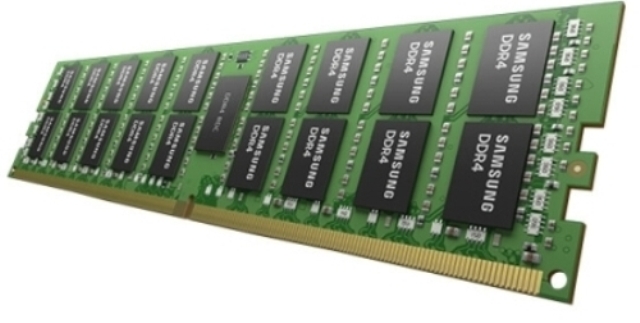
This 256GB DDR4-2933 RDIMM with Octal Rank x4 architecture delivers maximum density per slot for memory-intensive server workloads, while its registered signaling and ECC provide critical signal integrity and end-to-end data protection in large-scale virtualization and in-memory database deployments.
1. A massive memory capacity enables extreme server consolidation, letting you run hundreds of virtual machines or containers simultaneously without swapping to slower storage.
2. Octal Rank x4 organization packs the highest density per DIMM slot, keeping memory channels fully utilized and sustaining throughput under heavy in-memory database workloads.
3. The registered buffer chip stabilizes signal integrity across fully populated server boards, eliminating the electrical loading issues that would crash unregistered modules in 24/7 operations.
4. End-to-end ECC error correction proactively detects and fixes single-bit data corruption, safeguarding financial ledgers, scientific simulations, and hypervisor integrity against silent errors.
5. DDR4-2933 throughput provides the bandwidth headroom to feed multi-core server CPUs, accelerating real-time analytics and large-scale in-memory processing without stalling pipelines.
When you deploy a single 256GB DDR4-2933 RDIMM like the Samsung M386ABG40M5B-CYFC0, you are not just adding capacity—you are directly confronting the real-world failure points that keep data center architects awake at night. In a dense virtualization cluster, where dozens of VMs share a physical host, a silent bit-flip in a hypervisor’s memory structure can cascade into cross-tenant corruption. The module’s ECC engine detects and corrects single-bit errors on the fly, turning a potential financial transaction rollback into a non-event. Its registered architecture buffers command and address signals, which is essential when you populate all available channels with high-density Octal Rank x4 modules; without that clocked re-driving, electrical loading would force you to throttle speeds or sacrifice stability precisely when you are running an in-memory database like SAP HANA that demands deterministic latency at terabyte scale. That same 1.2V low-power design, paired with true 2933 MT/s bandwidth and CL21 access timing, sustains a massive analytical workload while keeping thermal margins in check—meaning a fully loaded 2TB server node can run complex OLAP queries without throttling under the rack’s power ceiling. Every aspect of this module translates directly into fewer application stalls, smaller maintenance windows, and a lower total cost of ownership for memory-bound enterprise workloads.
General Virtualization
A single 256GB Registered DIMM delivers massive capacity per slot, allowing dense consolidation of VMs with minimal physical footprint. For dual-socket servers, populate at least one DIMM per memory channel (e.g., 8 modules per socket) to maintain balanced NUMA performance, achieving terabyte-scale pools without sacrificing DDR4-2933 speed when limited to one DIMM per channel.
In-Memory Database
Low-latency databases demand both capacity and reliability; ECC protection on this octal-rank module guards against data corruption during intense writes. Configure a symmetric multi-channel population (one 256GB DIMM per channel on both sockets) to maximize interleaving, ideally targeting 2TB total capacity per server to cache entire datasets and reduce storage I/O.
High-Performance Computing
HPC workloads benefit from high memory bandwidth; use a balanced configuration with identical DIMMs across all channels to avoid performance drops from rank imbalance. With 256GB modules, a single DIMM per channel approach sustains full 2933 MT/s throughput, and for capacity-bound simulations, doubling to two DIMMs per channel remains viable with a slight frequency compromise.
Rigorously tested, compatible with Dell PowerEdge R750, HPE ProLiant DL380 Gen10, Lenovo ThinkSystem SR650 V2, and more.
Q: Can I mix this M386ABG40M5B-CYFC0 with other memory modules of different brands or speeds?
A: We strongly advise against mixing brands or speeds. Mismatched RDIMMs may cause instability, signal integrity issues, or default to the lowest common speed. Always use identical modules for validated platform support.
Q: Is this memory compatible with my system?
A: This 256GB DDR4-2933 Registered ECC module is compatible with Intel Xeon Scalable and AMD EPYC platforms featuring 288-pin slots. Verify your server motherboard supports octal-rank RDIMMs at 2933 MT/s.
Q: What is the recommended DIMM population order for optimal performance?
A: Refer to your server motherboard manual. Typically, populate each memory channel starting from the furthest slot from the CPU. Balance capacity across identical channels for optimal interleaving and performance.
Q: Does this module support overclocking or XMP profiles?
A: No. This enterprise Registered DIMM conforms to JEDEC DDR4-2933 standards only. It does not support consumer overclocking features or XMP profiles, ensuring reliable, deterministic data center operation.
Q: What warranty and typical failure rate can I expect?
A: This module includes a one-year warranty. As a server-grade RDIMM with ECC, it delivers a very low annualized failure rate (AFR) under specified conditions, typically below 0.5% in well-maintained environments.