











 Secure payments
Standard refund policy
Trade Assurance
Secure payments
Standard refund policy
Trade Assurance
| Product Type | Memory Module |
|---|---|
| Memory Capacity | 256 GB |
| Memory Technology | DDR4 |
| Product Voltage | 1.2 V |
| RAM Speed | 2933 MHz |
| RAM Standard | DDR4-2933/PC4-23400 |
| Error Identifying | ECC |
| Signal Type | Registered |
| Column Access Strobe (CAS) | CL21 |
| Rank | Octal Rank x4 |
| Quantity of Pins | 288-pin |
| RAM Genre | RDIMM |
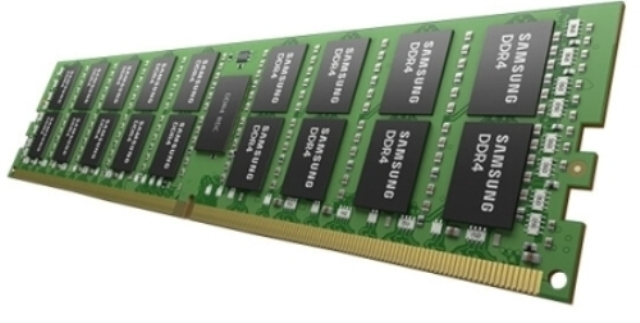
This 256GB DDR4-2933 RDIMM leverages an octal-rank x4 organization to deliver massive memory density per channel, making it optimal for in-memory databases and large-scale virtualization workloads where capacity and data integrity are non-negotiable. Its registered signal architecture combined with ECC at a standard 1.2V operating voltage ensures reliable signal integrity and single-bit error correction across heavily loaded server platforms.
1. An expansive memory footprint accommodates large-scale virtualization and in-memory databases, driving extreme consolidation ratios without performance trade-offs.
2. On-die ECC protection guarantees data integrity by silently correcting single-bit errors, a non-negotiable for financial, scientific, and mission-critical workloads.
3. Registered signal architecture stabilizes command and address buses, enabling densely populated server boards to scale memory without jeopardizing electrical reliability.
4. The octal-rank x4 organization leverages deep interleaving to saturate memory channels, delivering consistent low-latency access under heavy multi-tenant concurrency.
5. High-throughput DDR4 interface supplies the bandwidth headroom needed to keep real-time analytics and transactional engines responsive during peak loads.
When you are running a mission‑critical VMware cluster or an in‑memory database like SAP HANA, a single undetected bit‑flip can corrupt transactions and bring operations to a halt. The Samsung M386ABG40M5B‑CYFBQ, a 256 GB DDR4‑2933 registered RDIMM, directly addresses that reality. Its end‑to‑end ECC silently corrects single‑bit errors and detects multi‑bit faults, keeping your virtualized workloads and financial computations accurate under 24/7 pressure. Paired with registered signal buffering, this module lets you populate all channels in a 2U server without the bus instability that would plague unbuffered DIMMs, so you can confidently scale VM density or expand database heaps. Because it is built as an octal‑rank x4 design, the memory controller accesses eight independent banks of DRAM simultaneously, which dramatically lowers queuing delays when dozens of virtual CPUs compete for data. This translates into faster query responses in a heavily loaded SQL Server instance and smoother live‑migration of VMs during peak hours. The 1.2 V ultra‑low operating voltage further reduces thermal load in dense rack environments, helping you sustain performance without throttling. For the data center architect, it means one thing: uncompromised uptime and responsiveness where every millisecond matters.
General Virtualization
For dense server virtualization, a 256GB RDIMM minimizes DIMM slot usage while delivering enormous capacity per socket. Install one module per memory channel (typically 8 or 12 modules on dual‑socket platforms) to balance bandwidth and total RAM, giving you 2TB to 3TB of memory for hundreds of VMs without sacrificing registered ECC reliability.
In-Memory Database
In‑memory databases demand the lowest latency and highest capacity you can afford. Populate all memory channels equally with 256GB RDIMMs to reach several terabytes per node, using one DIMM per channel to maintain 2933 MT/s speed. Octal‑rank x4 modules at CL21 provide the large DRAM page depth that benefits heavy random access patterns, while registered ECC guards against data corruption.
High-Performance Computing (HPC)
HPC clusters prioritize memory bandwidth over raw capacity. Install one 256GB RDIMM per channel to keep the memory bus running at full width and speed on each socket. This configuration yields hundreds of gigabytes of fast ECC memory per node, minimizing swap and keeping simulation data close to the CPU—ideal for computational fluid dynamics, weather modeling, and large‑scale molecular dynamics workloads.
Rigorously tested server memory, compatible with Dell PowerEdge R760, HPE ProLiant DL380 Gen10, Lenovo ThinkSystem SR650, and more.
Q: Can I mix this M386ABG40M5B-CYFBQ with other memory modules of different brands or speeds?
A: Mixing different brands or speeds is strongly discouraged. For server environments using registered ECC memory, mixed modules can impair stability and ECC functionality. Always use identical RDIMMs to maintain validated system reliability.
Q: Is this memory compatible with my system?
A: This 256GB DDR4-2933 registered ECC RDIMM is compatible with Intel Xeon Scalable and AMD EPYC platforms supporting Octal Rank x4 modules. Please verify your server’s qualified vendor list to ensure platform and BIOS compatibility.
Q: What is the recommended DIMM population order for optimal performance?
A: Follow your server motherboard’s population guide. Typically, populate heaviest ranks first, balancing identical modules across memory channels. For this octal rank module, specific slot sequencing ensures optimized interleaving and maximum memory bandwidth.
Q: Does this module support overclocking or XMP profiles?
A: No. This is a server-grade registered ECC module strictly running JEDEC standard DDR4-2933 at CL21. Overclocking or XMP profiles are not supported, as enterprise memory prioritizes data integrity and long-term stability.
Q: What warranty and typical failure rate can I expect?
A: The module includes a one-year warranty. Enterprise RDIMMs feature rigorous screening and ECC circuit design, resulting in an extremely low annualized failure rate, typically far below that of client-grade memory modules.