











 Secure payments
Standard refund policy
Trade Assurance
Secure payments
Standard refund policy
Trade Assurance
| Product Type | Memory Module |
|---|---|
| Compliance Standards | |
| Memory Capacity | 256 GB |
| Memory Technology | DDR4 |
| Product Voltage | 1.2 V |
| RAM Speed | 3200 MHz |
| RAM Standard | DDR4-3200/PC4-25600 |
| Error Identifying | ECC |
| Signal Type | Registered |
| Column Access Strobe (CAS) | CL22 |
| Rank | Octal Rank x4 |
| Quantity of Pins | 288-pin |
| RAM Genre | RDIMM |
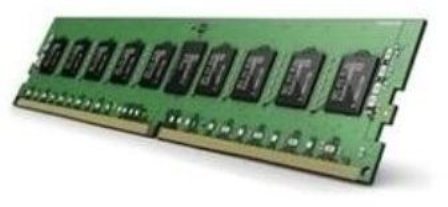
This 256GB DDR4-3200 registered ECC module with an octal-rank x4 organization delivers high-density memory capacity with enhanced signal integrity for demanding server platforms, making it ideally suited for heavy virtualization, in-memory databases, and mission-critical enterprise workloads. Its registered signal type, combined with ECC error correction, ensures reliable data integrity and stable operation at 3200MT/s, while the 1.2V low-power design helps reduce thermal footprint in dense rack deployments.
1. The massive memory capacity empowers virtualization-heavy data centers to pack far more virtual machines onto each physical host, directly reducing hardware sprawl and operational costs.
2. ECC error correction preserves transactional integrity and prevents silent data corruption, a non-negotiable safeguard for in-memory databases and financial processing.
3. Registered signal buffering stabilizes high-density memory channels, ensuring uninterrupted uptime for mission-critical enterprise workloads where resilience is paramount.
4. Octal Rank x4 organization maximizes interleaving depth, delivering sustained bandwidth efficiency under heavy multi-tenant consolidation that demands consistent low-latency access.
5. The high-speed transfer rate supplies the throughput required for real-time analytics and large-scale AI inference, eliminating memory bottlenecks in data-intensive server environments.
The Samsung M386ABG40M51-CAELQ is a server-class RDIMM purpose-built for environments where memory failures directly translate into revenue loss or data corruption. Its on-die ECC continuously detects and corrects single-bit errors caused by background radiation, a silent threat that would otherwise flip a critical value in a financial ledger or a virtual machine’s state. Registered buffering stabilizes the command and address lines, enabling a server to support multiple colossal 256GB modules without signal degradation during boot or heavy load, a non-negotiable requirement for dense virtualization clusters. The octal-rank x4 organization not only packs extreme capacity onto a single stick but also enables rank interleaving; when you run dozens of virtual machines or an in-memory database like Redis or SAP HANA, overlapping accesses across ranks dramatically reduce latency and raise effective throughput. Combined with a 3200MT/s transfer rate and a consistent CL22 latency, each channel delivers 25.6 GB/s of bandwidth, keeping real-time analytics and massive dataset caching free of stalls. For platform architects, this means you can collapse more workloads onto fewer nodes with absolute data integrity and deterministic performance—every single bit matters when your business runs on it.
This is a server-class 256GB DDR4-3200 ECC Registered RDIMM (8Rx4, CL22), built for high-capacity enterprise platforms. Capacity planning for typical workloads should follow the guidelines below.
General Virtualization
Populate at least one DIMM per memory channel to achieve balanced bandwidth and latency. A dual-socket server with two 256GB modules (one per CPU) delivers 512GB, which comfortably handles moderate virtual machine density. For larger consolidation ratios, scale to four modules in a quad-channel architecture to reach 1TB while keeping memory interleaving optimal.
In-Memory Database
Maximum reliable capacity is essential. Fill all available memory channels with 256GB RDIMMs; an 8-channel server can provide 2TB using eight modules. Symmetric population maintains consistent interleaving and low latency, critical for large, performance-sensitive in-memory datasets.
High-Performance Computing (HPC)
HPC workloads benefit most from high bandwidth. Install one 256GB DIMM per channel to fully saturate the memory bus, delivering both massive capacity (e.g., 2TB in an 8-channel-per-socket node) and peak throughput. Avoid mixing capacities or leaving channels empty, as uniform configurations prevent bank conflicts and sustain deterministic performance.
Rigorously tested server memory compatible with Dell PowerEdge R750, HPE ProLiant DL380 Gen10, Lenovo ThinkSystem SR650, etc.
Q: Can I mix this M386ABG40M51-CAELQ with other memory modules of different brands or speeds?
A: Mixing is not recommended for server environments. RDIMMs with ECC and Registered logic require identical specs to avoid signal integrity issues, system instability, and unbootable configurations. Uniformity ensures validated performance.
Q: Is this memory compatible with my Intel Xeon or AMD EPYC server platform?
A: Compatibility depends on motherboard chipset and CPU microarchitecture. This DDR4-3200 RDIMM is designed for scalable platforms supporting 8-channel memory and ECC Registered DIMMs. Verify your system's Qualified Vendor List.
Q: What is the recommended DIMM population order for optimal performance?
A: Always consult your server board manual. Typical best practice is to populate the slots furthest from the CPU first, balancing channels per memory controller. This ensures balanced interleaving and full bandwidth utilization.
Q: Does this module support overclocking or XMP profiles?
A: No. This is a JEDEC-compliant enterprise server DIMM operating at standard 1.2V and CL22. XMP and overclocking are unsupported to maintain data integrity and 24/7 reliability in mission-critical environments.
Q: What warranty and typical failure rate can I expect?
A: This module includes a 1-year warranty against manufacturing defects. As enterprise-grade RDIMM, its Annualized Failure Rate (AFR) is extremely low, typically under 0.2%, ensuring exceptional long-term reliability for data center operations.