











 Secure payments
Standard refund policy
Trade Assurance
Secure payments
Standard refund policy
Trade Assurance
| Model | M386B4G70DM0-YK03Q |
|---|---|
| Product Type | Memory Module |
| Compliance Standards | EU RoHS,FCC |
| Memory Capacity | 32 GB |
| Memory Technology | DDR3 |
| Product Voltage | 1.35V |
| RAM Speed | 1600MHz |
| RAM Standard | DDR3-1600/PC3-12800 |
| Error Identifying | ECC |
| Signal Type | Registered |
| Column Access Strobe (CAS) | CL11 |
| Rank | Quad Rank x4 |
| Quantity of Pins | 240-pin |
| RAM Genre | RDIMM |
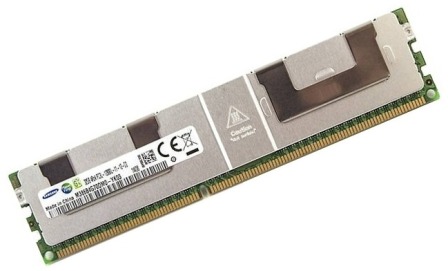
This Samsung M386B4G70DM0-YK03Q is a 32GB DDR3-1600 Registered ECC RDIMM operating at 1.35V, purpose-built for enterprise servers and workstations where data integrity is critical. Its quad-rank x4 organization maximizes memory density per channel, making it ideal for memory-intensive workloads such as virtualization, in-memory databases, and high-reliability computing environments that demand robust error correction and signal stability.
1. 32GB capacity per module allows dense memory configurations in 2U servers, maximizing virtual machine density without sacrificing footprint.
2. DDR3 technology delivers proven stability and power efficiency for legacy enterprise systems that prioritize uptime over cutting-edge throughput.
3. ECC protection corrects single-bit errors in real time, preventing silent data corruption in financial transaction databases and critical workloads.
4. Registered signal buffering stabilizes high-capacity memory buses, enabling fully populated server boards to operate reliably under 24/7 load.
5. Quad Rank x4 organization quadruples the logical banks available to the memory controller, sustaining bandwidth under heavy multi-tenant virtualization stress.
When deploying dense virtualization clusters on DDR3-era infrastructure, every detail of a memory module determines whether your hypervisor runs containers and VMs without silent corruption or disruptive crashes. The Samsung M386B4G70DM0-YK03Q is an RDIMM purpose-built for exactly this environment, and its four defining characteristics translate directly into uptime and performance for your critical workloads. First, the 1.35 V low-voltage design slashes power draw across dozens of DIMMs per node, reducing cooling burden in a packed data center while still delivering the full DDR3-1600 speed. That speed matters most in in-memory databases like Redis and Memcached, where a 1600 MT/s data rate ensures low-latency key-value operations and rapid analytical queries without bottlenecking the CPU.
Second, the 32 GB capacity achieved through a Quad Rank x4 organization lets you pack far more VMs or larger database working sets onto each server, delaying costly hardware refresh cycles. Third, ECC corrects single-bit errors and detects multi-bit faults—a non-negotiable defense against bit flips caused by cosmic radiation that can silently corrupt financial transactions or patient records. Finally, the registered signal buffer stabilizes the command path when fully populating bank after bank of these high-capacity, quad-rank DIMMs; without it, electrical loading would cause intermittent memory errors under heavy virtualization or database replication loads. Together, these features mean you can confidently run more workloads on aging but still mission-critical platforms, with assured data integrity and consistent response times.
General Virtualization
For moderate consolidation of virtual machines, a dual‑socket server with six to eight of these 32 GB Registered DIMMs per CPU (192–256 GB total) balances density and cost. Populate identical modules across memory channels to maintain balanced interleaving and avoid performance penalties. Leave room for future growth by not fully populating all slots upfront.
In‑Memory Database
Maximize capacity and throughput by fully populating all memory channels with these Quad‑Rank x4 RDIMMs, targeting 512 GB–1 TB per node. The 1.35 V low‑voltage operation helps control power and thermal loads in densely packed systems. Deploy modules in matched sets of eight or sixteen to ensure uniform latency and peak bandwidth under heavy transactional workloads.
High‑Performance Computing
Prioritize bandwidth per core by installing one 32 GB DIMM per channel, using the minimum number of ranks per channel needed to avoid rank‑multiplication latency. For dual‑socket nodes, equip 128–256 GB using eight modules in a balanced configuration to feed compute‑bound parallel tasks. The Registered ECC design safeguards lengthy simulation runs against soft memory errors.
Rigorously tested and validated for Dell PowerEdge R720, HP DL380p Gen8, Lenovo RD630 and more.
Q: Can I mix this M386B4G70DM0-YK03Q with other memory modules of different brands or speeds?
A: Mixing RDIMMs of different brands, speeds, or ranks is not recommended for server environments. It may cause POST failures or stability issues. Always use identical Samsung M386B4G70DM0-YK03Q modules to ensure validated signal integrity and uptime.
Q: Is this memory compatible with my system?
A: This 32GB DDR3-1600 registered ECC module is compatible with Intel Xeon E5-2600 v1/v2 and select AMD Opteron 6300 platforms. Verify your server board's QVL supports Quad Rank x4, 1.35V RDIMMs before ordering.
Q: What is the recommended DIMM population order for optimal performance?
A: Populate identical RDIMMs per channel starting with the furthest slot from the CPU. For dual‑processor boards, balance memory evenly across both sockets. Consult your server's technical manual for precise slot numbering and balanced memory rules.
Q: Does this module support overclocking or XMP profiles?
A: No. This is a JEDEC‑compliant registered server DIMM operating at 1600MHz (PC3‑12800). It does not expose XMP profiles or overclocking features; stability and error correction take precedence over tuning.
Q: What warranty and typical failure rate can I expect?
A: Covered by a 1‑year warranty. Production‑grade enterprise RDIMMs like this Samsung module exhibit an annualized failure rate (AFR) well below 0.5% under specified conditions, reflecting rigorous factory testing.