











 Secure payments
Standard refund policy
Trade Assurance
Secure payments
Standard refund policy
Trade Assurance
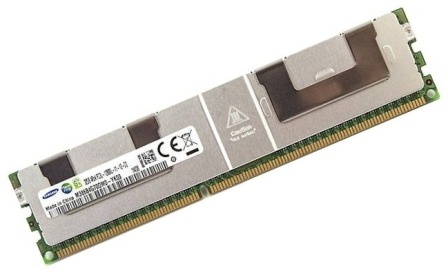
| Model | M386B4G70DM0-YK00 |
|---|---|
| Product Type | Memory Module |
| Compliance Standards | EU RoHS,FCC |
| Memory Capacity | 32 GB |
| Memory Technology | DDR3 |
| Product Voltage | 1.35V |
| RAM Speed | 1600MHz |
| RAM Standard | DDR3-1600/PC3-12800 |
| Error Identifying | ECC |
| Signal Type | Registered |
| Column Access Strobe (CAS) | CL11 |
| Rank | Quad Rank x4 |
| Quantity of Pins | 240-pin |
| RAM Genre | RDIMM |
This DDR3-1600 Registered ECC RDIMM is optimized for enterprise-class servers and workstations, excelling in virtualized environments, in-memory databases, and mission-critical workloads that demand uncompromising data integrity. Its Quad Rank x4 organization combines with Registered buffering to maximize capacity density per channel while maintaining signal stability, and the integrated ECC together with a low 1.35V operating voltage ensures reliable error correction and improved power efficiency in dense, always-on deployments.
1. ECC protection eliminates silent data corruption, preserving the integrity of transactional databases and financial records in always-on enterprise servers.
2. Registered signal buffering stabilizes command and address lines, enabling fully loaded memory banks to run reliably in dense virtualization clusters.
3. Quad Rank organization packs maximum depth onto the module, letting large-scale virtualization hosts allocate more memory to hundreds of VMs without resorting to slower swap storage.
4. Generous per-module capacity equips in-memory analytics and caching tiers with the headroom needed to accelerate business intelligence queries.
5. Low-voltage operation trims overall power draw and exhaust heat, helping data centers lower cooling costs while maintaining stable 24/7 service.
The M386B4G70DM0-YK00 is a 32GB DDR3-1600 Registered DIMM, purpose-built for enterprise servers where downtime is simply not an option. Its four defining characteristics translate directly into mission-critical resilience. First, the ECC circuitry silently detects and corrects single-bit memory errors caused by background radiation—without this, a flipped bit in a financial transaction database could corrupt a ledger with no warning. Second, the registered buffer stabilizes signal integrity across the memory bus, allowing a virtualization host to pack dozens of VMs onto a quad-socket machine without address-line collapse under heavy load. Third, the quad-rank x4 organization delivers the deep bank count and sustained bandwidth that an in-memory analytics engine like SAP HANA demands when scanning billions of rows; it prevents the rank-interleaving stalls that choke throughput on lighter modules. Finally, operating at just 1.35V instead of the standard 1.5V, this RDIMM meaningfully cuts power draw across a fully populated 384GB cluster—reducing cooling costs and raising compute density in space-constrained data centers. For infrastructure engineers running transactional databases and hypervisor farms, this module’s marriage of error protection, signal robustness, dense capacity, and energy efficiency is not a spec-sheet luxury; it is the practical difference between continuous uptime and a 3 a.m. page.
General Virtualization
For dense virtualization hosts, this 32 GB DDR3L RDIMM is an excellent building block. Populate six or eight identical modules per server to reach 192–256 GB, enabling comfortable overcommit ratios for mixed-application VMs. Pair half the memory channels first and keep all ranks identical to maintain balanced NUMA topology and avoid performance penalties.
In-Memory Database
In-memory databases such as Redis or SAP HANA demand both capacity and data integrity. Deploy this dual-voltage, quad-rank ECC RDIMM in fully populated channels—12 or 16 modules for 384–512 GB total—so the database fits entirely in RAM. The registered interface and ECC safeguard in-flight data, while CAS 11 latency remains acceptable for transactional workloads.
High-Performance Computing
HPC clusters favor capacity per node over ultimate latency. Use four or eight of these 32 GB modules per dual-socket node (128–256 GB) to keep large datasets resident. Quad-rank RDIMMs offer high density per channel, reducing the number of DIMMs needed, which lowers power draw in dense racks and leaves room for future scale-out with consistent 1.35 V low-power operation.
Server validated: rigorously tested, compatible with Dell R720/R620, HPE DL380p Gen8, Lenovo x3650 M4, Cisco C220 M3.
Q: Can I mix this M386B4G70DM0-YK00 with other memory modules of different brands or speeds?
A: Mixing different brands or speed grades is not recommended for registered ECC memory. It may cause signal integrity issues, leading to system instability. Always populate with identical modules for assured compatibility.
Q: Is this memory compatible with my system?
A: This 32GB DDR3-1600 Registered ECC RDIMM is designed for dual-processor server platforms supporting 240-pin ECC RDIMM, such as Intel Xeon E5-2600 v1/v2 or select AMD Opteron 6300 series. Verify board support for quad-rank x4 modules.
Q: What is the recommended DIMM population order for optimal performance?
A: Follow your server board’s memory population guide. Typically, populate identical DIMMs starting with slot 1 per channel for balanced interleaving. Using all channels symmetrically with matching quad-rank modules ensures maximum memory bandwidth.
Q: Does this module support overclocking or XMP profiles?
A: No. As a server-class registered ECC memory, it adheres to JEDEC standard timings with no overclocking or XMP support. Strict compliance ensures 24/7 data integrity and stability in mission-critical environments.
Q: What warranty and typical failure rate can I expect?
A: This module includes a 1-year warranty. Enterprise-grade qualification and ECC technology yield an extremely low annualized failure rate. It meets EU RoHS and FCC standards for reliability and environmental compliance.