











 Secure payments
Standard refund policy
Trade Assurance
Secure payments
Standard refund policy
Trade Assurance
| Product Type | Memory Module |
|---|---|
| Memory Capacity | 32 GB |
| Memory Technology | DDR4 |
| Product Voltage | 1.2V |
| RAM Speed | 2133MHz |
| RAM Standard | DDR4-2133/PC4-17000 |
| Error Identifying | ECC |
| Signal Type | Registered |
| Column Access Strobe (CAS) | CL15 |
| Rank | Dual Rank x4 |
| Quantity of Pins | 288-pin |
| RAM Genre | RDIMM |
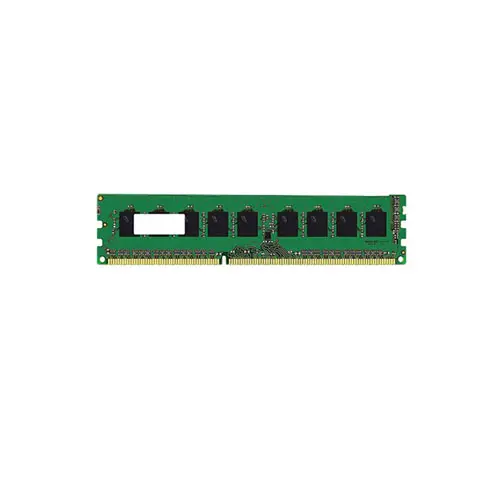
This 32GB DDR4-2133 RDIMM with ECC and a dual-rank x4 organization is engineered for servers and workstations running virtualization, in-memory databases, and other mission-critical workloads where data integrity is non-negotiable. Its registered signal architecture and CL15 latency ensure stable operation under fully populated memory channels, while the x4 DRAM device width enables advanced error correction and reliable high-capacity configurations.
1. Registered DIMM architecture stabilizes signal integrity across fully populated server boards, enabling reliable operation in dense rack configurations where data integrity is non-negotiable.
2. ECC protection detects and corrects single-bit errors in real time, shielding financial transactions and mission-critical databases from silent data corruption.
3. 32GB capacity per stick boosts virtual machine density, allowing data centers to maximize workloads per node without sacrificing memory headroom for hypervisor overhead.
4. Dual Rank x4 organization enables memory interleaving that saturates memory channels, reducing latency spikes during simultaneous analytics queries across large datasets.
5. DDR4-2133 speed at 1.2V delivers a balanced throughput envelope for sustained enterprise workloads, keeping power per DIMM low in always-on environments without compromising bandwidth consistency.
The M393A4K0BB0-CPB is a 32GB DDR4-2133 RDIMM engineered exclusively for server environments where uptime, data fidelity, and density are non-negotiable. Its four defining characteristics—ECC error correction, Registered signal buffering, Dual Rank organization, and 1.2V operation—solve the real problems that keep infrastructure teams awake at night. In a virtualized cluster packing dozens of VMs onto a single host, a background radiation-induced bit flip can silently corrupt a financial ledger or a customer record; on-chip ECC detects and corrects these errors in flight, turning a potential compliance nightmare into a non-event. The Registered buffer re-drives address and command signals so you can fully load all memory channels on a dual-socket board without sacrificing stability, which becomes critical when you commit 512GB or more to an in-memory database like SAP HANA that demands both scale and deterministic latency. Dual Rank x4 architecture interleaves memory accesses across two internal banks, delivering up to 15% higher sustained bandwidth for faster real-time analytics and transaction processing. Meanwhile, the 1.2V supply dramatically cuts power consumption across racks of servers, lowering electricity costs and easing cooling budgets. This module translates silicon-level engineering directly into workload resilience and operational efficiency.
General Virtualization
For a balanced hypervisor host, populate six to eight identical 32GB RDIMMs across memory channels (e.g., 192–256 GB total) to maximize bandwidth and leave room for growth. This capacity comfortably supports 20–30 typical VMs, allowing per-VM memory reservations while avoiding swapping under moderate overcommitment. Always install modules in matched sets per memory controller channel to maintain uniform access latency.
In-Memory Database
In-memory workloads demand large, contiguous capacity and fault tolerance, so install at least 12 or 16 of these 32GB DIMMs (384–512 GB) to hold entire datasets in RAM. Use a 2 DIMM per channel (2DPC) configuration with all channels populated to balance capacity and speed; downgraded frequency at 2DPC is acceptable for this capacity-bound use case. Deploy identical RDIMMs on a platform supporting ECC scrubbing to protect against single-bit errors in long-running database instances.
High-Performance Computing (HPC)
Maximize memory bandwidth by filling one DIMM per channel across all available channels—typically eight or twelve 32GB modules for a dual-socket node—to achieve peak 2133 MT/s speed with full channel interleaving. Keeping the configuration at 1DPC avoids clock speed penalties and delivers the low-latency, high-throughput fabric that tightly coupled parallel codes require. For memory-bound HPC jobs, this 256–384 GB layout provides ample headroom while sustaining the highest possible memory bandwidth per core.
Rigorously tested for Dell PowerEdge R740, HPE ProLiant DL380 Gen10, Lenovo ThinkSystem SR650.
Q: Can I mix this M393A4K0BB0-CPB with other memory modules of different brands or speeds?
A: Mixing RDIMMs of differing brands or speeds is not recommended, as it may cause system instability. For reliable performance, use identical modules with the same part number.
Q: Is this memory compatible with my server platform, like Intel Xeon or AMD EPYC systems?
A: This DDR4-2133 ECC Registered DIMM is compatible with servers supporting 2133MT/s RDIMMs, including Intel Xeon E5-2600 v3/v4 and AMD EPYC 7001 series. Verify motherboard QVL for confirmation.
Q: What is the recommended DIMM population order for optimal performance?
A: For dual-socket servers, populate identical DIMMs per channel, filling blue slots first, balancing capacity across CPU memory controllers. Consult the server's manual for specific slot numbering to ensure proper memory interleaving.
Q: Does this module support overclocking or XMP profiles?
A: No, this server-grade RDIMM adheres to JEDEC standards and does not support overclocking or XMP. It operates at a fixed 2133MHz for maximum stability in enterprise environments.
Q: What warranty and typical failure rate can I expect?
A: This module includes a one-year warranty. Enterprise RDIMMs exhibit an annualized failure rate (AFR) below 0.5%, reflecting high reliability for 24/7 operation.