











 Secure payments
Standard refund policy
Trade Assurance
Secure payments
Standard refund policy
Trade Assurance
| Product Type | Memory Module |
|---|---|
| Memory Capacity | 32 GB |
| Memory Technology | DDR4 |
| Product Voltage | 1.2 V |
| RAM Speed | 2400 MHz |
| RAM Standard | DDR4-2400/PC4-19200 |
| Error Identifying | ECC |
| Signal Type | Registered |
| Column Access Strobe (CAS) | CL17 |
| Rank | Dual Rank x4 |
| Quantity of Pins | 288-pin |
| RAM Genre | RDIMM |
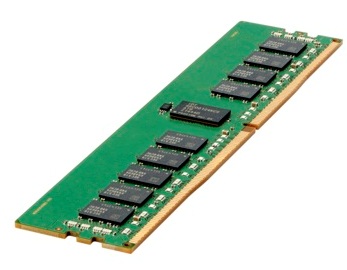
The M386A4K40BB0-CRC5Q is a server-class DDR4-2400 Registered DIMM with ECC, ideally suited for virtualization hosts and in-memory databases where data integrity and uptime are critical. Its Dual Rank x4 organization boosts bank-level parallelism for improved throughput, while the Registered signal type ensures stable operation across fully populated 288-pin server boards under heavy load.
1. The registered clock driver decouples the command and address bus from the memory controller, allowing fully loaded server platforms to maintain clean signal integrity and stable operation at scale.
2. On-the-fly ECC scrubbing eliminates single-bit errors silently, safeguarding transactional databases and long-running computational tasks from undetected data corruption.
3. A dense module capacity accommodates massive in-memory datasets, letting virtualization clusters pack more tenants per node without resorting to performance-sapping swap.
4. Dual-rank x4 organization interleaves accesses across internal banks, feeding memory channels evenly and preventing bandwidth starvation when multiple VMs contend for I/O simultaneously.
5. The PC4-19200 throughput class delivers close to twenty gigabytes per second of sustained bandwidth, accelerating real-time analytics and large cache pools in data-intensive enterprise applications.
The Samsung M386A4K40BB0-CRC5Q is a 32GB DDR4-2400 Registered DIMM engineered for servers where consistency is not negotiable. In a virtualized cluster hosting dozens of VMs per node, ECC memory acts as your silent auditor. A single high-energy particle can flip a bit in DRAM, silently corrupting a guest operating system or a financial transaction; ECC detects and corrects these errors in real time, preventing crash tickets and data integrity fire drills that erode user trust. Meanwhile, the Registered architecture buffers command and address signals, allowing the memory controller to reliably drive high-capacity ranks without the electrical instability that plagues unbuffered modules. This means you can populate 24 DIMM slots in a 2U box without random boot failures under thermal stress.
Take an in-memory database like Redis or SAP HANA: the dual-rank x4 organization delivers bank-level parallelism, lowering effective latency under concurrent access patterns and boosting throughput during peak trading hours. Every query relies on this bandwidth headroom. Finally, with 1.2V DDR4L operation, a rack of these modules draws noticeably less power, shrinking cooling costs in a data center that runs 24/7. This DIMM transforms business-critical workloads from a gamble into a guarantee.
General Virtualization
With 32GB DDR4-2400 ECC Registered DIMMs, populate your server with at least eight modules (256GB total) to support a moderate density of virtual machines. Distribute identical DIMMs equally across all memory channels for balanced performance, and retain headroom for live migration spikes. A minimum of two DIMMs per channel is recommended to maintain throughput under consolidation workloads.
In-Memory Database
Maximizing capacity and fault tolerance is critical—deploy twelve or more 32GB RDIMMs (384GB+) to keep entire datasets resident in memory. Use a multi-socket configuration and populate all channels symmetrically, favoring dual-rank x4 modules for their signal integrity and ECC protection. This layout reduces cache misses and ensures consistent low-latency access for transactional and analytical engines.
High-Performance Computing (HPC)
For bandwidth-sensitive HPC tasks, install one 32GB RDIMM per channel across all processors to achieve balanced peak memory bandwidth. Avoid mixing ranks or capacities across a single channel; dual-rank x4 modules offer strong throughput at 2400MT/s. Scaling to 256GB–512GB per node ensures large jobs fit without swapping, while ECC and registered signaling maintain stability during multi-day simulation runs.
Rigorously tested, compatible with Dell R740, HPE DL380 Gen10, Lenovo SR630, and more.
Q: Can I mix this M386A4K40BB0-CRC5Q with other memory modules of different brands or speeds?
A: Mixing is not recommended. Registered DIMMs require identical rank, timing, and speed to ensure signal integrity. Different specifications may cause system instability or prevent boot.
Q: Is this memory compatible with my system?
A: It is compatible with servers using Intel Xeon E5-2600 v3/v4 or AMD EPYC platforms that support DDR4-2400 Registered ECC memory. Verify your motherboard's memory QVL list.
Q: What is the recommended DIMM population order for optimal performance?
A: Populate identical DIMMs per memory channel in sets of 4 or 8, following your server manual. Balance capacity across CPU memory controllers to maximize interleaving and bandwidth.
Q: Does this module support overclocking or XMP profiles?
A: No, this Registered ECC DIMM runs strictly at JEDEC standard timings. Overclocking and XMP are not supported, as they compromise the signal reliability required in server environments.
Q: What warranty and typical failure rate can I expect?
A: This module includes a one-year warranty. Its premium components and ECC design yield an extremely low failure rate, with a typical MTBF exceeding 2 million hours under normal server operation.