











 Secure payments
Standard refund policy
Trade Assurance
Secure payments
Standard refund policy
Trade Assurance
| Model | M386A4K40BB1-CRC5Q |
|---|---|
| Product Type | Memory Module |
| Compliance Standards | EU RoHS,FCC |
| Memory Capacity | 32 GB |
| Memory Technology | DDR4 |
| Product Voltage | 1.2V |
| RAM Speed | 2400MHz |
| RAM Standard | DDR4-2400/PC4-19200 |
| Error Identifying | ECC |
| Signal Type | Registered |
| Column Access Strobe (CAS) | CL17 |
| Rank | Dual Rank x4 |
| Quantity of Pins | 288-pin |
| RAM Genre | RDIMM |
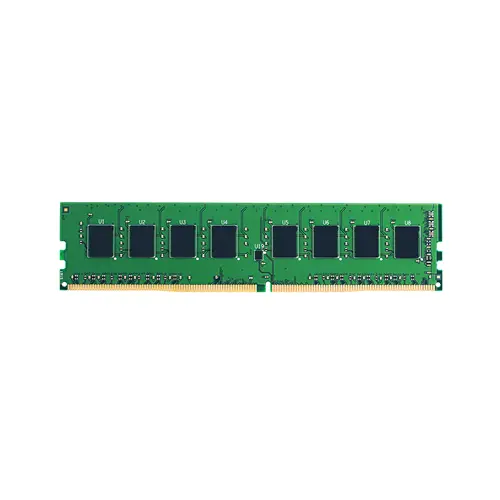
The M386A4K40BB1-CRC5Q is a 32GB DDR4-2400 registered ECC memory module purpose-built for server platforms, offering strong data integrity for virtualization and in-memory database workloads. Its dual-rank x4 organization and registered signaling enhance signal stability and memory channel efficiency, making it ideal for dense, mission-critical RDIMM configurations.
1. A 32GB capacity per module maximizes memory density per server node, allowing far more virtual machines to coexist without costly CPU socket expansions.
2. ECC protection corrects single-bit errors on the fly, preventing silent data corruption that could otherwise crash financial transactions or database queries.
3. Registered signal buffering stabilizes command addressing across heavily populated memory channels, essential for maintaining uptime in systems scaled to terabytes of RAM.
4. Dual Rank x4 organization interleaves accesses across two internal ranks, boosting effective bandwidth for parallel workloads like in-memory analytics.
5. Operating at just 1.2V, this module cuts power consumption per DIMM, directly lowering cooling overhead in dense rack deployments.
When you're running a dense virtualization cluster, every single memory error becomes a threat to dozens of workloads. The M386A4K40BB1-CRC5Q, a 32GB DDR4-2400 Registered ECC RDIMM, is engineered specifically to eliminate that risk. Its ECC technology silently detects and corrects single-bit data corruption—the kind of random soft error that can silently crash a hypervisor or corrupt a critical database record. Imagine a 24/7 in-memory database like SAP HANA: a single uncorrected bit flip could issue a wrong transaction, while this module’s ECC prevents that, protecting business logic at the silicon level.
That data integrity is reinforced by the Registered signal type. In a server packed with multiple DIMMs per channel, the register buffers the command and address lines, preserving signal quality and enabling stable operation at full capacity—a must when scaling a cloud infrastructure or a VDI farm where sudden memory failures cascade instantly. The dual-rank x4 organization then steps in, interleaving memory accesses across two internal ranks to deliver higher sustained bandwidth under concurrent loads. In practice, that translates to faster responsiveness when hundreds of virtual desktops boot simultaneously or when a financial analytics engine runs complex aggregations on a 512 GB in-memory dataset. And at 1.2V, you get that performance without inflating the power budget of a fully populated rack, keeping cooling costs in check while you pack more RAM into your data center.
Capacity Planning Guide for DDR4-2400 ECC RDIMM (32GB Modules)
The M386A4K40BB1-CRC5Q is a server-class memory module — a 32GB DDR4-2400 Registered DIMM with ECC and dual-rank x4 organization. Its error correction and buffering are essential for data integrity and stable operation under sustained load. Below are capacity recommendations for three typical enterprise workloads.
General Virtualization
Begin with a balanced memory-to-core ratio, typically 4–8 GB per vCPU, depending on VM density. In a dual-socket system with 16 DIMM slots, populating half the slots (8 × 32GB = 256GB) allows for smooth live migration and moderate overcommitment while leaving room for future growth. Avoid mixing capacities on the same memory channel to preserve symmetrical interleaving.
In-Memory Database
These workloads demand maximum capacity and low latency. Populate all channels identically — for example, 12 × 32GB (384GB) in a single-socket hexa-channel server, or 16 × 32GB (512GB) in a dual-socket configuration — to keep the entire dataset in RAM. Dual-rank modules like this one maximize bandwidth per channel, and ECC is non-negotiable for preventing silent data corruption during long-running transactions.
High-Performance Computing (HPC)
Bandwidth is often the bottleneck alongside capacity. Use balanced, fully-populated memory channels to achieve maximum system bandwidth. For a dual-socket server with 8 memory channels per socket, install 8 × 32GB per CPU (256GB total each) to saturate all channels with dual-rank DIMMs; this unlocks the highest achievable throughput for simulation, modeling, and large-scale parallel I/O.
Rigorously tested for Dell PowerEdge R740, HPE ProLiant DL380 Gen10, Lenovo ThinkSystem SR650, and similar servers.
Q: Can I mix this M386A4K40BB1-CRC5Q with other memory modules of different brands or speeds?
A: Mixing is not recommended for server environments. Registered ECC modules must be identical in speed, rank, and timings to ensure signal integrity and avoid system instability or POST failures.
Q: Is this memory compatible with my system?
A: It is compatible with servers supporting DDR4-2400 Registered ECC DIMMs, such as Intel Xeon E5-2600 v3/v4, Xeon Scalable, or select AMD EPYC platforms. Verify your system board's qualified vendor list.
Q: What is the recommended DIMM population order for optimal performance?
A: Follow the server's technical manual. Generally, populate identical DIMMs per channel starting with the farthest slot from the CPU. Balance across memory channels to enable interleaving and maximize ECC throughput.
Q: Does this module support overclocking or XMP profiles?
A: No. As a JEDEC-compliant server RDIMM, it operates at fixed 2400 MHz with CL17. Overclocking and XMP are not supported, ensuring predictable, reliable enterprise-grade operation.
Q: What warranty and typical failure rate can I expect?
A: It comes with a 1-year warranty. Enterprise-class RDIMMs like this exhibit very low annualized failure rates (AFR) under specified conditions, delivering high mean time between failures for mission-critical workloads.