











 Secure payments
Standard refund policy
Trade Assurance
Secure payments
Standard refund policy
Trade Assurance
| Model | M393A4K40BB1-CTD |
|---|---|
| Product Type | Memory Module |
| Compliance Standards | EU RoHS,FCC |
| Memory Capacity | 32 GB |
| Memory Technology | DDR4 |
| Product Voltage | 1.2V |
| RAM Speed | 2666MHz |
| RAM Standard | DDR4-2666/PC4-21300 |
| Error Identifying | ECC |
| Signal Type | Registered |
| Column Access Strobe (CAS) | CL19 |
| Rank | Dual Rank x4 |
| Quantity of Pins | 288-pin |
| RAM Genre | RDIMM |
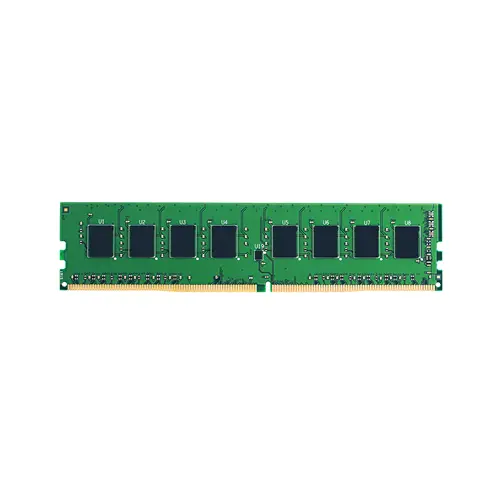
Designed specifically for server platforms, the Samsung M393A4K40BB1-CTD 32GB DDR4-2666 RDIMM leverages Registered signal technology and ECC to ensure data integrity and system stability under heavy, sustained loads. Its dual-rank x4 organization optimizes memory bandwidth in dense configurations, making it well-suited for virtualization clusters, in-memory databases, and other latency-sensitive enterprise workloads where reliability is paramount.
1. ECC error correction safeguards transactional databases and in-memory analytics by transparently detecting and fixing single-bit errors, preventing silent data corruption in mission-critical server environments.
2. Registered signal buffering offloads electrical loading from the memory controller, allowing dense multi-DIMM configurations that maximize total system memory for heavy virtualization hosts.
3. High-density 32GB capacity per module lets you pack more RAM into limited server slots, significantly raising guest VM density without adding extra physical nodes.
4. Dual Rank x4 organization leverages rank interleaving to overlap data transfers, keeping memory channels highly utilized and reducing average latency under large concurrent workloads.
5. 2666MHz bandwidth delivers steady throughput for I/O-intensive processes like software-defined storage and real-time stream processing, ensuring consistent response under sustained pressure.
The Samsung M393A4K40BB1-CTD is a server-class 32GB DDR4-2666 Registered DIMM engineered for data centers where reliability and scalable performance are non-negotiable. Its ECC technology silently detects and corrects single-bit memory errors that naturally occur under sustained compute loads, preventing silent data corruption in virtualized clusters running dozens of VMs on a single node, where a flipped bit could cascade into platform instability or database inconsistency. Registered signal buffering decouples the memory controller from the DRAM chips, allowing you to populate all 24 DIMM slots on a dual-socket board without signal integrity collapse—critical when expanding capacity for in-memory databases like SAP HANA that demand terabytes of fast, stable storage. The dual-rank x4 organization leverages bank interleaving to parallelize data fetches, markedly reducing latency and raising bandwidth under the heavy concurrent access patterns of OLTP workloads and real-time analytics. Together, these attributes mean your hypervisor cluster maintains contiguous uptime even under full memory stress, and your transactional database delivers microsecond responses on massive hot datasets without risking data loss from undetected faults.
General Virtualization
For a typical hypervisor host running multiple VMs, populate all memory channels symmetrically to maximize bandwidth. Start with six or eight identical 32GB RDIMMs per CPU to reach 192–256 GB, which comfortably supports 20–40 moderate VMs while maintaining balanced NUMA access.
In-Memory Database
In-memory databases like Redis or SAP HANA demand both high capacity and data integrity, making ECC registered memory essential. Equip each server with 12–16 modules of this 32GB RDIMM across both sockets to achieve 384–512 GB, ensuring the entire working set resides in RAM with minimal latency.
High-Performance Computing (HPC)
HPC workloads benefit from maximum memory bandwidth, so every memory channel should be populated with a single dual‑rank DIMM like this 32GB RDIMM. A common node configuration uses eight modules per socket (256 GB) at one DIMM per channel, delivering optimal throughput for simulation and modeling codes that stream large datasets.
Validated for server platforms like Dell EMC PowerEdge R760, HPE ProLiant DL380 Gen10, and Lenovo ThinkSystem SR650—rigorously tested.
Q: Can I mix this M393A4K40BB1-CTD with other memory modules of different brands or speeds?
A: Mixing brands or speeds is not recommended for registered server memory. It may cause instability, force the system to the lowest common speed, or prevent booting due to strict rank and timing matching requirements.
Q: Is this memory compatible with my Intel Xeon Scalable or AMD EPYC server platform?
A: This DDR4-2666 RDIMM is validated for Intel Xeon Scalable (Purley) and AMD EPYC (Naples/Rome) platforms. Verify your motherboard's QVL for 32GB Dual Rank x4 ECC Registered DIMM support to ensure full compatibility.
Q: What is the recommended DIMM population order for optimal performance with this module?
A: Populate identical DIMMs per memory channel, starting with the farthest slot from the CPU. For dual-socket servers, balance capacity evenly across both processors. Follow the specific slot numbering in your system’s manual to maximize memory interleaving.
Q: Does this module support overclocking or XMP profiles?
A: No. This is a server-grade Registered ECC DIMM operating at JEDEC standard DDR4-2666. It does not support XMP or overclocking, as data integrity and stability under 24/7 workloads take priority over frequency manipulation.
Q: What warranty and typical failure rate can I expect for this M393A4K40BB1-CTD?
A: This module comes with a one-year warranty. Enterprise-grade ECC RDIMMs typically exhibit an annualized failure rate (AFR) below 0.5% when operated within specified temperature and voltage limits.