











 Secure payments
Standard refund policy
Trade Assurance
Secure payments
Standard refund policy
Trade Assurance
| Product Type | Memory Module |
|---|---|
| Memory Capacity | 32 GB |
| Memory Technology | DDR4 |
| RAM Speed | 2666 |
| RAM Standard | DDR4-2666/PC4-21300 |
| Signal Type | Unbuffered |
| Column Access Strobe (CAS) | CL19 |
| Rank | Dual Rank x8 |
| Quantity of Pins | 260-pin |
| RAM Genre | SoDIMM |
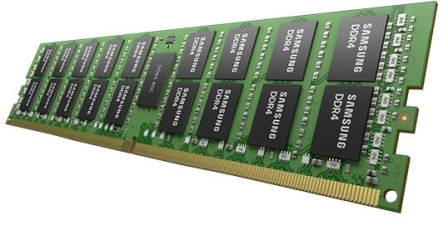
This SoDIMM is a dual-rank x8 DDR4-2666 module optimized for mobile workstations and high-performance laptops, delivering enhanced memory bandwidth through rank interleaving for demanding multitasking and content creation workloads. Its unbuffered design and standard 1.2V low-power operation ensure seamless plug-and-play compatibility across a broad range of notebook platforms while maintaining stable, energy-efficient performance.
1. DDR4 technology inherently operates at a low voltage, significantly reducing power consumption and waste heat to keep ultraportable laptops cooler and extend unplugged endurance.
2. Generous capacity allows dozens of applications and large media files to reside in memory simultaneously, eliminating slowdowns from disk swapping during heavy multitasking.
3. The SoDIMM form factor guarantees straightforward user installation and broad compatibility with mainstream notebook platforms, making field upgrades effortless.
4. Low-latency timings speed up data availability to the processor, resulting in quicker program launches and perceptibly snappier system feel in daily mobile workflows.
5. Dual Rank x8 organization interleaves access across internal banks to boost peak bandwidth, noticeably accelerating content creation tasks like photo batch processing and video rendering on the go.
The M474A4G43MB1-CTD is a 32GB DDR4 SODIMM purpose-built for notebooks and mobile workstations, and four characteristics define why it matters once you look beyond the spec sheet. First, the 32GB capacity directly answers the frustration of creative professionals or developers who run multiple virtual machines, containers, and IDE instances simultaneously—instead of watching your system choke on swap file thrashing, you keep every tool loaded and responsive. Second, the dual-rank x8 organization internally interleaves memory banks, which boosts effective bandwidth and keeps frame rates steadier during video exports or data analysis even when you have endless browser tabs open alongside heavy applications. Third, the 2666MT/s speed backed by a true PC4-21300 ceiling delivers the snappy responsiveness you feel when launching enormous spreadsheets or compiling large codebases, cutting idle wait time without generating excess heat. Fourth, the 260-pin unbuffered SODIMM form factor means hassle-free physical installation into ultrabooks and compact workstations, while the efficient 1.2V DDR4 operation sips power and extends battery life during long flights, back-to-back meetings, or field research—so you remain productive miles from an outlet. These elements together transform a simple memory swap into a visible productivity and endurance upgrade.
Laptop Upgrade
When upgrading a laptop with a single 8GB or 16GB module, adding a second identical 32GB DDR4-2666 SoDIMM enables dual-channel operation and brings total capacity to 40GB or 48GB, significantly improving integrated graphics performance and multitasking. For a cleaner path, replacing the existing module with a matched pair of 16GB sticks (compatible with the same rank and CAS latency) guarantees symmetrical dual-channel and avoids potential inter-rank timing quirks. Always verify your laptop supports Dual Rank x8 modules and that both slots can accept 32GB; many modern ultrabooks cap at 32GB total, so a single 32GB module may be the ceiling.
Mobile Workstation
CAD, 3D rendering, and large dataset analysis thrive on maximum capacity and bandwidth. Populate both SoDIMM slots with identical 32GB DDR4-2666 Dual Rank modules for a 64GB dual-channel configuration; the dual-rank design per module provides a slight bandwidth advantage from rank interleaving. Where applications like DaVinci Resolve or virtual machines consume extreme memory, this non-buffered setup delivers the lowest latency path available in a portable form factor while staying within typical 64GB laptop limits.
Ultrabook Power Saving
At 1.2V, DDR4-2666 SoDIMMs already minimize power draw, and a single 32GB module reduces the number of active DRAM chips compared to two 16GB sticks, offering a marginal but real battery-life extension. This solo configuration also keeps one slot vacant for future expansion without forcing a full swap. For users who prioritize energy efficiency over peak graphics bandwidth, a lone high-density module strikes an excellent balance between ample capacity and lower sustained power consumption.
Rigorously tested notebook memory, verified compatible with Dell Latitude 7490, Lenovo ThinkPad T480, and HP EliteBook 840 G5.
Q: Can I mix this M474A4G43MB1-CTD with other memory modules of different brands or speeds?
A: Mixing is possible, but the system will default to the slowest module's speed and timings. For optimal stability and dual-channel performance, we recommend using identical modules with matching capacity, rank, and JEDEC profile.
Q: Is this memory compatible with my system?
A: This 260-pin DDR4-2666 SoDIMM suits laptops with Intel 8th Gen (or newer) or AMD Ryzen 3000 series (and later) mobile platforms. Verify your laptop supports 32GB dual-rank modules and has an available SoDIMM slot.
Q: What is the recommended DIMM population order for optimal performance?
A: Most laptops feature two SoDIMM slots. Install this module in the primary slot; for dual-channel mode, populate both slots with identical capacity and rank modules. Single-channel operation occurs if only one slot is used.
Q: Does this module support overclocking or XMP profiles?
A: No, this is a standard JEDEC-compliant DDR4-2666 SoDIMM running at CL19. Laptop BIOS typically locks memory overclocking and XMP; the module operates at its native 2666MT/s frequency without tuning profiles.
Q: What warranty and typical failure rate can I expect?
A: This module includes a 1-year warranty. With a typical annualized failure rate (AFR) below 0.5%, it delivers high reliability. We recommend proper ESD handling during installation to avoid early-life failures.