











 Secure payments
Standard refund policy
Trade Assurance
Secure payments
Standard refund policy
Trade Assurance
| Product Type | Memory Module |
|---|---|
| Compliance Standards | |
| Memory Capacity | 32 GB |
| Memory Technology | DDR3 |
| Product Voltage | 1.5 V |
| RAM Speed | 1866 MHz |
| RAM Standard | DDR3-1866/PC3-14900 |
| Error Identifying | ECC |
| Signal Type | Registered |
| Column Access Strobe (CAS) | CL13 |
| Rank | Quad Rank x4 |
| Quantity of Pins | 240-pin |
| RAM Genre | RDIMM |
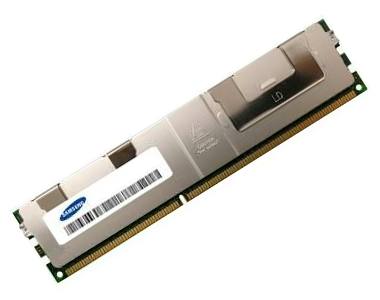
This DDR3-1866 registered ECC module leverages a quad-rank x4 configuration to deliver high 32 GB density, making it ideal for memory-intensive server workloads like virtualization and in-memory databases where data integrity is critical. The registered signal type ensures stable command and address signaling across fully populated multi-DIMM channels, providing the reliability demanded by multi-socket enterprise platforms.
1. Registered buffering decouples electrical loading from the memory controller, enabling densely populated servers to maintain signal integrity and uptime under sustained workloads.
2. ECC protection silently corrects single-bit errors in real time, preserving data accuracy for databases and financial transactions where even minor corruption is unacceptable.
3. Quad Rank x4 organization packs more logical ranks per channel, keeping memory bandwidth saturated for smoother virtual machine responsiveness during heavy consolidation.
4. Generous module capacity empowers higher virtualization density per rack unit, maximizing return on investment in server hardware that must host numerous concurrent tenants.
5. High DDR3 throughput accelerates in-memory caching and database operations, directly improving response times for business intelligence and legacy enterprise applications.
When you operate a virtualized cluster running dozens of guests or an in‑memory database where every bit counts, the M386B4G70DM0-CMA4 32GB DDR3‑1866 Registered DIMM becomes your infrastructure’s silent insurance. Its ECC logic detects and corrects single‑bit errors in real time—those random flips caused by background radiation that would silently corrupt a financial transaction or a customer record in a database, turning a minor hardware glitch into a data integrity nightmare. The registered buffer neatly isolates the command and address lines from the memory chips, so this quad‑rank module populates all 24 or 32 slots of your server without signal degradation; that lets you reach 768 GB or 1 TB of reliable memory to host dozens of virtual machines without random restarts. Quad‑rank x4 organization packs the maximum capacity per DIMM for today’s DDR3 platforms, giving your in‑memory analytics engine the headroom to cache entire tables, while the 1866 MT/s speed and CAS 13 latency accelerate read‑heavy workloads. This RDIMM keeps your existing server fleet stable and scalable, protecting uptime and data accuracy where it matters most.
General Virtualization
For dense VM hosting, populate all channels with one 32GB RDIMM per channel to balance capacity and memory bandwidth. Avoid mixing quad-rank DIMMs beyond supported limits, as high rank count can reduce achievable speed and increase latency. Plan for a 1:1 ratio of memory to CPU cores, aiming for 256–512GB per host for typical workloads.
In-Memory Database
Maximize capacity with full population of identical 32GB quad-rank RDIMMs, targeting 512GB or more per server. The ECC and registered design ensure data integrity under sustained large-dataset processing, while CL13 at 1866MT/s provides low latency crucial for real-time analytics. Use identical DIMMs to maintain memory interleaving and consistent performance.
High-Performance Computing (HPC)
Prioritize memory bandwidth per core by populating all memory channels with one 32GB RDIMM each, leveraging the 1866MT/s speed with the lowest possible CAS latency. For memory-bound workloads, consider scaling out across nodes rather than overloading a single server, and validate quad-rank DIMMs' impact on maximum supported frequency. Ensure thermal headroom for sustained full-load operation.
Rigorously tested server memory, compatible with Dell PowerEdge R720/R620, HP DL380p Gen8, and similar DDR3-1866 platforms.
Q: Can I mix this M386B4G70DM0-CMA4 with other memory modules of different brands or speeds?
A: Mixing is not recommended. This is a registered ECC DDR3 module designed for servers. Combining different brands or speeds can cause instability, timing conflicts, or unbuffered/ECC mismatches. For guaranteed reliability, use identical modules.
Q: Is this memory compatible with my Intel Xeon or AMD Opteron server platform?
A: This 32GB DDR3-1866 RDIMM works with servers supporting registered ECC DDR3 memory and 240-pin slots. Verify your motherboard supports quad-rank DIMMs and 1.5V operation. Common platforms: Intel C600 series or AMD G34/C32.
Q: What is the recommended DIMM population order for optimal performance?
A: Follow your server board’s memory slot numbering. Typically, populate identical DIMMs per channel starting with the slots farthest from the CPU. For quad-rank DIMMs, a single module per channel often yields best speed, but consult your platform’s guide.
Q: Does this module support overclocking or XMP profiles?
A: No. This is an enterprise server memory built for stability at JEDEC standard DDR3-1866 CL13. It does not support XMP or overclocking. Operating beyond rated specifications may cause data corruption and is not covered under warranty.
Q: What warranty and typical failure rate can I expect?
A: This module carries a 1-year warranty. Enterprise-grade RDIMMs undergo rigorous testing and feature ECC error correction. Typical annualized failure rate is very low (below 0.5%), ensuring long-term reliability in 24/7 server environments.