











 Secure payments
Standard refund policy
Trade Assurance
Secure payments
Standard refund policy
Trade Assurance
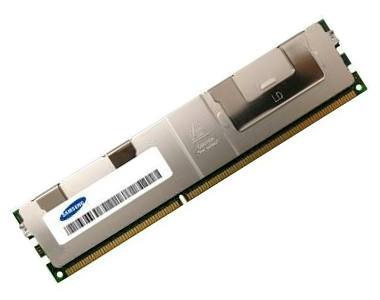
| Model | M386B4G70DM0-CMA4QM |
|---|---|
| Product Type | Memory Module |
| Compliance Standards | EU RoHS,FCC |
| Memory Capacity | 32 GB |
| Memory Technology | DDR3 |
| Product Voltage | 1.5V |
| RAM Speed | 1866MHz |
| RAM Standard | DDR3-1866/PC3-14900 |
| Error Identifying | ECC |
| Signal Type | Registered |
| Column Access Strobe (CAS) | CL13 |
| Rank | Quad Rank x4 |
| Quantity of Pins | 240-pin |
| RAM Genre | RDIMM |
Targeting enterprise server platforms, this 32GB DDR3-1866 RDIMM with ECC and registered signaling is ideally suited for memory-intensive workloads such as virtualization, in-memory databases, and mission-critical applications where data integrity is non-negotiable. Its quad-rank x4 organization and CL13 latency on a 240-pin interface ensure high capacity per channel while maintaining reliable signal integrity under load.
1. ECC error correction safeguards transactional data integrity, essential for financial databases and mission-critical workloads where memory errors could cascade into costly corruption.
2. Registered signal buffering stabilizes command and address lines, enabling dense server configurations to support massive memory populations without compromising signal integrity.
3. Quad Rank x4 design maximizes DIMM capacity while maintaining channel bandwidth saturation, ideal for virtualization hosts running extensive VM fleets.
4. 32GB module density allows servers to reach higher memory footprints per channel, boosting consolidation ratios for database instances and in-memory analytics.
5. 1866 MT/s data rate provides balanced throughput for DDR3-era servers, sustaining concurrent transactions in web farms and caching layers.
The M386B4G70DM0-CMA4QM is a 32 GB DDR3-1866 Registered DIMM with ECC and a quad-rank x4 organization, purpose-built for enterprise servers. In a virtualization cluster, its ECC engine actively corrects single-bit memory errors before they can silently corrupt a hypervisor or propagate across dozens of guest machines—turning what could become a multi-tenant outage into a harmless, logged event. Meanwhile, the registered buffer offloads the electrical load from the memory controller, so you can fill all 24 slots of a dual-socket server without sacrificing signal integrity; that stability is non-negotiable when dozens of virtual machines rely on a single physical host. In an in-memory database like SAP HANA or a high-concurrency Redis cluster, the quad-rank configuration lets each channel address dense, contiguous memory pools, while the 1866 MT/s speed and CL13 latency push nearly 15 GB/s of bandwidth per channel—shrinking query response times under heavy OLTP workloads. Together, these features mean you are not just adding capacity; you are hardening your infrastructure against silent data corruption, eliminating memory-induced jitter, and sustaining the deterministic low latency that business-critical applications demand around the clock.
General Virtualization
For dense VM hosting, balance capacity with memory bandwidth. Using this 32 GB registered DIMM, populate at least one DIMM per memory channel (typically four modules for quad-channel servers) to achieve 128 GB total, ensuring sufficient headroom for multiple guest machines without memory contention. Scale to eight modules for 256 GB in resource-heavy hypervisor deployments.
In-Memory Database
In-memory databases demand maximum capacity and minimal latency. Fill all available DIMM slots with these quad-rank modules, but note that high rank loading may limit operating frequency—confirm platform support for 1866 MT/s at full population. A 16-slot server can deliver 512 GB, enabling large datasets to reside entirely in RAM for real-time analytics.
High-Performance Computing
HPC workloads prioritize bandwidth. Install one DIMM per channel (e.g., 8 modules for an 8-channel platform) to avoid rank-induced speed reductions, sustaining the full 1866 MT/s data rate. This 8×32 GB (256 GB) configuration optimizes throughput for simulation and modeling codes that stream large matrices through memory.
Validated for servers: compatible with Dell PowerEdge R720, HP ProLiant DL380p Gen8, Lenovo ThinkServer RD630, and similar DDR3 ECC RDIMM systems.
Q: Can I mix this M386B4G70DM0-CMA4QM with other memory modules of different brands or speeds?
A: Mixing with different brands or speeds is not recommended. For registered ECC DDR3, all modules should match in speed, rank, and timings to ensure signal integrity and prevent stability issues.
Q: Is this memory compatible with my system?
A: This is a DDR3-1866 registered ECC RDIMM for servers. Verify your Intel or AMD server board supports 32GB Quad Rank x4 modules at 1.5V with 1866MHz and CL13 timing.
Q: What is the recommended DIMM population order for optimal performance?
A: Follow your server’s manual. Typically, populate identical Quad Rank RDIMMs starting from the farthest slot per channel. Balance channels and respect platform-specific rules to maximize memory bandwidth.
Q: Does this module support overclocking or XMP profiles?
A: No. This is an enterprise-grade registered ECC module adhering to JEDEC DDR3-1866 standards. It does not support overclocking or XMP, as server stability relies on strict standard compliance.
Q: What warranty and typical failure rate can I expect?
A: This module carries a one-year warranty. As a rigorously tested server component, it exhibits very low annualized failure rates under specified conditions, typically below 0.2% in controlled environments.