











 Secure payments
Standard refund policy
Trade Assurance
Secure payments
Standard refund policy
Trade Assurance
| Model | M392A4K40BM0-CPB40 |
|---|---|
| Product Type | Memory Module |
| Compliance Standards | EU RoHS,FCC |
| Memory Capacity | 32 GB |
| Memory Technology | DDR4 |
| Product Voltage | 1.2V |
| RAM Speed | 2133MHz |
| RAM Standard | DDR4-2133/PC4-17000 |
| Error Identifying | ECC |
| Signal Type | Registered |
| Column Access Strobe (CAS) | CL15 |
| Rank | Dual Rank x4 |
| Quantity of Pins | 288-pin |
| RAM Genre | VLP RDIMM |
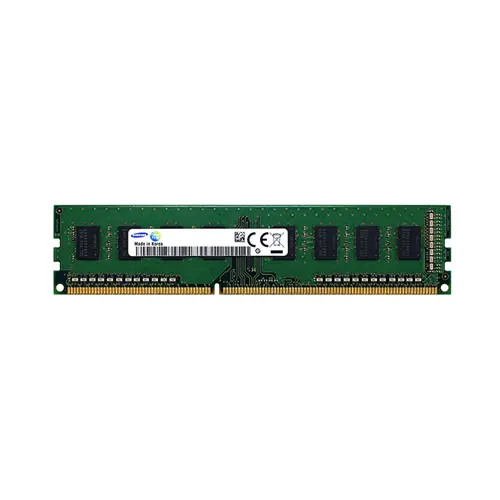
This DDR4-2133 VLP RDIMM is engineered for dense server environments and virtualization platforms, where its very low-profile form factor allows high-capacity 32 GB deployment in space-constrained 1U rack and blade chassis. The dual-rank x4 organization combined with Registered ECC signaling ensures hardened data integrity and improved memory interleaving, making it ideal for in-memory databases and always-on enterprise workloads.
1. ECC protection automatically corrects single-bit memory errors, preserving the data integrity that transactional databases and financial systems rely on 24/7 for compliance and trust.
2. Registered signal architecture buffers clock and command paths, letting the memory controller reliably drive massive capacities in scale-out virtualization clusters without signal degradation.
3. Dual Rank x4 organization enables rank interleaving, which pipelines memory accesses to sustain elevated bandwidth under the heavy, concurrent request loads typical of enterprise SaaS platforms.
4. A dense 32-gigabyte module concentrates capacity efficiently per slot, letting operators pack more active virtual machines onto a single hypervisor and reducing costly storage swapping during peak workloads.
5. The Very Low Profile RDIMM form factor minimizes physical height, streamlining chassis airflow in dense rack and blade deployments to cut fan power draw and extend service life through cooler operation.
Designed specifically for enterprise servers, the Samsung M392A4K40BM0-CPB40 is a 32GB DDR4 VLP RDIMM operating at 2133MHz with four defining characteristics that directly address critical datacenter challenges. Its ECC engine actively detects and corrects single-bit memory errors in real time, preventing silent data corruption that could crash a virtualized cluster or poison an in-memory database like SAP HANA—this means transaction integrity and continuous uptime for your mission‑critical workloads. The Registered buffer redistributes clock and command signals cleanly across the module, enabling stable population of all memory channels even at high capacities; in a dense VMware farm, that eliminates sporadic boot failures under full load. The dual‑rank x4 organization leverages internal bank interleaving to boost effective bandwidth, allowing Redis or Memcached instances to serve more queries per second during peak traffic. Finally, the Very Low Profile form factor sits flush in 1U rack servers and blade enclosures, preserving unimpeded airflow to downstream components and reducing cooling costs over the system’s life. Together, these features deliver not just a memory module, but a reliability firewall for your virtualization fabric and latency‑sensitive data platforms.
General Virtualization
For dense VM hosting, populate six or eight identical M392A4K40BM0 modules per server (192–256 GB total) to balance cost and VM density. Keep at least one DIMM slot free per channel to allow future scaling without replacing existing sticks. Use the same dual-rank x4 RDIMMs across all populated channels to maintain uniform memory interleaving and predictable latency.
In-Memory Database
Maximize capacity by installing sixteen or more of these 32 GB RDIMMs in a dual-socket server, achieving 512 GB or 1 TB for large in-memory datasets. Configure mirrored or lockstep memory RAS modes to protect data integrity, as the registered ECC design already corrects single-bit errors. Place equal modules behind each memory controller to avoid NUMA imbalances that can slow transactional throughput.
High-Performance Computing
Populate one DIMM per channel first to reach peak memory bandwidth on each socket, then add a second identical module per channel for capacity scaling. For dual-socket HPC clusters, eight 32 GB RDIMMs per node deliver 256 GB with low access latency, supporting memory-bandwidth-bound simulations. Keep all modules matched in rank and speed to prevent clock training downgrades that could cap the link at lower rates.
Rigorously tested, compatible with Dell PowerEdge R750, R650, R740, R640, and more.
Q: Can I mix this M392A4K40BM0-CPB40 with other memory modules of different brands or speeds?
A: Mixing is not recommended for server environments. Using identical modules ensures signal integrity, ECC consistency, and validated RAS performance. Mixed configurations may cause unexpected system instability.
Q: Is this memory compatible with my system?
A: This DDR4-2133 Registered ECC RDIMM is designed for server platforms supporting Intel Xeon Scalable or AMD EPYC processors. Verify your motherboard's qualified vendor list for 288-pin VLP RDIMM support.
Q: What is the recommended DIMM population order for optimal performance?
A: Follow your server motherboard manual. Typically, populate identical memory channels symmetrically (e.g., A1, B1 first, then A2, B2) to balance interleaving and maximize memory bandwidth.
Q: Does this module support overclocking or XMP profiles?
A: No. This is a server-grade Registered ECC module. It operates strictly at JEDEC-standard DDR4-2133 timings for maximum reliability and 24/7 stability. Overclocking is not supported.
Q: What warranty and typical failure rate can I expect?
A: This module includes a 1-year warranty. Its ECC and strict testing result in an annualized failure rate well under 1%, delivering enterprise-class durability for mission-critical workloads.