











 Secure payments
Standard refund policy
Trade Assurance
Secure payments
Standard refund policy
Trade Assurance
| Product Type | Memory Module |
|---|---|
| Memory Capacity | 64 GB |
| Memory Technology | DDR3 |
| Product Voltage | 1.5 V |
| RAM Speed | 1600 MHz |
| RAM Standard | DDR3-1600/PC3-12800 |
| Error Identifying | ECC |
| Signal Type | Registered |
| Column Access Strobe (CAS) | CL11 |
| Rank | Octal Rank x4 |
| Quantity of Pins | 240-pin |
| RAM Genre | RDIMM |
This 64GB DDR3-1600 registered ECC module (PC3-12800, Octal Rank x4) is engineered strictly for legacy server platforms, where its high-density rank architecture and hardware error correction deliver the data integrity essential for virtualization and in-memory database workloads. The 1.5V RDIMM design with registered signal buffering ensures stable multi-DIMM operation at full 1600 MT/s, making it a reliable choice for scaling memory capacity in aging enterprise systems without sacrificing uptime.
1. A 64GB capacity per module drastically increases the memory footprint per channel, enabling dense server virtualization where countless virtual machines can be provisioned without memory bottlenecks.
2. ECC protection silently corrects single-bit errors in real time, which is non-negotiable for preserving data integrity in transactional databases and long-running analytical workloads.
3. Registered signals buffer the command and address buses, maintaining rock-steady signal integrity across fully populated multi-rank configurations in 2U and 4U rack servers.
4. 1600 MT/s throughput supplies the per-channel bandwidth necessary to keep pace with multi-core CPUs during parallel in-memory processing, accelerating large-scale data ingest and real-time reporting.
5. Octal Rank x4 organization multiplies the internal bank groups accessible simultaneously, maximizing memory channel utilization and delivering consistent low-latency access under heavy enterprise consolidation loads.
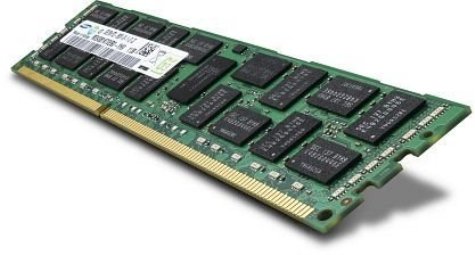
Designed specifically for enterprise servers, the Samsung M386B8G70DE0-CK0 is a 64GB DDR3 1600MHz Registered DIMM that directly addresses the critical demands of data centers. Its ECC technology actively detects and corrects single-bit memory errors, a non-negotiable safeguard when you are running memory-intensive databases like SAP HANA or SQL Server, where even a single flipped bit can corrupt financial records or halt transactional integrity. The Registered architecture buffers command and address signals, enabling stable operation across densely populated server boards without signal degradation—this means you can confidently fill all 24 DIMM slots in a virtualized host to maximize VM density.
The Octal Rank x4 organization is particularly vital for consolidation. In a hypervisor hosting dozens of virtual machines, higher rank counts allow parallel data access across multiple DRAM banks, sustaining bandwidth even under simultaneous heavy requests and reducing the dreaded “memory wall” latency spike during peak workloads. The CL11 latency at 1.5V represents a time-tested balance between responsiveness and power efficiency for legacy yet robust DDR3 infrastructures, ensuring your existing large-scale research computing clusters or render farms continue delivering predictable, enterprise-grade performance without unexpected bottlenecks.
Memory Type Assessment: Server Memory
The specifications—DDR3, ECC, Registered, 240-pin, 1.5V, 64GB Octal Rank x4 RDIMM—confirm this is a legacy server-class module designed for stability and large capacity in multi-slot platforms.
General Virtualization
Deploy these 64GB RDIMMs in balanced multiples across available memory channels. For a dual-socket system with 12 slots per CPU, installing 8 identical modules (512GB total) per node maximizes density while maintaining NUMA locality. This configuration comfortably hosts 20-30 moderate VMs, with ECC ensuring hypervisor integrity under sustained consolidation workloads.
In-Memory Database
Populate all memory channels symmetrically with one 64GB RDIMM per channel to eliminate interleaving penalties. On a quad-channel server, 4 modules yield 256GB of reliable, registered memory—sufficient for caching entire datasets in Redis or SAP HANA Express editions. Octal Rank x4 offers high capacity per slot but adds slight latency; prioritize module count over maximum per-slot density for better transactional throughput.
High-Performance Computing
Use identical 64GB RDIMMs to populate 8 of 24 available slots (one DIMM per channel) in a dual-socket I/O-intensive node. This 512GB configuration at DDR3-1600 provides sufficient bandwidth for memory-bound fluid dynamics or climate modeling simulations. Avoid mixing ranks or speeds; the registered signal type stabilizes large DIMM counts essential for long-running parallel MPI jobs.
Rigorously tested server memory, compatible with Dell PowerEdge R720, HP DL380p Gen8, and more.
Q: Can I mix this M386B8G70DE0-CK0 with other memory modules of different brands or speeds?
A: Mixing is not recommended. Mismatched RDIMMs can cause instability, force downgraded speeds, or conflict due to different ranks and timings. For reliable ECC operation, use identical part numbers across all channels.
Q: Is this memory compatible with my system?
A: This 64GB DDR3-1600 Registered ECC module fits servers with Intel Xeon E5-2600 v1/v2 or AMD Opteron 6300 series platforms. Verify that your motherboard supports octal-rank x4 RDIMMs and 1.5V operation via its qualified vendor list.
Q: What is the recommended DIMM population order for optimal performance?
A: Populate identical modules per channel, starting with the slot farthest from the CPU (often blue or DIMM_A1). Balance capacity across memory channels as per the server board manual to maximize interleaving and bandwidth.
Q: Does this module support overclocking or XMP profiles?
A: No. As an enterprise ECC Registered DIMM, it runs strictly at JEDEC-standard DDR3-1600 CL11 timings. XMP and overclocking are disabled to ensure 24/7 data integrity and platform stability.
Q: What warranty and typical failure rate can I expect?
A: It includes a one-year warranty. Typical annualized failure rates for this Samsung enterprise-grade RDIMM are exceptionally low (often <0.2%), backed by rigorous production testing for continuous server workloads.