











 Secure payments
Standard refund policy
Trade Assurance
Secure payments
Standard refund policy
Trade Assurance
| Product Type | Memory Module |
|---|---|
| Memory Capacity | 64 GB |
| Memory Technology | DDR4 |
| Product Voltage | 1.2V |
| RAM Speed | 2133MHz |
| RAM Standard | DDR4-2133/PC4-17000 |
| Error Identifying | ECC |
| Signal Type | Registered |
| Column Access Strobe (CAS) | CL15 |
| Rank | Quad Rank x4 |
| Quantity of Pins | 288-pin |
| RAM Genre | RDIMM |
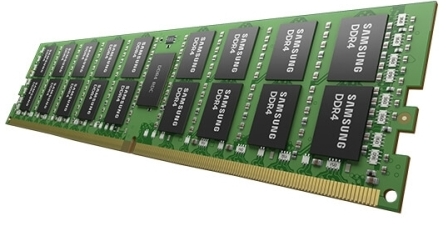
This 64GB DDR4-2133 Registered ECC RDIMM is engineered for dual-socket servers and virtualization platforms where data integrity under heavy multi-threaded workloads is critical. Its quad-rank x4 organization maximizes capacity density per channel, while the registered signal type and ECC ensure superior signal stability and real-time error correction for memory-intensive applications like in-memory databases and large-scale virtualization.
1. ECC error correction silently detects and fixes single-bit memory errors, preserving data integrity for transactional databases and financial systems that cannot tolerate even silent data corruption.
2. Registered signal buffering stabilizes command and address lines under heavy DIMM population, enabling large-scale virtualization hosts to run dozens of guest machines without signal degradation.
3. A massive per-module capacity allows hypervisors to support significantly more virtualized workloads per physical server, directly lowering infrastructure costs in dense cloud deployments.
4. Quad Rank x4 organization packs the highest density per DIMM slot, reducing total module count and freeing precious board space while maintaining balanced memory channel loading for analytics engines.
5. RDIMM designation guarantees validated compatibility with enterprise server platforms, ensuring reliable operation and access to platform-level memory RAS features in always-on data center environments.
When you deploy a dense virtualization cluster or an in-memory database like SAP HANA, the M393A8K40B21-CRBQ0 RDIMM is not just another memory module—it is the foundation of uptime and predictable performance. First, its ECC constantly corrects single-bit errors and detects multi-bit faults, which is non-negotiable when a cosmic-ray-induced bit flip can silently corrupt financial records or hypervisor state. Second, the Registered interface buffers command and address signals, letting you populate all 24 DIMM slots per server without electrical instability; this stability keeps virtual machine migration and bare-metal provisioning reliable under peak load. Third, the 64 GB Quad Rank x4 density lets you pack half a terabyte of memory onto a dual-socket server using current-generation CPUs, meaning your Redis or Memcached farms can hold entire hot datasets in DRAM, shrinking query latencies from milliseconds to microseconds. Fourth, the 1.2 V operating voltage dramatically lowers thermal output per gigabyte, so data centers can run more nodes per rack while meeting PUE targets. Together, these four characteristics turn a memory spec sheet into a tangible advantage for always-on services that cannot afford downtime or latency.
General Virtualization
This 64GB DDR4-2133 Registered ECC RDIMM is built for virtualized environments where memory reliability and density are paramount. Deploy multiple identical modules in balanced channels—typically six or eight in a dual-socket server—to maximize capacity while maintaining NUMA locality. ECC protection prevents silent data corruption across dozens of guest VMs, making it ideal for hypervisors like vSphere or KVM.
In-Memory Database
For in-memory databases such as SAP HANA or Redis clusters, large quad-rank DIMMs deliver the low-latency, high-availability memory pools required. Populate all memory channels with identical 64GB sticks to reach 512GB–1TB per node, ensuring symmetrical ranks per channel to avoid performance penalties. Registered buffering stabilizes signal integrity under heavy transactional loads, while ECC guards critical real-time data.
High-Performance Computing
HPC workloads demand massive, error-free memory bandwidth for simulations and scientific modeling. Install six or eight of these RDIMMs per CPU to achieve peak throughput via full channel interleaving. The conservative 2133MHz speed provides deterministic latency, and registered logic ensures reliable operation in dense, multi-node clusters running MPI jobs around the clock.
Server module rigorously tested, compatible with Dell PowerEdge R740, HPE DL380 Gen10, Lenovo SR650, and similar systems.
Q: Can I mix this M393A8K40B21-CRB0Q with other memory modules of different brands or speeds?
A: Mixing is not recommended. Mismatched brands, speeds, or ranks can cause signal integrity issues and system instability in ECC Registered server environments. Homogeneous configurations ensure reliability.
Q: Is this memory compatible with my system?
A: It is compatible with servers using Intel Xeon E5-2600 v3/v4 or E5-1600 v3/v4 platforms (Socket LGA 2011-3) and select AMD EPYC systems that require DDR4-2133 ECC RDIMMs. Verify your motherboard’s memory QVL.
Q: What is the recommended DIMM population order for optimal performance?
A: For Quad Rank modules, populate identical DIMMs symmetrically across all memory channels to balance interleaving. Typically, install in the first slot of each channel (A1, B1, C1, D1) before adding further ranks.
Q: Does this module support overclocking or XMP profiles?
A: No. As a JEDEC-standard DDR4-2133 Registered ECC DIMM, it operates strictly at 1.2V with CL15 timing. Overclocking and XMP profiles are not supported on server-grade memory to maintain data integrity.
Q: What warranty and typical failure rate can I expect?
A: This module includes a one-year warranty. Enterprise-class RDIMMs are built with rigorous component selection and testing, typically yielding an annualized failure rate (AFR) far below 0.5% under specified conditions.