











 Secure payments
Standard refund policy
Trade Assurance
Secure payments
Standard refund policy
Trade Assurance
| Product Type | Memory Module |
|---|---|
| Memory Capacity | 64 GB |
| Memory Technology | DDR4 |
| Product Voltage | 1.2 V |
| RAM Speed | 2933 MHz |
| RAM Standard | DDR4-2933/PC4-23400 |
| Error Identifying | ECC |
| Signal Type | Registered |
| Column Access Strobe (CAS) | CL21 |
| Rank | Dual Rank x4 |
| Quantity of Pins | 288-pin |
| RAM Genre | RDIMM |
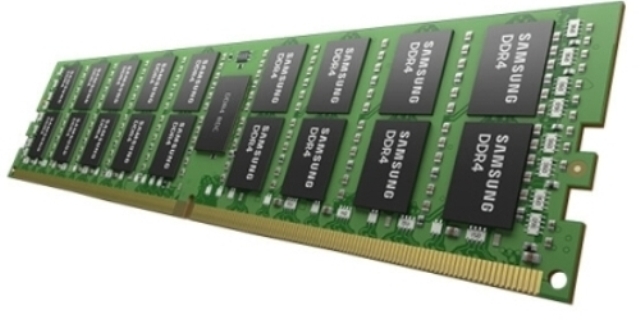
Designed for enterprise servers, this 64GB DDR4-2933 RDIMM with ECC and registered signal integrity is optimized for memory-intensive workloads such as virtualization and in-memory databases, where dual-rank x4 organization enhances bandwidth efficiency. Its registered architecture ensures stable operation in fully populated systems while ECC provides critical error correction for unwavering data integrity.
1. Registered buffer technology stabilizes massive server memory configurations by reducing electrical loading on the memory controller, which is vital for maintaining uptime in hyper-scale virtualized environments.
2. ECC protection actively corrects single-bit memory errors, preserving data integrity for mission-critical enterprise applications like transactional databases and real-time analytics.
3. Dual Rank x4 organization interleaves memory accesses to maximize channel bandwidth, boosting throughput for in-memory computing workloads under heavy consolidation.
4. A very high capacity per module enables densely packed server nodes to achieve the multi-terabyte memory footprints required by advanced virtualization and container orchestration platforms.
5. This speed tier accelerates data transfers with snappy latency, ensuring consistent responsiveness for cloud-native services handling concurrent user requests.
When deploying mission‑critical infrastructure, the specifications of your server memory define whether your platform merely runs or truly delivers. The Samsung M393A8G40AB2-CVFBQ is a 64 GB DDR4‑2933 Registered DIMM purpose‑built for enterprise servers, and its four hallmark characteristics directly address the pain points you face in the data center.
Start with ECC error correction. In a dense virtualization cluster running dozens of VMs on a single node, a single bit flip in memory can silently corrupt a database transaction or bring down a hypervisor. This module’s ECC engine detects and corrects those errors, preserving data integrity in 24/7 operation where financial ledgers or patient records cannot tolerate even a transient fault. Next, the Registered buffer architecture decouples the command/address bus from the chip load. For a host powering an in‑memory database such as SAP HANA or Redis, this means you can populate all 24 DIMM slots per server without signal degradation, scaling to terabytes of reliable memory when every microsecond of query latency matters. The dual‑rank x4 organization further amplifies real‑world throughput. By interleaving accesses across two internal ranks, the module reduces read latency variance under heavy concurrency, so your analytics workload sees sustained 2933 MT/s bandwidth instead of stalling on page‑open conflicts. That CL21 latency, paired with 2933 speed, keeps response times tight when the database engine iterates through billions of in‑memory records. Finally, the 1.2 V DDR4 standard drives down power consumption per DIMM, lowering thermal load across a fully populated server—a direct saving on cooling and a longer service life. Together, these traits convert a spec sheet into a tangible advantage: error‑free virtualization, rock‑steady large‑capacity scaling, and the predictable performance your business‑critical applications demand.
General Virtualization
For general virtualization hosts, a balanced approach using one 64GB RDIMM per memory channel provides sufficient headroom for dozens of VMs without overprovisioning. In a typical dual-socket server with eight channels, populating all channels with a single module each delivers 512GB total—ideal for 40–60 mixed-workload virtual machines. ECC and registered buffering ensure stability during noisy-neighbor memory contention.
In-Memory Database
In-memory databases like Redis or SAP HANA require absolute data integrity and maximum capacity within latency budgets. Configure fully symmetric memory populations: install identical 64GB dual-rank RDIMMs across all channels (e.g., 12 modules for 768GB on a dual-socket, six-channel-per-CPU platform). The registered ECC design prevents silent data corruption, while the dual-rank x4 organization sustains high throughput for large, latency-sensitive datasets.
High-Performance Computing
Memory bandwidth often limits HPC simulation performance. To maximize throughput, populate every channel with one 64GB RDIMM, achieving optimal per-channel bandwidth without rank contention. On an eight-channel platform, eight modules supply 512GB of high-speed DDR4-2933, feeding many-core CPUs efficiently. The dual-rank construction balances capacity and bandwidth, keeping data-parallel workloads like CFD or molecular dynamics supplied with minimal idle cycles.
Rigorously tested, compatible with Dell PowerEdge R760, HPE ProLiant DL380 Gen10, Lenovo ThinkSystem SR650, and Supermicro X11.
Q: Can I mix this M393A8G40AB2-CVFBQ with other memory modules of different brands or speeds?
A: Mixing brands or speeds is strongly discouraged with registered ECC server memory. Disparate timings or ranks often cause boot failures, instability, or uncorrected errors. Uniform, identical modules are required for validated RAS and performance.
Q: Is this memory compatible with my system?
A: This DDR4-2933 ECC RDIMM targets Intel Xeon Scalable (Gen 1/2) and AMD EPYC 7001/7002 servers. Confirm your board supports 64GB dual-rank x4 DIMMs and 2933 MT/s by checking the official Qualified Vendor List.
Q: What is the recommended DIMM population order for optimal performance?
A: Install identical DIMMs into corresponding slots per channel (e.g., A1, B1, C1…) to enable balanced interleaving. For a dual-rank x4 RDIMM, this maximizes memory bandwidth and ECC protection. Always follow your server manual.
Q: Does this module support overclocking or XMP profiles?
A: No. This is a JEDEC-compliant registered ECC module operating at fixed 2933 MT/s and CL21. Overclocking and XMP are not supported, as data integrity and stability are paramount in enterprise platforms.
Q: What warranty and typical failure rate can I expect?
A: It carries a 1-year warranty. Enterprise ECC RDIMMs typically exhibit an AFR well under 0.5% when run within spec, ensuring high reliability for mission-critical workloads.