











 Secure payments
Standard refund policy
Trade Assurance
Secure payments
Standard refund policy
Trade Assurance
| Product Type | Memory Module |
|---|---|
| Compliance Standards | RoHS,WEEE |
| Memory Capacity | 64 GB |
| Memory Technology | DDR4 |
| Product Voltage | 1.2 V |
| RAM Speed | 2933 MHz |
| RAM Standard | DDR4-2933/PC4-23400 |
| Error Identifying | ECC |
| Signal Type | Registered |
| Column Access Strobe (CAS) | CL21 |
| Rank | Quad Rank x4 |
| Quantity of Pins | 288-pin |
| RAM Genre | RDIMM |
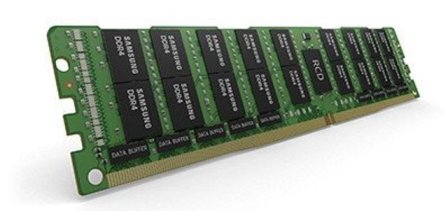
Designed as a 64GB DDR4-2933 Registered ECC RDIMM, this module is purpose-built for enterprise servers and virtualization platforms demanding high data integrity and large memory footprints. Its quad-rank x4 organization maximizes capacity density per channel while registered signaling stabilizes multi-DIMM configurations, and ECC protection ensures reliability for critical workloads like in-memory databases and dense virtual machines.
1. Ample capacity per module conserves DIMM slots, allowing memory scaling without sacrificing existing modules in dense server nodes.
2. ECC protection seamlessly corrects single-bit faults, preserving data accuracy for in-memory databases and preventing costly application errors.
3. Registered signal buffering maintains command integrity across heavily populated memory channels, ensuring stable operation in large-scale multi-socket servers.
4. The sophisticated rank and device architecture delivers deep parallelism, preventing bandwidth drops when multiple virtual machines contend for memory resources.
5. The tuned transfer rate provides ample throughput for next-gen server processors while keeping power and cooling requirements within tight data center envelopes.
Designed for the data center, the M386A8K40CM2-CVF is a 64GB DDR4-2933 Registered DIMM (RDIMM) with ECC, built to eliminate the risks that keep IT architects awake at night. Its ECC engine silently corrects single-bit memory errors in real time—a critical defense when a cosmic ray flipping a single bit can corrupt financial transactions or silently poison a long-running analytics query in an in-memory database like SAP HANA. The registered buffer chip on the module stabilizes command and address signals, enabling you to densely populate a server with multiple DIMMs per channel without signal degradation. This means your VMware or Kubernetes cluster can run significantly more virtual machines on a single host, deferring costly hardware expansion. The quad-rank, x4 organization pushes capacity to 64GB per slot while maintaining balanced electrical loading, so when an entire Redis dataset lives in memory, you get predictable latency under heavy workloads. In a virtualized cluster or a memory-hungry database tier, this combination of error correction, signal integrity, and massive capacity directly translates to fewer application crashes, consistent performance during peak transactions, and the confidence to consolidate mission-critical workloads onto fewer servers.
General Virtualization
For general virtualization on dual-socket servers, deploy one 64 GB DDR4-2933 RDIMM per memory channel to balance density and bandwidth. A typical configuration uses 16 identical modules (one per channel, 8 channels per CPU) to deliver 1 TB of total capacity while maintaining the full 2933 MT/s speed. This approach supports a large number of virtual machines and avoids performance penalties from unbalanced NUMA configurations.
In-Memory Database
In-memory databases demand maximum capacity and rock-solid data integrity. Populate all available memory channels with these 64 GB Quad Rank x4 Registered ECC DIMMs, achieving multi-terabyte footprints with uniform latency. The ECC and registered signal types guard against errors under sustained write loads, and fully populating each socket symmetrically eliminates remote memory access bottlenecks critical for real-time analytics.
High Performance Computing (HPC)
HPC codes rely on high sustained memory bandwidth, so limit installation to one Quad Rank 64 GB DIMM per channel. Because Quad Rank loading often forces the memory controller to downclock when two DIMMs share a channel, single-DIMM-per-channel configurations preserve the 2933 MT/s rate and CL21 timings. If more total capacity is needed, consider platforms with more memory channels rather than adding a second module per channel, keeping bandwidth maximized for simulation and modeling workflows.
Rigorously tested and verified compatible with Dell PowerEdge R750, HPE ProLiant DL380 Gen10, and Lenovo ThinkSystem SR650 V2.
Q: Can I mix this M386A8K40CM2-CVF with other memory modules of different brands or speeds?
A: We strongly advise against mixing different brands or speeds in server platforms. This RDIMM requires matched ranks and timings to maintain signal integrity and stable ECC operation under sustained workloads.
Q: Is this memory compatible with my system?
A: It is compatible with servers using Intel Xeon Scalable or AMD EPYC platforms that support DDR4-2933 Registered ECC memory. Verify your motherboard's QVL for 64GB quad-rank RDIMM support.
Q: What is the recommended DIMM population order for optimal performance?
A: For quad-rank x4 RDIMMs, populate identical modules per channel following the server's balanced memory configuration. Typically install in sets of six or eight, prioritizing white or blue slots as detailed in your platform manual.
Q: Does this module support overclocking or XMP profiles?
A: No. As an enterprise DDR4-2933 Registered ECC DIMM, it adheres strictly to JEDEC standard timings at 1.2 V for deterministic reliability. XMP or overclocking is not supported, as mandated for server-grade stability.
Q: What warranty and typical failure rate can I expect?
A: This module includes a one-year warranty. Actual failure rates are extremely low due to stringent server-grade binning and ECC protection, contributing to an annualized failure rate (AFR) well below industry norms in compliant environments.