











 Secure payments
Standard refund policy
Trade Assurance
Secure payments
Standard refund policy
Trade Assurance
| Product Type | Memory Module |
|---|---|
| Memory Capacity | 64 GB |
| Memory Technology | DDR4 |
| Product Voltage | 1.2 V |
| RAM Speed | 2933 MHz |
| RAM Standard | DDR4-2933/PC4-23400 |
| Error Identifying | ECC |
| Signal Type | Registered |
| Column Access Strobe (CAS) | CL21 |
| Rank | Quad Rank x4 |
| Quantity of Pins | 288-pin |
| RAM Genre | RDIMM |
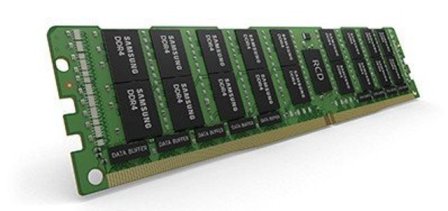
This 64GB DDR4-2933 Registered ECC RDIMM, featuring a quad-rank x4 organization and CL21 latency, is engineered for memory-intensive server platforms running virtualization, in-memory databases, and other mission-critical workloads that demand maximum capacity per channel. The registered signal type and integrated ECC maintain robust signal integrity and data accuracy across high-density quad-rank configurations, while the 1.2V low-power design supports reliable 24/7 operation.
1. High per-module capacity allows dense server configurations to host more virtual machines and in-memory databases without populating extra DIMM slots, directly raising consolidation ratios.
2. ECC protection silently detects and corrects single-bit errors in real time, ensuring data integrity for financial transactions, scientific computing, and mission-critical databases.
3. Registered signal buffering stabilizes the memory channel by reducing electrical load on the CPU memory controller, enabling reliable operation across fully populated multi-DIMM server platforms.
4. Fast data throughput keeps modern multi-core server processors saturated with data, cutting CPU idle time during large-scale analytics and real-time processing workloads.
5. Quad Rank x4 architecture achieves maximum memory depth per channel while preserving channel balance, critical for virtualization farms and memory-hungry enterprise applications that require both capacity and stability.
Understanding server memory means looking beyond the spec sheet to the real-world risks it neutralizes. The Samsung M386A8K40CM2-CVFC0 is a 64GB DDR4-2933 Registered DIMM with ECC, purpose-built for enterprise servers where downtime is measured in revenue lost per second. Its four critical attributes turn into operational guarantees.
The ECC capability is your silent guardian against bit-flip errors caused by cosmic radiation or electrical noise. In a memory database like SAP HANA or a hypervisor cluster hosting dozens of virtual machines, a single uncorrected bit can corrupt financial transactions or silently propagate through live data, leading to catastrophic decision-making. ECC detects and corrects these errors in real time, preserving the integrity of your insights. Meanwhile, the Registered signal buffer ensures stability at this 64GB capacity. A traditional unbuffered module would overload the memory controller in a 2-socket server packed with multiple DIMMs, causing erratic boot failures and performance collapse. Here, the register re-drives signals cleanly, allowing you to populate all channels confidently for heavy virtualization or in-memory analytics without signal degradation. The Quad Rank x4 organization maximizes internal bank interleaving, increasing concurrency—your database queries return faster because the memory can pipeline requests more efficiently. Finally, operating at a cool 1.2V, it reduces the total power draw across a fully loaded rack, cutting both energy bills and thermal stress in your data center. This memory transforms raw capacity into a foundation of reliability, ensuring that your consolidated workloads run error-free and at peak efficiency, even under relentless 24/7 duty cycles.
General Virtualization
Deploy these 64GB RDIMMs in balanced sets to populate all memory channels per CPU — typically one module per channel for optimal throughput. For a dual‑socket server with eight channels each, install eight modules to reach 512 GB, providing ample headroom for dozens of moderate VMs while maintaining consistent 2933 MT/s speed.
In‑Memory Database
Maximize capacity by fully populating every DIMM slot, accepting any necessary speed reduction when using quad‑rank modules. Combine multiple 64GB sticks to reach multi‑terabyte footprints, enabling entire datasets to reside in RAM for ultra‑low latency access. Keep CAS 21 timing in mind; where latency is sensitive, test real‑world query performance and consider balancing rank count against frequency.
High‑Performance Computing (HPC)
Populate one DIMM per channel to sustain 2933 MT/s and avoid the clock speed drop that occurs with multiple quad‑rank modules per channel. This delivers the memory bandwidth critical for simulation and modelling codes. Scale total capacity by adding more nodes rather than overloading individual server memory buses, keeping compute‑to‑memory ratios tight.
Server-grade validated: compatible with Dell PowerEdge R760, HPE ProLiant DL380 Gen10, Lenovo ThinkSystem SR650, and more.
Q: Can I mix this M386A8K40CM2-CVFC0 with other memory modules of different brands or speeds?
A: Mixing with different brands or speeds is strongly discouraged in server environments. It may cause instability, reduced performance, or POST failures. For reliable operation, use identical RDIMMs validated by your system vendor.
Q: Is this memory compatible with my system?
A: This 64GB DDR4-2933 Registered ECC RDIMM is designed for servers using Intel Xeon Scalable or AMD EPYC platforms. Verify your motherboard supports Quad Rank x4 modules and 1.2V operation to ensure full compatibility.
Q: What is the recommended DIMM population order for optimal performance?
A: Populate identical DIMMs per memory channel, typically starting with the white slots. For this Quad Rank module, avoid mixing with different ranks per channel. Always follow the server board’s population guide to maximize bandwidth.
Q: Does this module support overclocking or XMP profiles?
A: No, this is a server-class Registered DIMM built for stability. It operates exclusively at JEDEC standard DDR4-2933 without XMP or overclocking support. Overclocking is incompatible with ECC and registered memory architectures.
Q: What warranty and typical failure rate can I expect?
A: This module includes a one-year warranty. Server memory typically exhibits an annualized failure rate below 0.3% under rated conditions, reflecting rigorous manufacturing and testing for 24/7 enterprise workloads.