











 Secure payments
Standard refund policy
Trade Assurance
Secure payments
Standard refund policy
Trade Assurance
| Product Type | Memory Module |
|---|---|
| Memory Capacity | 64 GB |
| Memory Technology | DDR4 |
| Product Voltage | 1.2 V |
| RAM Speed | 2933 MHz |
| RAM Standard | DDR4-2933/PC4-23400 |
| Error Identifying | ECC |
| Signal Type | Registered |
| Column Access Strobe (CAS) | CL21 |
| Rank | Quad Rank x4 |
| Quantity of Pins | 288-pin |
| RAM Genre | RDIMM |
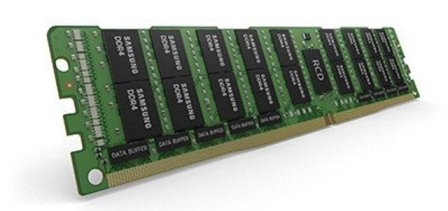
This 64GB DDR4-2933 RDIMM is purpose-built for enterprise servers handling memory-intensive workloads like virtualization and in-memory databases, where its quad-rank x4 organization and registered signal architecture deliver maximum capacity per channel with enhanced bus stability. The module’s ECC protection and CL21 access latency further guarantee end-to-end data integrity and consistent, error-resilient performance in 24/7 mission-critical environments.
1. 64GB capacity per module packs massive memory into a single slot, allowing a 1U server to run hundreds of lightweight containers or a handful of memory-hungry in-memory databases without scaling out hardware.
2. DDR4-2933 speed delivers the steady, high-throughput bandwidth that modern multi-socket processors demand, shrinking batch processing windows and accelerating live data streaming.
3. ECC protection silently detects and corrects single-bit errors, guarding financial ledgers and scientific computations against subtle data corruption that could cascade into critical failures.
4. Registered buffering stabilizes the command and address buses in fully loaded memory channels, enabling dense 24-DIMM platforms to sustain 24/7 uptime under relentless transactional loads.
5. Quad Rank x4 organization quadruples the bank interleaving within the stick, boosting parallel access efficiency and keeping response times low even when heavy virtualization multiplexes countless workloads on the same node.
In a data center where every transaction matters, this DDR4-2933 Registered ECC module is engineered to eliminate the silent threats that undermine server reliability. The ECC engine actively detects and corrects single-bit memory errors caused by cosmic radiation or electrical noise, a non-negotiable safeguard for virtualized clusters where a single uncorrected bit flip in a financial database or a hypervisor memory page can crash dozens of guest workloads simultaneously.
The registered buffer isolates the memory controller from the electrical load of high-capacity ranks, enabling fully populated channels without signal degradation. This means you can install multiple 64 GB RDIMMs per server node without sacrificing stability, directly addressing the density demands of memory-hungry in-memory databases like SAP HANA and dense VMware farms. At 2933 MT/s, the Quad Rank x4 organization balances deep rank interleaving with robust throughput, sustaining the bandwidth to accelerate simultaneous OLTP queries and real-time analytics. The 1.2 V operating voltage further reduces thermal stress and power draw in always-on deployments, letting you pack more compute into the same power envelope while protecting your TCO.
General Virtualization
For dense VM hosting, populate all memory channels symmetrically to maximize bandwidth and minimize NUMA latency. Deploy six or eight identical 64GB RDIMMs in a balanced configuration per socket (e.g., 6 × 64GB = 384GB or 8 × 64GB = 512GB) to support a high consolidation ratio while preserving headroom for memory overcommitment. Avoid mixing quad-rank DIMMs in the same channel beyond the platform’s per‑channel rank limit, as this may force speed downgrades.
In-Memory Database
Low latency and sheer capacity are paramount, so fully load every channel with one 64GB RDIMM initially and scale to two DIMMs per channel (2DPC) if the platform allows it at 2933 MT/s. Use the largest supported population—often 16 × 64GB for 1TB per socket—to keep the entire dataset in RAM and eliminate storage I/O bottlenecks. Monitor for rank‑related timing impacts; quad‑rank x4 parts deliver high density but may require relaxing the memory speed when populating multiple ranks per channel.
High-Performance Computing
Bandwidth is the critical resource, so aim for one DIMM per channel at the maximum rated speed of 2933 MT/s to avoid frequency drops. A typical dual‑socket node benefits from 12 identical 64GB RDIMMs (768GB total), providing balanced bandwidth per core for MPI‑heavy or memory‑bandwidth‑bound simulations. Lean toward a “one DIMM per channel” topology rather than huge capacity per socket, preserving the full 2933 MT/s clock and minimizing jitter in tightly synchronized codes.
Rigorously tested and compatible with servers like Dell PowerEdge R740, HPE ProLiant DL380 Gen10, and Lenovo ThinkSystem SR650.
Q: Can I mix this M386A8K40CM2-CVFG0 with other memory modules of different brands or speeds?
A: Mixing is not recommended for enterprise servers. Different speeds or timings may force the memory controller to downgrade to the lowest common specification, risking system instability or unbootable states with ECC Registered DIMMs.
Q: Is this memory compatible with my system?
A: This 288-pin DDR4-2933 ECC Registered DIMM is compatible with server platforms supporting RDIMMs, such as Intel Xeon Scalable (Cascade Lake) and AMD EPYC 7002/7003 series. Always verify against your motherboard's Qualified Vendor List (QVL).
Q: What is the recommended DIMM population order for optimal performance?
A: For quad-rank modules, populate the furthest slot from the CPU per channel first to balance signal integrity. Uniformly distribute modules across all memory channels to maximize bandwidth, following the server motherboard's specific population guidelines.
Q: Does this module support overclocking or XMP profiles?
A: No. This server-grade Registered DIMM operates strictly at JEDEC standard DDR4-2933 CL21. Overclocking and XMP profiles are not supported to ensure the deterministic reliability required in data center environments.
Q: What warranty and typical failure rate can I expect?
A: It includes a one-year warranty. Enterprise RDIMMs like this Samsung module exhibit an extremely low annualized failure rate, typically below 0.5%, ensuring high operational reliability for mission-critical workloads.