











 Secure payments
Standard refund policy
Trade Assurance
Secure payments
Standard refund policy
Trade Assurance
| Product Type | Memory Module |
|---|---|
| Memory Capacity | 64 GB |
| Memory Technology | DDR4 |
| Product Voltage | 1.2 V |
| RAM Speed | 2933 MHz |
| RAM Standard | DDR4-2933/PC4-23400 |
| Error Identifying | ECC |
| Signal Type | Registered |
| Column Access Strobe (CAS) | CL21 |
| Rank | Quad Rank x4 |
| Quantity of Pins | 288-pin |
| RAM Genre | RDIMM |
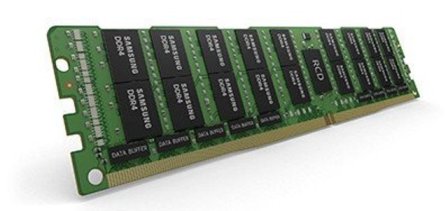
Optimized for enterprise server platforms handling virtualization and memory-intensive database workloads, this 64GB DDR4-2933 Registered ECC RDIMM delivers robust data integrity through error correction and a registered signal architecture that ensures stable operation under heavy memory loads. Its quad-rank x4 organization maximizes capacity density per channel while the 2933 MT/s speed and CL21 latency provide a balanced profile for scaling large, reliable memory configurations.
1. Registered signal type preserves signal integrity across fully populated memory channels, enabling massive memory configurations essential for enterprise virtualization and in-memory databases.
2. ECC error correction continuously detects and corrects single-bit errors, preventing silent data corruption in financial transactions and long-running analytics workloads.
3. 64GB capacity per module dramatically increases memory density per server node, allowing more virtual machines to reside on a single physical host without swapping penalties.
4. Quad Rank x4 organization allows the memory controller to interleave access across more banks, boosting effective bandwidth for concurrent multi-tenant workloads under heavy CPU utilization.
5. 2933 MT/s transfer speed elevates the data throughput ceiling for each channel, reducing latency bubbles during peak transaction loads in scale-out clustered services.
In a virtualized data center, memory errors are a hidden threat. The M386A8K40CM2-CVFBQ 64GB DDR4-2933 RDIMM neutralizes that risk with ECC, which transparently fixes single-bit upsets before they can crash your hypervisor or corrupt an in-memory database transaction. The registered design buffers command and address signals, so you can install multiple modules per channel without signal degradation—this is what enables the multi-terabyte memory footprint required to consolidate hundreds of virtual machines or run large Redis instances. Its quad-rank x4 organization is more than a density enabler; four ranks boost performance through interleaving, and the x4 DRAM width aligns natively with ECC operations, ensuring that error detection never starves bandwidth. Paired with a 2,933 MT/s data rate, this module keeps latency-sensitive workloads like SAP HANA responsive during peak loads. Ultimately, you gain a foundation of data integrity, scalable capacity, and consistent low latency that translates to higher uptime and safer consolidation.
Server Memory Capacity Planning Guide
The specified module is a 64GB DDR4-2933 Registered ECC RDIMM, purpose-built for server environments requiring data integrity and high capacity. Below are recommended configurations for typical workloads.
General Virtualization
Populate one DIMM per memory channel (e.g., 1DPC) to balance capacity and memory bandwidth. For a dual-socket server with 8 channels each, eight 64GB modules yield 512GB, comfortably hosting 50+ mid-size VMs. Avoid populating all slots initially to reserve headroom for scaling.
In-Memory Database
Maximize capacity within thermal and budget limits. Deploy two 64GB RDIMMs per channel (2DPC) on platforms like 8-channel systems, delivering 1TB of memory. While quad-rank DIMMs may force a slight speed reduction at 2DPC, the massive RAM footprint keeps entire datasets resident, drastically reducing storage I/O latency.
High-Performance Computing
Prioritize balanced per-core memory bandwidth. Use one quad-rank 64GB module per channel (1DPC) to sustain full 2933 MT/s speed. In an 8-channel node, 512GB provides 2–4GB per core for memory-bandwidth-bound simulations. ECC registration ensures silent data corruption is mitigated during long-duration computational runs.
Rigorously tested server DDR4 RDIMM, compatible with Dell PowerEdge R740, HPE ProLiant DL380 Gen10, Lenovo ThinkSystem SR650.
Q: Can I mix this M386A8K40CM2-CVFBQ with other memory modules of different brands or speeds?
A: Mixing registered ECC modules of different brands or speeds is not recommended. It forces all DIMMs to the lowest common frequency and may cause signal integrity issues, leading to system instability on server platforms.
Q: Is this memory compatible with my system?
A: Compatibility depends on your server board and CPU. This DDR4-2933 ECC RDIMM is designed for Intel Xeon Scalable (Skylake-SP/Cascade Lake) and AMD EPYC platforms. Always verify the system’s qualified vendor list (QVL) for support.
Q: What is the recommended DIMM population order for optimal performance?
A: Follow the server board’s population guide. Typically, populate identical RDIMMs per channel starting with the furthest slot (e.g., white connectors first). For quad-rank modules, balance across memory channels to maximize bandwidth and avoid performance penalties.
Q: Does this module support overclocking or XMP profiles?
A: No. This is a server-grade registered DIMM that strictly adheres to JEDEC DDR4-2933 standards. Overclocking and XMP are not supported, as enterprise platforms prioritize data integrity, reliability, and compliance over tunable performance.
Q: What warranty and typical failure rate can I expect?
A: This module comes with a 1-year warranty. As an enterprise-class RDIMM, it offers an MTBF exceeding 2 million hours under specified conditions, ensuring exceptionally low failure rates in 24/7 data center environments.