











 Secure payments
Standard refund policy
Trade Assurance
Secure payments
Standard refund policy
Trade Assurance
| Product Type | Memory Module |
|---|---|
| Memory Capacity | 64 GB |
| Memory Technology | DDR4 |
| Product Voltage | 1.2V |
| RAM Speed | 1600MHz |
| RAM Standard | DDR4-1600/PC4-12800 |
| Error Identifying | ECC |
| Signal Type | Registered |
| Column Access Strobe (CAS) | CL11 |
| Quantity of Pins | 276-pin |
| RAM Genre | CDIMM |
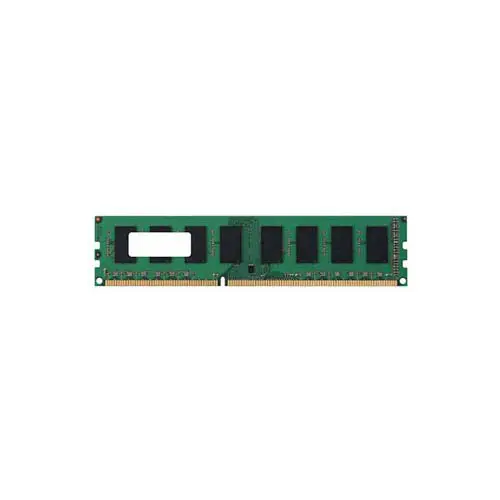
This 64GB DDR4-1600 Registered ECC CDIMM is purpose-built for server platforms, providing robust data integrity and stability for virtualization, in-memory databases, and other mission-critical enterprise workloads. The Registered signal type minimizes electrical load on the memory controller for superior reliability in dense configurations, while integrated ECC and a tight CL11 CAS latency work together to eliminate data corruption and reduce access delays.
1. A dense 64GB capacity per module enables heavy virtualization clusters to pack more virtual machines onto each physical host, directly lowering server sprawl and licensing costs.
2. Integrated ECC silently corrects single-bit memory faults in real time, preserving transactional integrity in databases and safeguarding financial records against silent data corruption.
3. The registered signal architecture buffers address and command lines, stabilizing signal integrity when populating all memory channels and allowing large-scale in-memory analytics to scale without instability.
4. A steady 1600MHz clock sustains predictable 12.8GB/s bandwidth per channel, keeping latency-sensitive cloud services responsive even under concurrent tenant spikes.
5. Operating at just 1.2V, the module slashes memory power draw per node, which cumulatively trims data center cooling demands and extends hardware lifespan in always-on deployments.
The M350A8K43BB0-CK0 is a 64GB DDR4-1600 registered ECC CDIMM, engineered for enterprise server environments where data integrity and relentless uptime define operational success. In a dense virtualization cluster hosting dozens of VMs, silent memory errors caused by cosmic radiation background can corrupt hypervisor state or guest data without warning. The module’s ECC technology detects and corrects single-bit flips in real time, transforming a potential multi-tenant outage into an invisible, non-event—this is not a feature, it is the difference between trusted uptime and a costly weekend for your IT team. Registered signal buffering tackles a less obvious but equally critical pain point: as you scale to dual- or quad-socket servers fully loaded with high-capacity DIMMs, the electrical load destabilizes the memory bus. The register redistributes that load cleanly, allowing all four channels to operate at rated speed without training failures, so your 64GB rank stays rock-solid under the heavy instruction mix of an in-memory database like Redis or SAP HANA. Speaking of capacity, 64GB per module means you can equip a 512GB buffer pool in just eight slots, leaving room to grow. When a financial trading system queries sub-millisecond Redis sorted sets, that density directly shrinks your TCO—fewer servers, tighter latency, and zero compromises on the 1.2V low-power envelope that keeps thermal footprint manageable in rack-dense deployments. You are not buying a DIMM; you are underwriting the deterministic consistency every virtualized workload and real-time analytics engine demands.
Capacity Planning Guide for 64GB DDR4-1600 ECC Registered DIMM
This 64GB DDR4-1600 ECC Registered memory module (1.2V, CL11, PC4-12800) is engineered for servers that require high capacity, data integrity, and stable operation. Use the guidelines below to optimize configuration for key server workloads.
General Virtualization
For dense VM hosting, install four modules per CPU (256GB) as a balanced starting point; scale to eight modules (512GB) in a dual-socket server to comfortably support 50+ typical virtual machines. Populate identical DIMMs across memory channels to maintain uniform performance, and rely on ECC to prevent hypervisor crashes.
In-Memory Database
Maximize capacity by fully populating all DIMM slots with these 64GB modules. On a dual-socket board with 24 slots, you achieve 1.5TB, allowing entire working sets to remain in RAM for ultra-low latency. The 1.2V operating voltage reduces power overhead, while Registered ECC safeguards critical transactional data during sustained loads.
High-Performance Computing (HPC)
Populate one DIMM per memory channel to balance bandwidth and capacity without mixing ranks or speeds. In a typical 6-channel node, six 64GB modules deliver 384GB, enough for large simulation checkpoints and scratch data. Registered ECC ensures error-free uptime during multi-day parallel jobs, and the low voltage contributes to overall cluster power efficiency.
Rigorously tested for servers, compatible with Dell PowerEdge R740, HPE ProLiant DL380 Gen10, Lenovo ThinkSystem SR650.
Q: Can I mix this M350A8K43BB0-CK0 with other memory modules of different brands or speeds?
A: Mixing different brands or speeds is not recommended for server environments. It may cause instability, reduced performance, or incompatibility. Use identical modules with the same part number, rank, and latency for validated reliability.
Q: Is this memory compatible with my system?
A: This DDR4-1600 ECC Registered CDIMM is compatible with server platforms supporting 1.2V, 276-pin LRDIMM/RDIMM configurations, such as Intel Xeon E5-2600 v3/v4 and select AMD EPYC systems. Verify your server’s qualified vendor list.
Q: What is the recommended DIMM population order for optimal performance?
A: For balanced memory access, populate channels evenly per CPU. Typically fill all white slots first, then black slots, following your server’s manual. Install identical DIMMs in matching slots to maintain multi-channel interleaving.
Q: Does this module support overclocking or XMP profiles?
A: No. This is an enterprise-grade ECC Registered module designed for stability, not overclocking. It runs strictly at JEDEC nominal timings (DDR4-1600, CL11) without XMP profiles to ensure data integrity in 24/7 operation.
Q: What warranty and typical failure rate can I expect?
A: This module comes with a one-year warranty. It undergoes rigorous screening and has a typical annualized failure rate (AFR) far below 1% under specified server conditions, ensuring long-term reliability for mission-critical workloads.