











 Secure payments
Standard refund policy
Trade Assurance
Secure payments
Standard refund policy
Trade Assurance
| Model | M393B1K70CH0-CH9Q5N |
|---|---|
| Product Type | Memory Module |
| Compliance Standards | CE,WEEE,RoHS |
| Memory Capacity | 8 GB |
| Memory Technology | DDR3 |
| Product Voltage | 1.5V |
| RAM Speed | 1333MHz |
| RAM Standard | DDR3-1333/PC3-10600 |
| Error Identifying | ECC |
| Signal Type | Registered |
| Column Access Strobe (CAS) | CL9 |
| Rank | Dual Rank x4 |
| Quantity of Pins | 240-pin |
| RAM Genre | RDIMM |
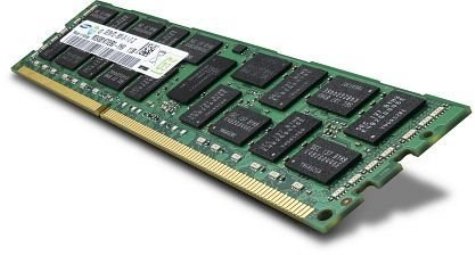
The M393B1K70CH0-CH9Q5N is an 8GB DDR3-1333 registered ECC RDIMM engineered for server platforms, making it ideal for virtualization, in-memory databases, and other mission-critical workloads where data integrity and uptime are paramount. Its dual-rank x4 configuration and CL9 latency deliver a balance of high memory bandwidth and low access latency, while the registered signal type and ECC ensure robust signal integrity and single-bit error correction across demanding 24/7 enterprise environments.
1. ECC protection continuously corrects single-bit errors, preserving data integrity for financial ledgers and mission-critical databases that cannot tolerate silent corruption.
2. Registered command buffering stabilizes high-density memory configurations, allowing virtualized servers to scale up RAM footprints without sacrificing signal integrity.
3. Dual-rank organization with narrow-component interleaving increases effective channel utilization, delivering consistent throughput for multiple concurrent virtual machines.
4. This capacity point provides a lean, cost-optimized memory baseline ideally suited for lightweight container orchestration and edge-caching nodes.
5. The DDR3 frequency band offers a predictable bandwidth envelope that maintains steady transactional performance in legacy enterprise resource planning workloads.
The Samsung M393B1K70CH0-CH9Q5N is an 8GB DDR3 Registered DIMM engineered for server platforms where every bit of data integrity translates directly into business continuity. Its Error Correction Code (ECC) actively detects and automatically corrects single-bit memory errors caused by cosmic radiation or electrical noise, preventing silent data corruption that could crash a hypervisor or silently alter a financial database entry during a high-frequency trading session. The registered buffer re-drives address and command signals across fully loaded memory channels, meaning you can populate all 24 DIMM slots in a virtualization cluster without signal degradation; this directly supports higher virtual machine density, allowing dozens of VMs to run stable memory-intensive workloads simultaneously. The Dual Rank x4 organization further interleaves memory banks to boost sustained bandwidth, which is critical for in-memory databases like SAP HANA or Redis where microsecond latency spikes during peak OLTP queries can degrade user experience. Running at DDR3-1333 with CL9 timings and a dependable 1.5V profile, it strikes a precise balance between responsive throughput and power efficiency in your data center rack. For IT architects, this module means uncompromised reliability, scalable capacity, and consistent performance exactly when your mission-critical applications demand it most.
General Virtualization
For a general virtualization host using this 8GB DDR3-1333 RDIMM, plan for balanced capacity and memory bandwidth. A common starting point is six identical modules (48GB total) installed across three channels per CPU, leaving room for future expansion. This setup supports a moderate number of virtual machines while maintaining ECC reliability.
In-Memory Database
In-memory databases demand maximum capacity and sustained throughput. Populate all memory channels with one or two DIMMs per channel, aiming for 128GB or more using sixteen 8GB RDIMMs in a dual‑socket server. Protecting data integrity with registered ECC is critical, so avoid mixing speeds and stick to this uniform 1333MHz, Dual Rank x4 configuration to minimize latency penalties.
High Performance Computing (HPC)
For HPC workloads, memory bandwidth is paramount. Install one RDIMM per channel to achieve the highest possible speed without dropping to a lower rank. A typical node might deploy twelve modules (96GB total) across four channels per CPU, ensuring all DIMMs are identical M393B1K70CH0 parts. This configuration delivers consistent 1333MHz operation, balancing capacity with the sustained bandwidth required by parallel simulations and scientific computing.
Strictly tested server DDR3 RDIMM; compatible with Dell R720, HP DL380p Gen8, Lenovo x3650 M4, etc.
Q: Can I mix this M393B1K70CH0-CH9Q5N with other memory modules of different brands or speeds?
A: Mixing different brands or speeds with registered ECC memory is not recommended. It may cause system instability or prevent boot. Use identical modules to ensure reliable operation.
Q: Is this memory compatible with my system?
A: This RDIMM is compatible with servers supporting DDR3-1333 registered ECC memory, such as Intel Xeon 5500/5600 or AMD Opteron platforms. Verify your board's qualified vendor list for exact support.
Q: What is the recommended DIMM population order for optimal performance?
A: Consult your server board manual; typically, populate the farthest slot per channel first (e.g., DIMM1, DIMM3) and balance dimms across CPU memory controllers for best throughput.
Q: Does this module support overclocking or XMP profiles?
A: No, this is a JEDEC-compliant server module with no XMP or overclocking support. It is engineered for maximum stability and 24/7 error-free operation in enterprise environments.
Q: What warranty and typical failure rate can I expect?
A: It includes a one-year warranty. Built with ECC and server-grade components, the module has a very low annualized failure rate, typically under 0.5%, ensuring high reliability.