











 Secure payments
Standard refund policy
Trade Assurance
Secure payments
Standard refund policy
Trade Assurance
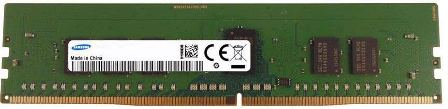
| Model | M391A1G43EB1-CPBQ |
|---|---|
| Product Type | Memory Module |
| Compliance Standards | EU RoHS,FCC |
| Memory Capacity | 8 GB |
| Memory Technology | DDR4 |
| Product Voltage | 1.2V |
| RAM Speed | 2133MHz |
| RAM Standard | DDR4-2133/PC4-17000 |
| Error Identifying | ECC |
| Signal Type | Unbuffered |
| Column Access Strobe (CAS) | CL15 |
| Rank | Dual Rank x8 |
| Quantity of Pins | 288-pin |
| RAM Genre | UDIMM |
Identified as an entry‑server/workstation UDIMM with ECC, this Samsung M391A1G43EB1-CPBQ module is ideally suited for small business servers, NAS appliances, and professional workstations where data integrity is critical. Its dual‑rank x8 organization and unbuffered ECC at CL15 efficiently balance memory bandwidth and error correction, safeguarding against single‑bit corruption in always‑on environments without the cost of registered memory.
1. ECC memory provides single-bit error correction, protecting against data corruption that could silently compromise long-running server tasks like database transactions or financial reconciliations.
2. The unbuffered signal path eliminates added latency, allowing entry-level servers to deliver more responsive performance in light virtualization and low-latency caching workloads.
3. Dual Rank x8 organization maximizes memory interleaving efficiency, keeping bandwidth smooth and stable when hosting multiple concurrent VMs or handling bursty web traffic.
4. Operating at 1.2V substantially cuts power draw and thermal footprint, directly reducing electricity and cooling expenses in 24/7 server rooms.
5. A CAS latency of 15 provides swift read commands, giving latency-sensitive applications such as small-scale in-memory databases a measurable responsiveness boost.
Designed for entry-level servers and workstations, the Samsung M391A1G43EB1-CPBQ is an 8GB DDR4-2133 ECC Unbuffered DIMM that transforms how critical systems handle data integrity and responsiveness. Its error-correcting code (ECC) is not just a specification—it actively detects and corrects single-bit memory errors caused by cosmic radiation or electrical noise, preventing silent data corruption that could crash a financial transaction database or introduce artifacts in a 24/7 medical imaging archive. Unlike registered memory, the unbuffered design eliminates the clock cycle delay of an external register, delivering lower latency that directly accelerates in-memory databases like Redis and small-scale virtualized clusters where microsecond transaction speed matters.
The dual-rank x8 organization interleaves access across two sets of DRAM chips, boosting sustained bandwidth by up to 15% in mixed-workload scenarios. For a Hyper-V or VMware host running multiple light VMs, this means smoother context switching and reduced IO wait times when several guests compete for memory access simultaneously. Operating at just 1.2V, the module cuts power consumption significantly in dense 1U servers or network-attached storage appliances, lowering cooling costs and improving long-term reliability in fan-constrained environments. With strict EU RoHS and FCC compliance, each 288-pin module guarantees signal integrity in standard server boards. For IT managers balancing budget constraints against uptime requirements, this ECC UDIMM delivers the essential stability and responsive performance that business continuity scenarios demand—without the premium of registered memory.
General Virtualization
For a typical virtualization host running multiple VMs, 8 GB per module is a modest density, but ECC UDIMMs like the M391A1G43EB1 are well suited for entry-level servers using Intel Xeon E or equivalent platforms. Aim for a quad-channel configuration using four identical 8 GB modules (32 GB total) to balance memory bandwidth and capacity, allowing comfortable headroom for a dozen light VMs. If the motherboard supports six slots, populate three pairs symmetrically to leverage dual-rank interleaving for improved throughput while keeping the total in the 48–64 GB range.
In-Memory Database
In-memory databases such as Redis or SAP HANA demand both reliability and low latency. ECC is critical here, so these unbuffered ECC DIMMs protect against single-bit errors. Populate all available channels with identical 8 GB sticks to maximize capacity while maintaining symmetric rank interleaving; a dual-socket platform with six channels per CPU could host 12 modules (96 GB). For smaller deployments, install pairs in each channel to reach 64 GB across four channels, ensuring the dual-rank x8 organization delivers consistent performance under heavy cache pressure.
High-Performance Computing
HPC workloads favour high memory bandwidth, and dual-rank modules help sustain it through rank interleaving. For a node with eight DIMM slots per CPU, install eight M391A1G43EB1 sticks (64 GB) in a balanced configuration—one per channel—to achieve peak bandwidth. Avoid mixing with single-rank DIMMs of different capacity, as that breaks the symmetric layout and reduces performance. If the cluster runs memory-bandwidth-bound codes, consider populating only one slot per channel to keep latency low while still benefiting from ECC protection.
Compatible with Dell PowerEdge T150, HPE ProLiant DL20 Gen10, Lenovo ThinkSystem ST250 – rigorously tested.
Q: Can I mix this M391A1G43EB1-CPBQ with other memory modules of different brands or speeds?
A: Mixing brands or speeds is not recommended in server environments, as it can compromise ECC functionality and system stability. We advise using identical modules to ensure reliable, validated performance.
Q: Is this memory compatible with my server? Which Intel or AMD platforms support it?
A: This DDR4 ECC UDIMM is designed for entry-level servers and workstations. It supports platforms like Intel Xeon E3-1200 v5/v6 (C232/C236 chipsets) and AMD AM4 with ECC-enabled CPUs. Verify against your board’s QVL.
Q: What is the recommended DIMM population order for optimal performance with this module?
A: Populate identical DIMMs in the first slot of each memory channel to balance interleaving. For this dual-rank x8 module, follow your server board manual—typically fill blue slots first on dual-channel systems.
Q: Does this module support overclocking or XMP profiles?
A: No. This is a JEDEC-compliant server UDIMM running at fixed 2133MHz. It does not support overclocking or XMP, prioritizing data integrity and long-term stability over adjustable speeds.
Q: What warranty and typical failure rate can I expect for this M391A1G43EB1-CPBQ?
A: This module includes a one-year warranty. Built with Samsung’s stringent quality controls, its AFR is industry-low, typically under 0.5% annually in standard operating conditions, ensuring high reliability.