











 Secure payments
Standard refund policy
Trade Assurance
Secure payments
Standard refund policy
Trade Assurance
| Product Type | Memory Module |
|---|---|
| Memory Capacity | 8 GB |
| Memory Technology | DDR3 |
| Product Voltage | 1.5V |
| RAM Speed | 1066MHz |
| RAM Standard | DDR3-1066/PC3-8500 |
| Error Identifying | ECC |
| Signal Type | Registered |
| Column Access Strobe (CAS) | CL7 |
| Rank | Quad Rank x8 |
| Quantity of Pins | 240-pin |
| RAM Genre | RDIMM |
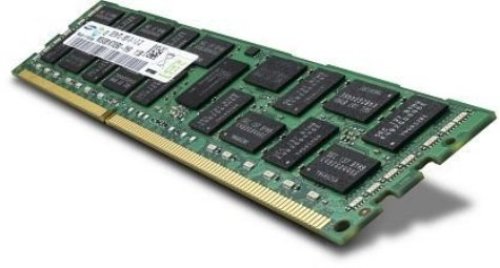
Ideally suited for virtualization hosts and in-memory databases, this Samsung M393B1K73BHD-CF8 8GB DDR3-1066 RDIMM leverages its registered signal type and ECC to ensure robust data integrity and system stability under sustained heavy loads. The quad-rank x8 organization maximizes memory density per channel for legacy servers, while the CL7 latency ensures responsive access in data-critical applications.
1. Registered signal type buffers command and address lines, enabling large memory populations essential for virtualization-heavy data centers.
2. ECC corrects single-bit errors automatically, preventing silent data corruption in transactional databases that demand five-nines reliability.
3. Quad Rank x8 configuration maximizes capacity per channel, allowing higher memory density for memory-bound enterprise workloads like in-memory analytics.
4. 8GB capacity per module strikes a balance between density and cost, ideal for scaling out web servers handling moderate concurrent connections.
5. 1066MHz speed with CL7 latency provides deterministic bandwidth, smoothing out I/O bottlenecks for disk-intensive server applications.
The M393B1K73BHD-CF8 is a server-grade registered DIMM, and every design choice behind it directly tackles the real-world pain points of data center reliability and virtualization density. Its ECC engine quietly corrects single-bit memory errors as they occur, which means a stray cosmic particle flipping a bit in your hypervisor’s memory won’t silently corrupt a running virtual machine nor crash a critical in‑memory database transaction. The registered buffer isolates the electrical load from the CPU’s memory controller, so when you populate all 24 DIMM slots in a 2U host to drive a dense VMware or Kubernetes cluster, signal integrity stays crisp, boot‑time training remains fast, and the platform simply stays up. Underneath that stability, the quad‑rank x8 organization interleaves accesses across four internal banks on a single 8 GB stick, effectively multiplying bandwidth during parallel workloads such as Redis serving tens of thousands of queries per second or a busy SQL server scanning large tables. The aggressive CAS latency of just 7 cycles also keeps access latency exceptionally low, directly reducing transaction turnaround time for latency‑sensitive financial or search applications. Together, these four characteristics transform a memory module into an insurance policy for uptime and a multiplier for per‑core performance in any scale‑out server environment.
General Virtualization
With only 8GB per RDIMM, populate at least six identical modules across triple-channel memory controllers to provide 48GB or more for a moderate VM density. Match all DIMMs to maintain balanced interleaving and avoid performance penalties; populate one DIMM per channel for optimum bandwidth in small hypervisor hosts.
In-Memory Database
In-memory platforms demand both capacity and data integrity, so use the full set of available memory slots—twelve or more of these 8GB ECC Registered DIMMs to reach 96GB–192GB. Quad-rank x8 modules can stress command bus loading, so limit to two DIMMs per channel and verify platform support for quad-rank at full speed. Sacrificing one slot per channel to maintain reliability is preferable to occasional correctable errors under high write pressure.
High-Performance Computing (HPC)
HPC clusters often prioritize memory bandwidth over monolithic capacity. Deploy six or eight of these 1.5V DDR3-1066 RDIMMs in a balanced multi-channel configuration (e.g., one DIMM per channel) to sustain steady throughput for MPI workloads. Capacity per node will remain modest at 48–64GB, which suits many tightly coupled simulations; replace older 1.35V low-power DIMMs with these standard-voltage parts only if the cooling and power budget allow the higher thermal load.
Rigorously tested server DDR3 RDIMM compatible with Dell PowerEdge R710, HP ProLiant DL380 G7, and IBM System x3550 M3.
Q: Can I mix this M393B1K73BHD-CF8 with other memory modules of different brands or speeds?
A: Mixing is not advised. This registered ECC module requires identical rank, speed, and timings to maintain signal integrity. Mismatched modules often cause boot failures or data corruption in server environments.
Q: Is this memory compatible with my system?
A: It is compatible with servers using DDR3 Registered ECC memory, such as Intel Xeon 5500/5600 or AMD Opteron 6100 platforms. Always check your motherboard's qualified vendor list for specific support confirmation.
Q: What is the recommended DIMM population order for optimal performance?
A: Populate identical DIMMs per channel, balancing capacity across both CPUs in dual-socket servers. For quad-rank modules, begin with the primary slots (often blue) as directed in your system service manual to maximize memory bandwidth.
Q: Does this module support overclocking or XMP profiles?
A: No, server Registered DIMMs strictly follow JEDEC specifications for maximum uptime and data reliability. Overclocking and XMP are disabled to guarantee error-free operation in mission-critical 24/7 deployments.
Q: What warranty and typical failure rate can I expect?
A: It carries a 1-year warranty. Built with premium components and rigorous screening, these server-grade modules deliver extremely low failure rates under standard thermal and electrical conditions, ensuring long-term dependability.