











 Secure payments
Standard refund policy
Trade Assurance
Secure payments
Standard refund policy
Trade Assurance
| Model | M393B1K70CH0-YH9Q4 |
|---|---|
| Product Type | Memory Module |
| Compliance Standards | EU RoHS,FCC |
| Memory Capacity | 8 GB |
| Memory Technology | DDR3 |
| Product Voltage | 1.35V |
| RAM Speed | 1333MHz |
| RAM Standard | DDR3-1333/PC3-10600 |
| Error Identifying | ECC |
| Signal Type | Registered |
| Column Access Strobe (CAS) | CL9 |
| Rank | Dual Rank x4 |
| Quantity of Pins | 240-pin |
| RAM Genre | RDIMM |
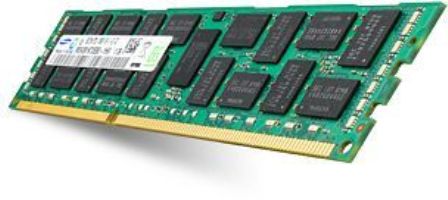
Designed as a server-grade RDIMM with ECC and a registered interface, this module ensures superior signal integrity and data reliability for virtualization hosts and memory-intensive database workloads. Its dual-rank x4 organization and low 1.35V operating voltage enable balanced capacity scaling and energy efficiency in dense rack servers, while the CL9 latency maintains responsive access for in-memory processing.
1. ECC protection continuously corrects single-bit memory errors, safeguarding transactional integrity in financial and database servers where even a flipped bit can cause costly corruption.
2. Registered buffering isolates the memory controller from electrical loading, enabling fully populated server nodes to scale up capacity for large in-memory analytics without signal degradation.
3. Dual Rank x4 organization interleaves access across internal banks, keeping server memory channels busy and delivering predictable bandwidth under heavy multi-VM consolidation.
4. A 1.35V operating voltage trims datacenter energy draw per module, directly reducing cooling overhead while sustaining always-on stability for dense rack deployments.
5. An 8 GB footprint per RDIMM supplies a cost‑effective capacity node for moderate virtualization hosts, running multiple light‑to‑medium instances with room to spare for peak demands.
The Samsung M393B1K70CH0-YH9Q4 is an 8GB DDR3 Registered ECC RDIMM engineered specifically for server platforms, where its four core characteristics directly resolve real-world data-center challenges. ECC error correction eliminates silent data corruption at the hardware level—for a virtualized cluster running financial databases or a hypervisor hosting business-critical VMs, this means a single bit flip from background radiation will never propagate into a poisoned transaction record or an unexplained system crash. The registered buffer architecture sharpens command and address signals, allowing you to fully populate every DIMM slot in a dual-socket host without signal degradation, so you can confidently maximize memory density for dense virtual machine fleets without sacrificing stability under peak load. Operating at a low 1.35V instead of the standard 1.5V tangibly reduces power draw across an entire rack, cutting both electricity costs and cooling overhead inside a 24/7 colocation environment—an advantage that compounds with every node. The dual-rank x4 organization enables aggressive bank interleaving that raises effective memory bandwidth; for an in-memory cache cluster powering a high-traffic web application or a real-time analytics engine like Redis, this translates directly to lower response latency and higher sustained throughput. These attributes collectively turn a memory module into a foundation for server reliability, efficiency, and predictable performance.
Server Memory (DDR3 Registered ECC RDIMM)
General Virtualization
For a typical hypervisor hosting multiple VMs, populate at least one DIMM per channel to balance capacity and memory bandwidth. A dual-socket server with three channels per CPU benefits from six 8GB RDIMMs (48GB total), allowing modest overcommit while maintaining ECC protection for guest stability. Scale to twelve modules for 96GB when deploying memory-hungry virtual appliances.
In-Memory Database
Low latency and data integrity are paramount. Deploy a symmetrical population across all memory channels—e.g., six or twelve identical 8GB modules—to maximize interleaving and registered buffer efficiency. For datasets approaching 128GB, use sixteen modules in a four-channel platform, ensuring dual-rank x4 organization to sustain high transaction throughput under full ECC scrubbing.
High Performance Computing
HPC workloads demand substantial bandwidth and reliable error correction. Fill every channel with identical dual-rank 8GB RDIMMs to achieve peak memory parallelism; a common node configuration uses twelve modules (96GB) across six channels per socket. This layout minimizes memory-side bottlenecks during large-scale MPI or OpenMP parallel runs while registered buffering stabilizes signal integrity in dense clusters.
Rigorously tested, compatible with Dell R720, HP DL380p Gen8, IBM x3650 M4, Cisco UCS C220 M3.
Q: Can I mix this M393B1K70CH0-YH9Q4 with other memory modules of different brands or speeds?
A: Mixing this Registered ECC module with different brands or speeds is strongly discouraged. Mismatched timings, ranks, or voltages can lead to system instability and POST failures. For enterprise reliability, use identical part numbers throughout the server.
Q: Is this memory compatible with my system?
A: This module requires a server motherboard with DDR3 Registered ECC support, such as Intel Xeon E5-2600 v1/v2 or AMD Opteron 6300 series platforms. Please consult your system’s qualified vendor list to confirm compatibility.
Q: What is the recommended DIMM population order for optimal performance?
A: For optimal performance, populate one DIMM per memory channel first, starting with the primary slots (typically blue). This dual-rank RDIMM benefits from balanced channel interleaving. Follow your server's memory population guide to maximize throughput.
Q: Does this module support overclocking or XMP profiles?
A: No, this server-grade Registered ECC module does not support overclocking or XMP profiles. It adheres strictly to JEDEC DDR3-1333 standards at 1.35V to ensure data integrity and 24/7 operational stability in mission-critical environments.
Q: What warranty and typical failure rate can I expect?
A: This Samsung memory comes with a one-year warranty. Under normal server operating conditions, the annualized failure rate is typically below 0.5%, reflecting its enterprise-grade design and rigorous quality testing for minimal downtime.