











 Secure payments
Standard refund policy
Trade Assurance
Secure payments
Standard refund policy
Trade Assurance
| Model | M392B1K70DH0-YH9 |
|---|---|
| Product Type | Memory Module |
| Compliance Standards | EU RoHS,FCC |
| Memory Capacity | 8 GB |
| Memory Technology | DDR3 |
| Product Voltage | 1.35V |
| RAM Speed | 1333MHz |
| RAM Standard | DDR3-1333/PC3-10600 |
| Error Identifying | ECC |
| Signal Type | Registered |
| Column Access Strobe (CAS) | CL9 |
| Rank | Dual Rank x4 |
| Quantity of Pins | 240-pin |
| RAM Genre | VLP RDIMM |
Designed as a DDR3 VLP Registered DIMM with ECC, this module is purpose-built for high-density server environments where data integrity and system stability are critical, such as virtualization clusters and in-memory databases. Its Dual Rank x4 configuration and 1.35V low-voltage operation maximize memory bandwidth per channel while reducing thermal footprint in space-constrained 1U/2U rack servers.
1. ECC protection corrects single-bit errors and detects multi-bit faults, preserving data integrity essential for financial ledgers and hypervisor memory states.
2. Registered buffering isolates the memory controller from electrical loading, enabling fully populated channels to serve massive in-memory databases without signal degradation.
3. The VLP form factor reclaims critical airflow clearance in 1U and blade chassis, lowering fan speeds and directly reducing thermal-induced component drift.
4. Dual rank interleaving rotates access across internal banks, effectively doubling sustained throughput to prevent stutter during dense virtual machine consolidation.
5. Low-voltage operation trims overall memory power budget and waste heat, measurably improving datacenter PUE and extending hardware refresh cycles.
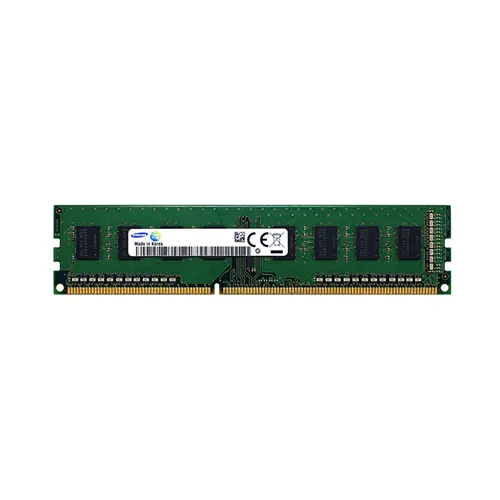
The M392B1K70DH0-YH9 is an 8GB DDR3 VLP RDIMM built specifically for server environments where uptime and data fidelity are non-negotiable. Its four defining characteristics translate directly into operational resilience. The ECC engine silently detects and corrects single-bit memory errors, a crucial shield against silent data corruption in virtualization clusters — a single flipped bit in a hypervisor’s memory space can crash dozens of virtual machines. Registered logic redrives command and address signals across high-density memory channels, eliminating signal degradation in multi-DIMM configurations; this is what keeps large-scale database servers stable during peak in-memory processing spikes. The dual-rank x4 organization enables rank interleaving, boosting effective bandwidth for latency-sensitive workloads like Redis or SAP HANA, where pipelined data access cuts transaction latency noticeably. Finally, the 1.35V low-voltage design slashes power draw per DIMM without sacrificing 1333MHz performance, directly reducing cooling overhead and energy costs across a fleet of hundreds of nodes. For the data center engineer balancing density, integrity, and TCO, this memory module turns architectural risks into predictable, measurable reliability.
This memory module, M392B1K70DH0-YH9, is an 8 GB DDR3-1333 ECC Registered VLP RDIMM built for servers, running at a low 1.35 V. The capacity planning below addresses three typical server workloads.
General Virtualization
Populate at least one DIMM per memory channel to balance bandwidth and capacity. In a dual-socket server using triple-channel architecture, install six modules symmetrically (48 GB total) for moderate VM density. Scale to two modules per channel (96 GB) when hosting more virtual machines.
In-Memory Database
Maximize capacity by fully populating all channels with two or three identical 8 GB RDIMMs. A dual-processor system with three DIMMs per channel reaches 144 GB, enabling medium-scale in-memory analytics. Always install the same part number across sockets to preserve uniform latency and ECC reliability.
High-Performance Computing
Achieve peak memory bandwidth by installing exactly one DIMM per channel — six modules (48 GB) sustain the full 1333 MT/s speed. Adding a second module per channel may force a down-clock, reducing floating-point throughput. Favor raw speed over larger capacity for bandwidth-sensitive HPC simulations.
Server memory, rigorously tested. Compatible: Dell PowerEdge R710, R720, HP ProLiant DL380 G7, DL380p Gen8, Lenovo ThinkServer RD630.
Q: Can I mix this M392B1K70DH0-YH9 with other memory modules of different brands or speeds?
A: Mixing different brands or speeds is not recommended for this Registered ECC memory. It can cause instability or boot failures. For optimal reliability, use identical modules.
Q: Is this memory compatible with my system?
A: This DDR3 Registered ECC RDIMM is designed for server platforms supporting Intel Xeon E5 series or AMD Opteron with 240-pin slots. Verify your motherboard's compatibility list.
Q: What is the recommended DIMM population order for optimal performance?
A: Populate DIMMs per your server motherboard's manual, typically filling identical slots across memory channels first (e.g., slots A1, B1, C1) to enable channel interleaving for best throughput.
Q: Does this module support overclocking or XMP profiles?
A: No, this enterprise-grade Registered ECC module does not support overclocking or XMP profiles. It is engineered for data integrity and stable 24/7 server operation.
Q: What warranty and typical failure rate can I expect?
A: This module includes a 1-year warranty. Enterprise memory like this typically has a very low annualized failure rate (AFR), ensuring high reliability for 24/7 server operation.