











 Secure payments
Standard refund policy
Trade Assurance
Secure payments
Standard refund policy
Trade Assurance
| Model | M393B1K70CH0-CH9Q4 |
|---|---|
| Product Type | Memory Module |
| Compliance Standards | EU RoHS,FCC |
| Memory Capacity | 8 GB |
| Memory Technology | DDR3 |
| Product Voltage | 1.5V |
| RAM Speed | 1333MHz |
| RAM Standard | DDR3-1333/PC3-10600 |
| Error Identifying | ECC |
| Signal Type | Registered |
| Column Access Strobe (CAS) | CL9 |
| Rank | Dual Rank x4 |
| Quantity of Pins | 240-pin |
| RAM Genre | RDIMM |
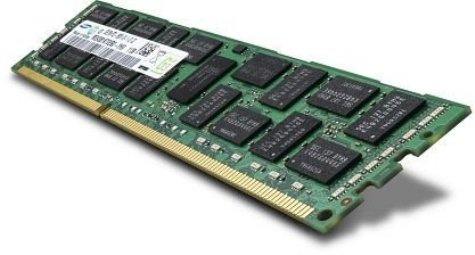
This server-grade 8GB DDR3-1333 RDIMM with registered ECC is purpose-built for legacy enterprise servers and is ideally suited for virtualized environments and in-memory databases where data integrity is critical. Its dual-rank x4 configuration and CL9 latency ensure stable signal integrity under heavy loads, while the registered buffer minimizes electrical loading on the memory controller to support larger capacities per channel.
1. ECC protection silently corrects single-bit memory faults, preserving data integrity for financial ledgers and virtualized workloads running nonstop in enterprise server fleets.
2. Registered buffering decouples the command bus from the DRAM chips, enabling large-capacity multi-DIMM configurations without signal degradation in dense rack deployments.
3. Dual Rank x4 organization keeps memory interleaving deep and channels fully utilized, delivering predictable low-latency throughput when consolidating numerous VMs on a single host.
4. The conservative standard-voltage design ensures wide platform compatibility and thermal reliability across generations of data center hardware, keeping cooling costs in check.
5. Moderate per-module density strikes an optimal balance for building affordable yet capable nodes that power memcached clusters or lightweight container orchestration.
When overseeing a virtualized server cluster or an in-memory database, the M393B1K70CH0-CH9Q4 RDIMM isn’t just another component—it’s the foundation of reliable performance. This 8 GB DDR3‑1333 module uses ECC to detect and correct single‑bit errors silently induced by cosmic radiation or electrical noise. In a hypervisor running dozens of VMs, a single uncorrected flip could crash critical services or corrupt financial transactions; ECC eliminates that risk, delivering the data integrity that 24/7 operations demand. The registered signal architecture buffers the command and address lines, stabilizing the memory controller when populating all channels with multiple dual‑rank DIMMs. For a memory‑hungry Redis or SAP HANA instance, this enables consistent low latency even under heavy contention, while the dual‑rank ×4 organization interleaves banks to raise bandwidth without sacrificing capacity. Whether you are scaling out a VMware farm or accelerating real‑time analytics, this module quietly protects every bit, keeping downtime and silent corruption out of the equation.
Server Memory Capacity Planning
The M393B1K70CH0-CH9Q4 is an 8GB DDR3-1333 Registered ECC RDIMM, designed exclusively for server platforms. Its ECC and registered signaling ensure data integrity and stability under sustained, heavy workloads, making it suitable for older-generation but still critical infrastructure. Below are configuration guidelines for three typical server scenarios using this module.
General Virtualization
For a dual‑socket virtualization host running 10-15 light to moderate VMs, populate a balanced configuration of six identical 8GB RDIMMs per processor (one DIMM per channel in a triple‑channel architecture) for a total of 48GB. This minimizes memory bandwidth bottlenecks while keeping costs predictable. For larger VM densities, double the count to twelve modules for 96GB, utilizing all available channels to maintain low latency across multiple guests.
In‑Memory Database
In‑memory databases like Redis or Memcached demand capacity first. Install twelve 8GB RDIMMs across a dual‑processor server to reach 96GB, allowing a substantial dataset to reside entirely in RAM. If the platform supports quad‑channel memory, populate four identical modules per CPU socket (64GB total) to balance bandwidth and latency, though you must monitor ECC error logs closely under constant high‑voltage access patterns.
High‑Performance Computing
HPC workloads benefit from maximum memory bandwidth. Fill all memory channels symmetrically—for example, eight 8GB modules in a dual‑socket system with four channels each (64GB total)—to enable full interleaving. Configure the modules at their rated 1333MHz and CL9 timings. If the compute nodes run memory‑saturated fluid dynamics or weather models, consider doubling to sixteen modules for 128GB, ensuring every channel is populated identically to avoid NUMA node imbalance.
Rigorously tested server memory, compatible with Dell PowerEdge R710, R610, R510, HP DL380 G7, DL360 G7, IBM x3650 M3.
Q: Can I mix this M393B1K70CH0-CH9Q4 with other memory modules of different brands or speeds?
A: Mixing is not recommended for server environments. Registered ECC modules from different brands or speeds may cause signal integrity issues, forcing the memory controller to downclock all DIMMs, reducing overall stability and performance.
Q: Is this memory compatible with my system?
A: This DDR3-1333 Registered ECC RDIMM is designed for dual-processor server platforms like Intel Xeon 5500/5600 series or AMD Opteron 6100 series. Verify your board supports 1.5V, 240-pin Registered DIMMs with x4 DRAM organization.
Q: What is the recommended DIMM population order for optimal performance?
A: Populate identical DIMMs per memory channel starting from the farthest slot from the CPU. For dual-rank x4 RDIMMs, install in sets of three per channel on triple-channel systems to maintain balanced interleaving and maximum bandwidth.
Q: Does this module support overclocking or XMP profiles?
A: No. This is a JEDEC-compliant server memory module without XMP profiles. Overclocking is not supported; the registered clock driver and ECC functionality are designed for reliable, stock-speed operation in enterprise workloads.
Q: What warranty and typical failure rate can I expect?
A: We provide a one-year warranty. This Samsung original module exhibits an extremely low annualized failure rate (AFR) of approximately 0.2% under normal server operating conditions, ensuring high reliability for critical applications.