











 Secure payments
Standard refund policy
Trade Assurance
Secure payments
Standard refund policy
Trade Assurance
| Model | M393B1K70CH0-YH9Q8 |
|---|---|
| Product Type | Memory Module |
| Compliance Standards | EU RoHS,FCC |
| Memory Capacity | 8 GB |
| Memory Technology | DDR3 |
| Product Voltage | 1.35V |
| RAM Speed | 1333MHz |
| RAM Standard | DDR3-1333/PC3-10600 |
| Error Identifying | ECC |
| Signal Type | Registered |
| Column Access Strobe (CAS) | CL9 |
| Rank | Dual Rank x4 |
| Quantity of Pins | 240-pin |
| RAM Genre | RDIMM |
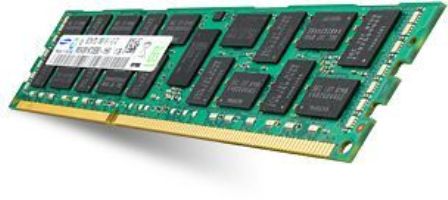
This Samsung 8GB DDR3-1333 RDIMM (M393B1K70CH0-YH9Q8) is a server-grade memory module optimized for virtualization and in-memory database workloads where data integrity is critical. Its registered signal architecture and ECC error correction deliver rock-solid stability in multi-DIMM configurations, while the dual-rank x4 organization and low 1.35V operating voltage enhance memory bandwidth efficiency per watt for dense data center deployments.
1. ECC instantly detects and corrects single-bit memory errors, preserving data integrity for long-running database servers and financial transaction systems.
2. Registered signal buffering stabilizes high-density memory configurations, enabling reliable operation across multiple DIMMs per channel in densely consolidated virtualized environments.
3. Dual Rank x4 organization maximizes interleaved bank accesses, boosting effective bandwidth for simultaneous VMs and reducing memory latency under tier-1 application loads.
4. 1.35V low-power operation cuts data center energy consumption and lowers cooling overhead, directly reducing TCO for scale-out server fleets.
5. PC3-10600 bandwidth provides consistent 10.6 GB/s throughput per channel, efficiently handling mid-tier enterprise workloads and virtualization demands without overprovisioning.
The Samsung M393B1K70CH0-YH9Q8 is a server-grade DDR3 Registered DIMM, engineered for mission-critical enterprise environments where downtime is not an option. Its defining features directly address the pain points of data center architects and IT managers.
First, ECC error correction continuously detects and corrects single-bit memory errors caused by background radiation, preventing silent data corruption in financial transaction databases or long-running analytics jobs. This means a flipped bit will never quietly cascade into a faulty calculation or a crashed virtual machine. Second, the Registered signal buffer isolates the memory controller from the electrical load of multiple DIMMs, enabling stable operation with large-capacity memory configurations. In a dense virtualization cluster hosting dozens of VMs, this stability allows you to populate all channels without risking signal integrity, maximizing host memory density. Third, the 1.35V low-voltage operation significantly reduces power draw and thermal output across a rack full of servers, which lowers cooling overhead and extends component lifespan. Finally, the Dual Rank x4 organization combined with 1333MHz speed delivers strong interleaved bandwidth for memory-intensive workloads like Redis or Memcached, effectively doubling the internal page-hit rate and accelerating key-value lookups. For the data center, this translates into reliable, efficient, and responsive infrastructure you can trust around the clock.
General Virtualization
This registered DDR3-1333 8GB module suits entry-level virtualization hosts where total memory is more critical than raw bandwidth. For a typical two-socket server, populate at least six identical DIMMs per CPU (12 modules total, 96GB) to balance memory channels and support 20–30 light VMs. Always install modules in matched sets per memory bank to maintain ECC protection and avoid performance penalties from unbalanced NUMA configurations.
In-Memory Database
In-memory databases demand both capacity and reliability, making this dual-rank x4 RDIMM a solid building block. Deploy a fully populated 24-DIMM server configuration (192GB) to hold substantial datasets entirely in RAM while benefiting from ECC error correction. Prioritize identical 1.35V low-voltage modules to reduce thermal load and power draw in dense deployments, ensuring stable latencies under sustained write-intensive workloads.
High Performance Computing
For HPC clusters where memory bandwidth per core is crucial, use these ECC Registered DIMMs in a balanced, multi-channel configuration. In a dual-socket node with eight memory channels per CPU, install eight modules (64GB) to maximize bandwidth via channel interleaving. The CAS 9 latency and 1.35V operation help maintain energy efficiency across scale-out nodes, while ECC safeguards long-running computational integrity against single-bit errors.
Rigorously tested server memory for Dell PowerEdge R720, HP DL380p Gen8, Lenovo RD430, and similar.
Q: Can I mix this M393B1K70CH0-YH9Q8 with other memory modules of different brands or speeds?
A: Mixing is not recommended. Mismatched brands, speeds, or ranks often cause stability issues and prevent the server from booting. For guaranteed reliability, populate all channels with identical Samsung RDIMMs meeting the same PC3-10600 specification.
Q: Is this memory compatible with my Intel Xeon E5-2600 v2 series server platform?
A: Yes, this DDR3-1333 Registered ECC module is fully compatible with systems using Intel C602/C604 chipsets. Verify your motherboard supports 1.35V low-voltage operation and Registered DIMMs. Always consult the vendor’s qualified memory list for your specific server model.
Q: What is the recommended DIMM population order for optimal performance?
A: For dual-socket servers, balance ranks across memory channels as per the motherboard manual. Typically, populate identical RDIMMs starting with the slots furthest from the CPU, filling blue or black slots first. Install in matched pairs per channel for dual rank interleaving.
Q: Does this module support overclocking or XMP profiles?
A: No. This is an enterprise server RDIMM conforming to JEDEC standards. It runs at fixed 1333MHz with CL9 latency and does not support XMP or overclocking. Stability and data integrity are prioritized over tunable performance.
Q: What warranty and typical failure rate can I expect?
A: We provide a one-year warranty covering manufacturing defects. Samsung server memory undergoes rigorous testing and exhibits an annualized failure rate well below 0.2% in normal operating conditions, ensuring high reliability for mission-critical workloads.