











 Secure payments
Standard refund policy
Trade Assurance
Secure payments
Standard refund policy
Trade Assurance
| Product Type | Memory Module |
|---|---|
| Memory Capacity | 8 GB |
| Memory Technology | DDR3 |
| Product Voltage | 1.35 V |
| RAM Speed | 1600 MHz |
| RAM Standard | DDR3-1600/PC3-12800 |
| Error Identifying | ECC |
| Signal Type | Registered |
| Column Access Strobe (CAS) | CL11 |
| Rank | Single Rank x4 |
| Quantity of Pins | 240-pin |
| RAM Genre | RDIMM |
This DDR3-1600 registered ECC module (RDIMM) with 1.35V low-voltage operation is purpose‑built for server platforms running memory‑intensive workloads such as virtualization, in‑memory databases, and transactional processing where data integrity is critical. Its registered signal architecture and single‑rank x4 organization stabilize multi‑DIMM channel loading, while ECC reliably corrects single‑bit errors to prevent silent data corruption in 24/7 enterprise environments.
1. ECC integrity actively detects and corrects single-bit errors, preserving data accuracy in virtualization clusters and financial transaction databases where even silent corruption is unacceptable.
2. Registered signal architecture buffers command and address buses, stabilizing signal quality across fully populated memory channels for reliable operation in high-capacity server platforms.
3. Low-voltage operation reduces power consumption per DIMM, directly lowering cooling demands and energy costs in dense rack-scale and blade server deployments.
4. DDR3-1600 data transfer rate supplies the sustained bandwidth needed to keep multiple virtual machines responsive during peak I/O workloads without throttling.
5. Single Rank x4 construction uses x4-width DRAM chips to maximize per-rank error coverage and RAS protection, enhancing mission-critical uptime in demanding enterprise environments.
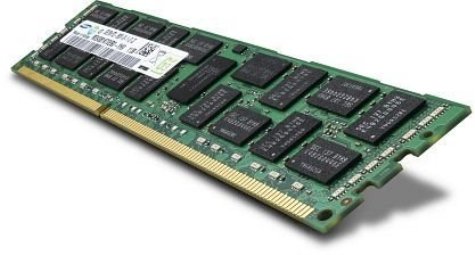
The Samsung M393B1G70BH0-YK0 is a server-class DDR3 Registered ECC RDIMM, built specifically to solve the reliability and scalability challenges of enterprise data centers. In a dense virtualization cluster, its ECC engine is non-negotiable: it corrects single-bit errors and detects multi-bit corruption in real time, so a stray cosmic particle won’t silently poison a database query or corrupt a live virtual machine state. The registered buffer amplifies and re-drives clock and command signals, which means you can fully populate all six or twelve DIMM slots per channel without signal collapse—this keeps dozens of VMs stable under heavy consolidation. Operating at just 1.35V, the module drives energy efficiency across a rack, directly lowering cooling overhead and operating expenses. When you run an in-memory database like Redis or a transactional MySQL workload, the single-rank x4 organization delivers wide error coverage akin to Chipkill, significantly hardening uptime. With 1600MT/s throughput and CL11 latency, every read of a database index or virtualized I/O operation remains predictable under load, translating raw specs into genuine business continuity.
Server Memory Identified
This is an 8GB DDR3-1600 ECC Registered RDIMM (1.35V low-voltage). It is designed for server-class platforms where reliability is critical. Below are capacity planning guidelines for typical enterprise workloads.
General Virtualization
Balance cost with VM density using 6–8 modules (48–64 GB). Deploy in pairs per memory channel to maintain two-DIMM-per-channel (2DPC) populations. This configuration supports moderate consolidation without excessive latency penalty, leaving room to scale as VM demand grows.
In-Memory Database
Target capacity over bandwidth. Populate all available channels with a single DIMM per channel (1DPC) to maximize speed while still scaling total memory. For instance, install 8 identical RDIMMs (64 GB) for smaller in-memory datasets, or double to 128 GB using 16 modules if your dual-socket platform permits, ensuring low CAS latency responsiveness.
High-Performance Computing (HPC)
Optimize for memory bandwidth. Use balanced configurations—typically 6 or 8 identical RDIMMs per CPU to fully populate channels at 1DPC. All-module matching (same rank, speed, CAS) eliminates performance variability. This approach delivers peak throughput for parallel tasks, and the low-voltage design reduces thermal load in dense clusters.
Validated server memory. Compatible with Dell PowerEdge R720, R620, HP DL380p Gen8, and more.
Q: Can I mix this M393B1G70BH0-YK0 with other memory modules of different brands or speeds?
A: Mixing this RDIMM with modules of different brands or speeds is not recommended. ECC Registered memory requires matched configurations to ensure signal integrity and system stability in server environments.
Q: Is this memory compatible with my system?
A: This DDR3-1600 ECC Registered DIMM is designed for server platforms supporting Intel Xeon E5-2600 v1/v2 or AMD Opteron 6300 series. Verify your server board’s qualified vendor list for RDIMM support.
Q: What is the recommended DIMM population order for optimal performance?
A: Populate identical RDIMMs in matched sets, starting with the first slot of each memory channel as per your server board manual. Balanced configurations across channels maximize memory bandwidth on dual/quad-channel server platforms.
Q: Does this module support overclocking or XMP profiles?
A: No, this is an ECC Registered server memory module. It adheres strictly to JEDEC DDR3-1600 standards and does not support overclocking or XMP profiles, which are disabled on enterprise platforms for reliability.
Q: What warranty and typical failure rate can I expect?
A: This module comes with a one-year warranty. As a server-grade ECC RDIMM, it meets stringent reliability standards with typical failure rates well below 0.1% annually under normal operating conditions.