











 Secure payments
Standard refund policy
Trade Assurance
Secure payments
Standard refund policy
Trade Assurance
| Product Type | Memory Module |
|---|---|
| Compliance Standards | |
| Memory Capacity | 8 GB |
| Memory Technology | DDR3 |
| Product Voltage | 1.5 V |
| RAM Speed | 1600 MHz |
| RAM Standard | DDR3-1600/PC3-12800 |
| Error Identifying | ECC |
| Signal Type | Registered |
| Column Access Strobe (CAS) | CL11 |
| Rank | Dual Rank x4 |
| Quantity of Pins | 240-pin |
| RAM Genre | RDIMM |
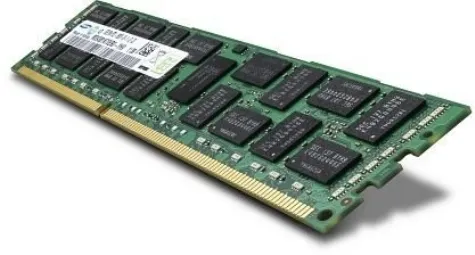
Designed specifically for server environments, this DDR3-1600 RDIMM is ideally suited for memory-intensive workloads such as virtualization and in-memory databases where data integrity is paramount. Its registered signal architecture and ECC capability stabilize high-capacity deployments, while the dual-rank x4 configuration optimizes bank-level parallelism to sustain throughput under heavy load.
1. ECC protection corrects single-bit errors on-the-fly, preserving data accuracy in long-running server workloads where memory integrity is non-negotiable.
2. Registered buffering reduces electrical load on the memory controller, enabling stable population of all DIMM slots in dense rack servers and blade enclosures.
3. Dual Rank x4 architecture interleaves requests across internal banks, sustaining peak bandwidth under heavy virtualization and multi-tenant database operations.
4. DDR3-1600 delivers 12.8 GB/s of bandwidth per channel, efficiently handling concurrent connections for web hosting and mid-range enterprise applications.
5. An 8 GB RDIMM provides a balanced cost-per-gigabyte for scaling out memory in basic application servers or edge analytics platforms.
In enterprise server environments where data integrity and uninterrupted uptime are non-negotiable, the M393B1K70DH0-CK0 registered DDR3-1600 RDIMM directly addresses your most critical operational risks. Its ECC engine actively detects and corrects single-bit errors—silent bit flips caused by cosmic radiation that could corrupt financial transactions or patient records—ensuring your database commits are always accurate. The registered clock buffer stabilizes signal loading across fully populated platforms, meaning you can deploy 24 DIMMs in a quad-socket virtualization cluster without compromising boot reliability or experiencing intermittent memory faults under heavy VM migration. Dual-rank x4 organization interleaves accesses across two internal ranks and a wider x4 data bus, dramatically accelerating In-Memory databases like Redis or SAP HANA. This configuration means the memory controller can pipeline multiple read requests with lower contention, slashing query latency when millions of key-value lookups hit the cache tier simultaneously. Every architectural choice—from registered buffering to dual-rank x4 interleaving—translates into tangible business continuity: you avoid costly transactional errors, maintain compute density in hyperconverged nodes, and extract maximum ROI from single-threaded database licenses that demand sustained memory throughput.
General Virtualization
For a balanced virtualized host using 8 GB DDR3-1600 RDIMMs, populate all memory channels symmetrically to maximize bandwidth. A typical dual-socket server with three channels per CPU benefits from six identical modules (48 GB total), leaving room for moderate VM density. Scale to 12 modules (96 GB) if hosting more memory-intensive VMs, but avoid mixing capacities within a channel to maintain uniform access latency.
In-Memory Database
In-memory databases thrive on capacity and low latency, so fill every DIMM slot with these registered 8 GB sticks to reach the platform’s maximum supported RAM. For a two-socket system with 12 slots per CPU, install 24 modules (192 GB) using dual-rank x4 DIMMs to leverage rank interleaving. Distribute modules equally across sockets to preserve NUMA locality and prevent remote-memory penalties during large dataset scans.
High-Performance Computing (HPC)
HPC workloads prioritize memory bandwidth over raw capacity. Configure the server with one DIMM per channel—typically six or eight modules (48–64 GB) on a dual-socket node—to run channels at full speed without rank-throttling. Select the lowest CAS latency available (CL11 here) and avoid populating more than two ranks per channel, since dual-rank x4 modules already supply sufficient bank parallelism. This setup delivers optimal throughput for simulation and modeling codes.
Server RAM rigorously tested and compatible with Dell PowerEdge R720, R620, HP DL380p Gen8, Lenovo x3650 M4.
Q: Can I mix this M393B1K70DH0-CK0 with other memory modules of different brands or speeds?
A: Mixing is not recommended. For reliable server operation, pair only identical RDIMMs with the same speed, rank, and ECC Registered specification. Incompatible modules may cause system instability or failure to POST.
Q: Is this memory compatible with my system?
A: This 8GB DDR3-1600 Registered ECC RDIMM is designed for Intel Xeon E5/E3-1200 v2/v3 and AMD Opteron platforms with 240-pin DDR3 slots. Verify your server board explicitly supports 1.5V Registered ECC memory and dual-rank x4 configuration.
Q: What is the recommended DIMM population order for optimal performance?
A: Follow your server motherboard's population guide. Typically, install identical DIMMs in identical-colored slots, starting with channel 0 (farthest from CPU) to enable balanced interleaving and maximize memory bandwidth on multi-channel platforms.
Q: Does this module support overclocking or XMP profiles?
A: No. This is a JEDEC‑compliant enterprise RDIMM running at standard DDR3-1600 CL11. It does not support overclocking or Intel XMP. The fixed 1.5V profile ensures 24/7 stability in server environments.
Q: What warranty and typical failure rate can I expect?
A: This module carries a 1-year warranty. Thanks to Samsung’s stringent testing and high-quality 30nm-class chips, the annualized failure rate (AFR) is extremely low in properly cooled, spec-compliant server deployments.