











 Secure payments
Standard refund policy
Trade Assurance
Secure payments
Standard refund policy
Trade Assurance
| Model | M393B1K70DH0-CK0Q9 |
|---|---|
| Product Type | Memory Module |
| Compliance Standards | EU RoHS,FCC |
| Memory Capacity | 8 GB |
| Memory Technology | DDR3 |
| Product Voltage | 1.5V |
| RAM Speed | 1600MHz |
| RAM Standard | DDR3-1600/PC3-12800 |
| Error Identifying | ECC |
| Signal Type | Registered |
| Column Access Strobe (CAS) | CL11 |
| Rank | Dual Rank x4 |
| Quantity of Pins | 240-pin |
| RAM Genre | RDIMM |
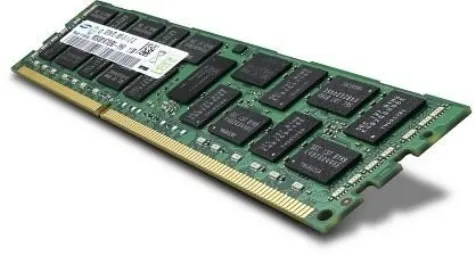
This 8GB DDR3-1600 registered ECC module is purpose-built for server platforms demanding stringent data integrity, making it an excellent fit for virtualization and in-memory database workloads. The dual-rank x4 organization combined with registered signal buffering enhances interleaving and reduces electrical loading, ensuring stable high-capacity operation across multi-DIMM configurations.
1. ECC protection detects and corrects single-bit memory errors in real time, safeguarding transactional databases and critical workloads against silent data corruption in always-on server environments.
2. Registered signal buffering decouples the electrical load from the system memory controller, allowing fully populated multi-DIMM channels without compromising signal integrity under sustained enterprise uptime.
3. Dual Rank x4 organization enables rank interleaving, maximizing channel utilization and delivering the consistent memory bandwidth essential for dense virtual machine consolidation.
4. The 1600MHz clock speed provides a peak transfer rate of 12.8 gigabytes per second per channel, accelerating in-memory caching and real-time analytics in read-heavy architectures.
5. An 8 gigabyte capacity per module balances density and cost, offering sufficient headroom for moderate virtualization hosts or appliance-type server deployments where predictable performance matters.
This Samsung module (M393B1K70DH0-CK0Q9) is a server-class DDR3 Registered DIMM with ECC, purpose-built for mission-critical enterprise workloads where uptime and data fidelity are non-negotiable. In dense virtualization clusters, ECC silently rectifies single-bit errors caused by background radiation or signal noise, preventing corrupt data from cascading across dozens of VMs and triggering unexplained application crashes. The Registered architecture buffers command and address signals, circumventing the electrical loading that would destabilize unbuffered memory once all channels are populated; this is fundamental when scaling an in-memory database node to hundreds of gigabytes for sub-millisecond transaction processing. The dual-rank x4 organization further enables rank interleaving, so while one rank completes a refresh or write cycle, the controller reads from the other, smoothing latency spikes during sustained OLTP storms. Paired with the reliable 1600MT/s speed at CL11, the module delivers consistent bandwidth for real-time analytics, where a single stalled memory fetch directly delays a revenue-critical dashboard. For data center operators, these characteristics converge into a single assurance: predictable performance and uncompromising data integrity under continuous load.
General Virtualization
For a typical hypervisor hosting 10–15 mixed VMs, populate the server with six to eight M393B1K70DH0-CK0Q9 8 GB RDIMMs (48–64 GB total) spread across all memory channels. This dual‑rank x4 configuration provides balanced registered ECC protection and adequate capacity for moderate overcommitment without excessive paging. Avoid single‑channel setups to preserve memory bandwidth for simultaneous guest workloads.
In-Memory Database
In‑memory databases like Redis or SAP HANA demand large, fault‑tolerant memory pools. Deploy the maximum supported DIMMs—commonly 12 or 24 modules—to reach 96 GB or 192 GB while retaining full ECC availability and dual‑rank performance. Populate channels evenly with identical 8 GB RDIMMs to sustain low latency under heavy online transaction processing, and reserve one spare rank per channel where RAS features are critical.
High‑Performance Computing
HPC clusters benefit from the 1600 MHz registered ECC memory’s signal integrity at scale. Install eight or sixteen modules per node (64 GB/128 GB) with one DIMM per channel to exploit the maximum memory frequency while retaining error correction for long‑running MPI jobs. Dual‑rank x4 devices offer a sweet spot between capacity and command‑rate penalties, keeping sustained memory throughput high during dense linear algebra or CFD runs.
Rigorously tested for server compatibility. Compatible with Dell PowerEdge R720, HP DL380p Gen8, Lenovo RD630.
Q: Can I mix this M393B1K70DH0-CK0Q9 with other memory modules of different brands or speeds?
A: We strongly advise against mixing. Registered ECC modules must precisely match in rank, CAS latency, and speed to ensure signal integrity and avoid system instability. Uniformity is critical in server environments.
Q: Is this memory compatible with my system?
A: Compatibility depends on your server's motherboard and processor. This DDR3 Registered DIMM supports 2DPC configurations on platforms like Intel Xeon 5600/5500 series and AMD Opteron 6100 series. Consult your vendor's qualified list for final verification.
Q: What is the recommended DIMM population order for optimal performance?
A: Populate identical DIMMs per channel, starting with the farthest slot from the CPU. For dual-socket servers, balance memory equally across both processors and fill channels in sets of three for triple-channel architectures to maximize bandwidth.
Q: Does this module support overclocking or XMP profiles?
A: No. This is a server-grade Registered DIMM with ECC, which strictly adheres to JEDEC DDR3-1600 specifications. Overclocking and XMP profiles are not supported, as data integrity and platform stability take precedence over frequency gains.
Q: What warranty and typical failure rate can I expect?
A: This module includes a one-year warranty. Built with Samsung 40nm-class DRAM and stringent burn-in testing, it achieves an annualized failure rate (AFR) well under 0.5% in compliant server environments, ensuring excellent long-term reliability.