











 Secure payments
Standard refund policy
Trade Assurance
Secure payments
Standard refund policy
Trade Assurance
| Product Type | Memory Module |
|---|---|
| Memory Capacity | 8 GB |
| Memory Technology | DDR3 |
| RAM Speed | 1600MHz |
| RAM Standard | DDR3-1600/PC3-12800 |
| Error Identifying | Non-ECC |
| Signal Type | Unbuffered |
| Column Access Strobe (CAS) | CL11 |
| Rank | Dual Rank x8 |
| Quantity of Pins | 240-pin |
| RAM Genre | UDIMM |
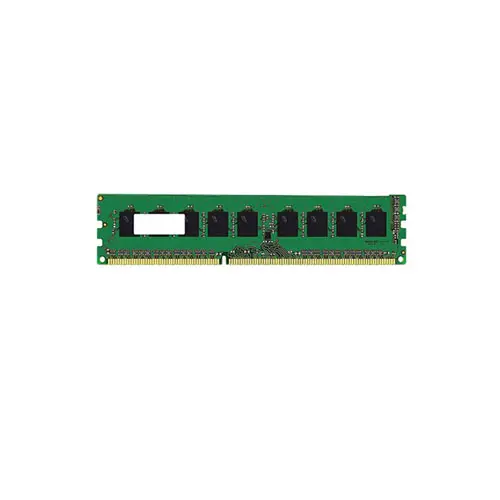
This DDR3-1600 UDIMM is a desktop-class memory module tailored for upgrading legacy systems used in mainstream productivity, content creation, and casual gaming. Its dual-rank x8 organization improves memory interleaving and bandwidth efficiency, while the unbuffered, non-ECC design ensures lower latency, making it a cost-effective solution for responsive multitasking on compatible desktop platforms.
1. An 8GB capacity comfortably handles modern desktop multitasking, letting you keep a browser, office suite, and media player open simultaneously without swapping to storage.
2. Operating at 1600MHz, this module supplies ample bandwidth to prevent memory bottlenecks in gaming and content creation workflows.
3. CL11 latency balances fast access times with stable operation, contributing to snappy application launches and consistent frame pacing.
4. The dual-rank x8 organization interleaves memory accesses for higher effective throughput, which benefits video encoding and large photo batch processing.
5. As a standard UDIMM, it guarantees effortless plug-and-play upgrades in consumer desktop platforms without complex BIOS adjustments.
The M378B1G73BH0-YK0 is an 8 GB DDR3-1600 desktop UDIMM whose four defining characteristics—capacity, frequency, CL11 latency, and dual-rank x8 organization—translate directly into real-world fluency. For gamers immersed in AAA titles, the 8 GB footprint prevents crippling shortage stutters, while the 1600 MHz clock and agile CL11 response work together to feed the CPU with instructions and texture data faster, slashing load times and minimizing in-engine lag. The dual-rank architecture interleaves memory banks to lift effective bandwidth during complex firefights and open-world traversal, keeping frame delivery consistent. Content creators editing 4K timelines benefit identically: the full 8 GB holds large project assets in active memory without paging, and the combination of high transfer rate, low latency, and bank-level parallelism accelerates rendering and encoding passes, cutting project turnaround times. Whether you are refreshing an aging tower or assembling a reliable workstation, these four attributes ensure demanding applications run fluidly, making every computing session measurably more productive.
Gaming Build
For a responsive dual‑channel gaming rig, pair two of these 8 GB DDR3‑1600 UDIMMs to create a 16 GB kit. The 1600 MHz clock and CL11 timings deliver smooth frame pacing in modern titles when running in dual‑rank x8 configuration. If your budget permits, a 32 GB setup (four modules) helps with background streaming and large map‑loading workloads, though 16 GB remains the sweet spot for most gamers.
Content Creation
Video editing, 3D rendering and complex compositing thrive on high memory capacity. Maximize your board’s DIMM slots with four of these 8 GB modules to reach 64 GB of total system memory. This non‑ECC DDR3‑1600 capacity allows large timeline previews and simultaneous asset handling without swapping to storage. While it lacks ECC, the dual‑rank design keeps bandwidth stable under multi‑threaded renders, making it a cost‑effective upgrade for older workstations.
General Productivity
Office multitasking, web browsing and light spreadsheets perform reliably with a single 8 GB module. This single‑channel configuration keeps initial cost low while providing enough capacity to handle dozens of browser tabs and Office‑suite applications concurrently. For a solid productivity boost, deploy a second identical module in dual‑channel mode, doubling bandwidth to 25.6 GB/s and noticeably improving system responsiveness during heavy multitasking sessions.
Rigorously tested, compatible with desktops: Dell OptiPlex 9020, HP EliteDesk 800 G1, Lenovo ThinkCentre M93.
Q: Can I mix this M378B1G73BH0-YK0 with other memory modules of different brands or speeds?
A: Mixing different brands or speeds is not recommended. Faster modules will downclock to match the slowest, potentially causing instability. For best reliability, use identical modules within the same kit.
Q: Is this memory compatible with my desktop system?
A: This DDR3-1600 UDIMM is compatible with desktop motherboards featuring 240-pin DDR3 slots and chipsets like Intel 6/7/8 Series or AMD 900 Series. Please verify your motherboard’s QVL list and maximum supported memory.
Q: What is the recommended DIMM population order for optimal performance?
A: For dual-channel motherboards, install identical pairs in the same-colored slots, typically A2 and B2 first. Consult your motherboard manual for the exact priority, as improper placement may reduce performance.
Q: Does this module support overclocking or XMP profiles?
A: No. This 8GB DDR3-1600 CL11 UDIMM operates at JEDEC standard timings and voltage (1.5V). It does not feature XMP profiles and is validated for stable operation only at its rated specifications.
Q: What warranty and typical failure rate can I expect?
A: This module includes a one-year warranty. Manufacturing failure rates are extremely low, typically under 0.5% annually. We recommend proper ESD handling during installation to ensure long-term reliability.